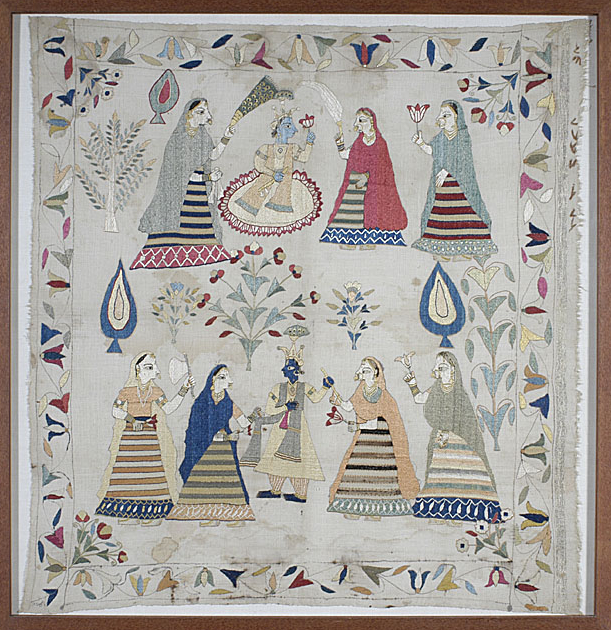
Chamba rumals
Square cloths for covering gifts, embroidered in the hills with scenes from the life of Krishna in the style of Pahari painting.
In the hill state of Chamba, women of the court embroidered rumals in silk on fine cotton, often from drawings by the court painters, so that the same Krishna scenes appear in painting and in thread.
The embroidery was done in double satin stitch, so that the picture looks the same on both sides.
Gallery
8 works


Pictures from Wikimedia Commons; select one to see it full size with its credit.
More textiles & crafts
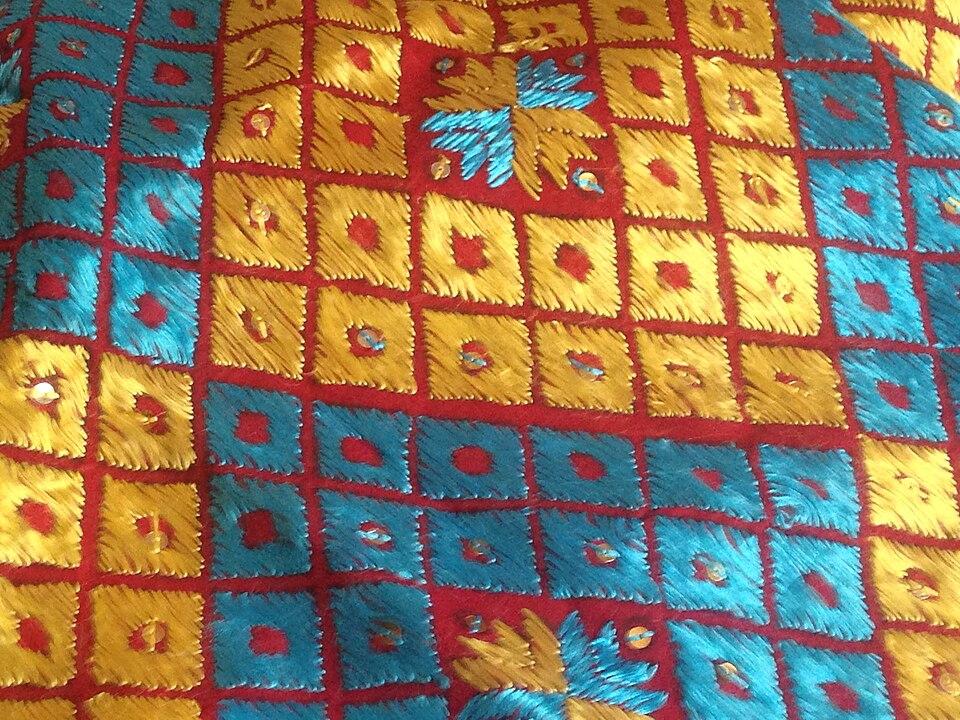
The 'flower work' of Punjabi women: geometric embroidery in golden and crimson silk, worked from the back of the cloth. A bagh, 'garden', covers the whole shawl; brides were given them at their weddings.
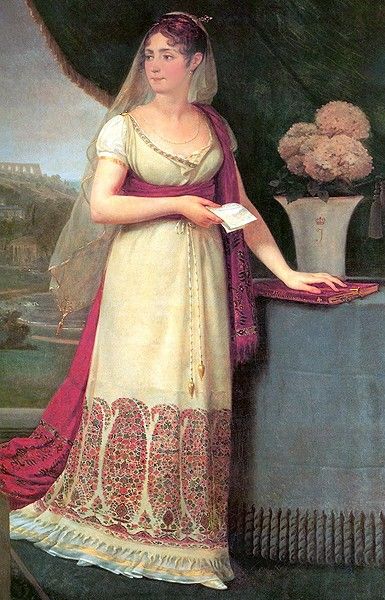
After 1819 Kashmir's shawl workshops worked for Lahore, and the Sikh court wore and gave shawls of great richness; some even show maps of Srinagar.
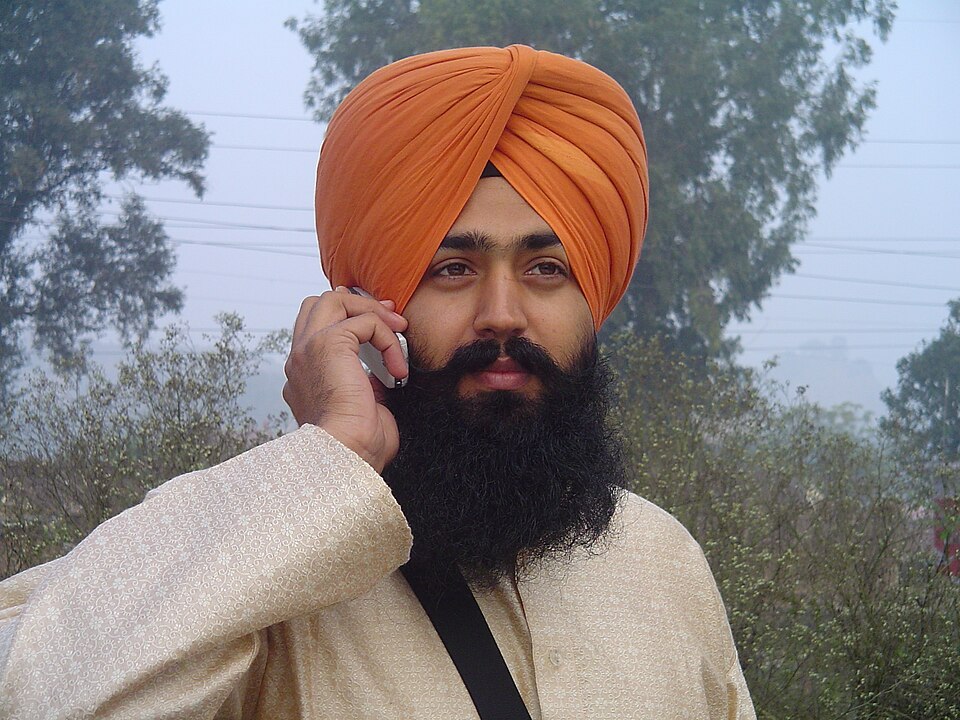
The turban, required of every Khalsa Sikh to cover the uncut hair, in styles from the Akali bunga to the pagh of the Doaba and the patka of children.
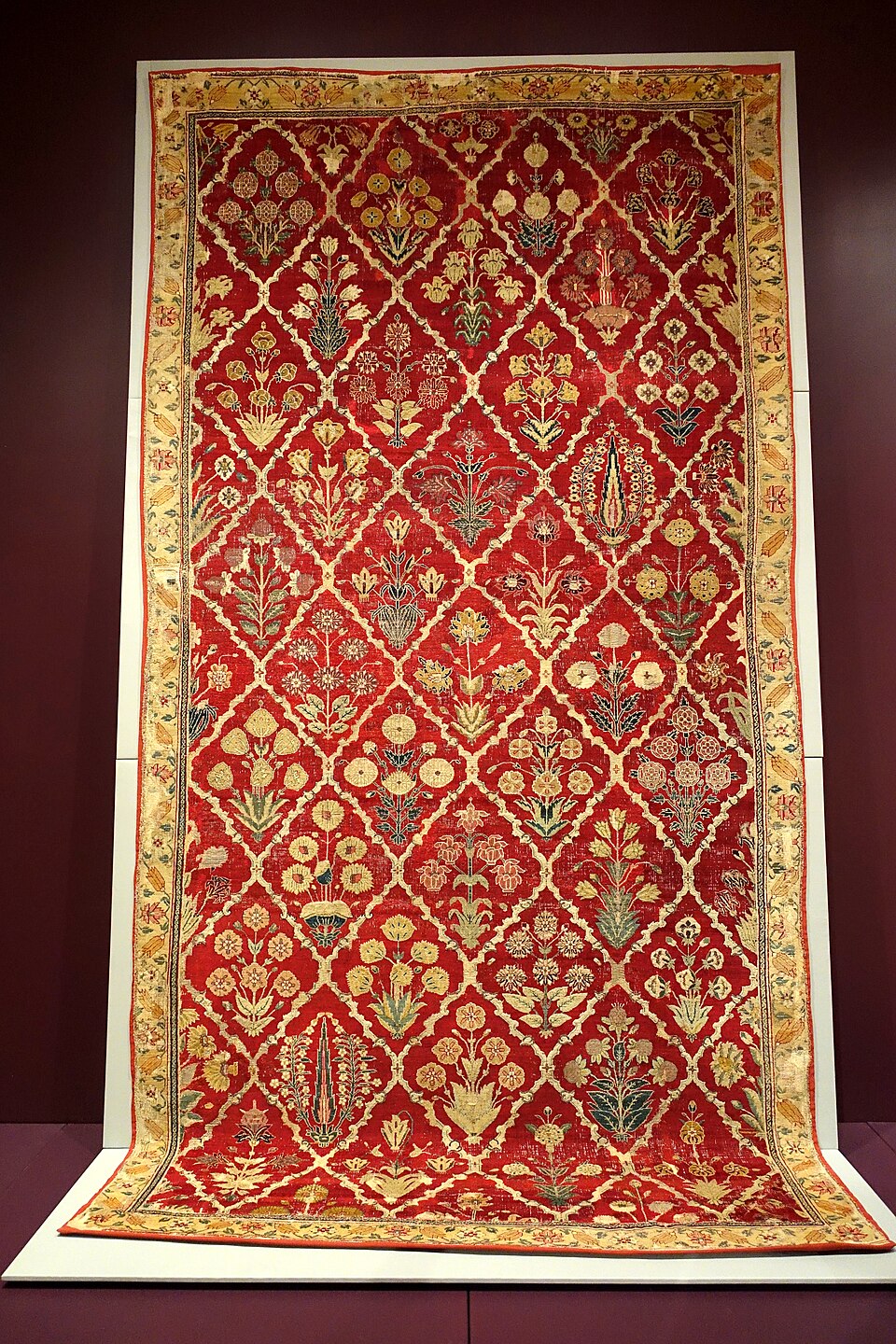
A carpet woven in the imperial workshops of Lahore for a London merchant, with his arms and those of his guild in the border.
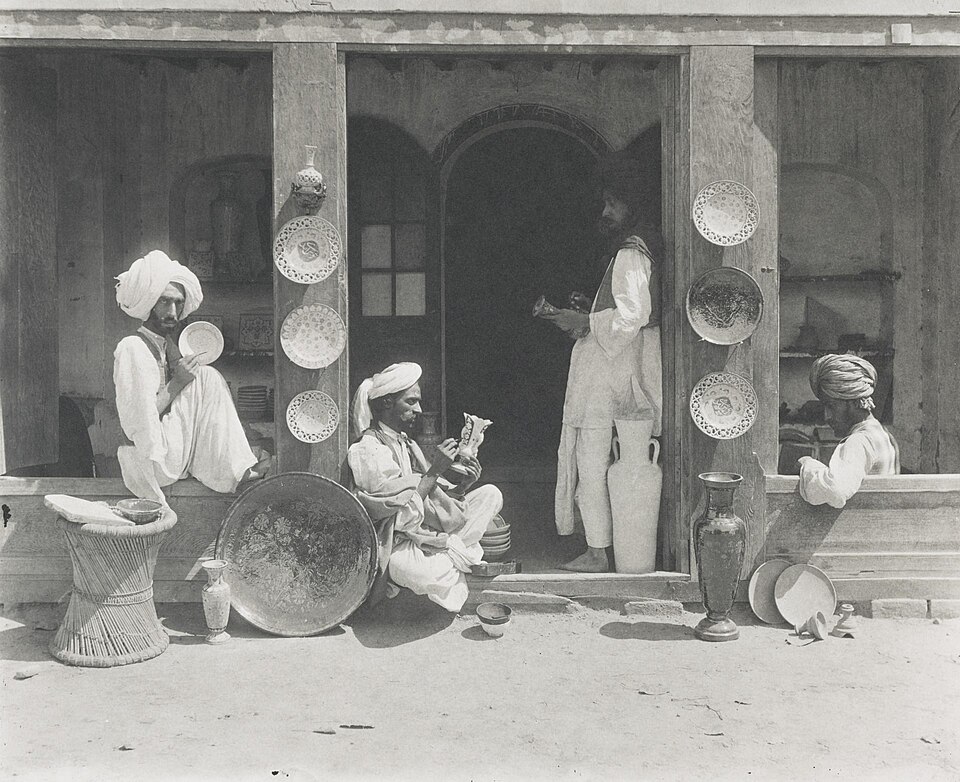
The cobalt-and-white glazed pottery and tiles of Multan, the craft that clothed its Sufi tombs and is still practised in the city.
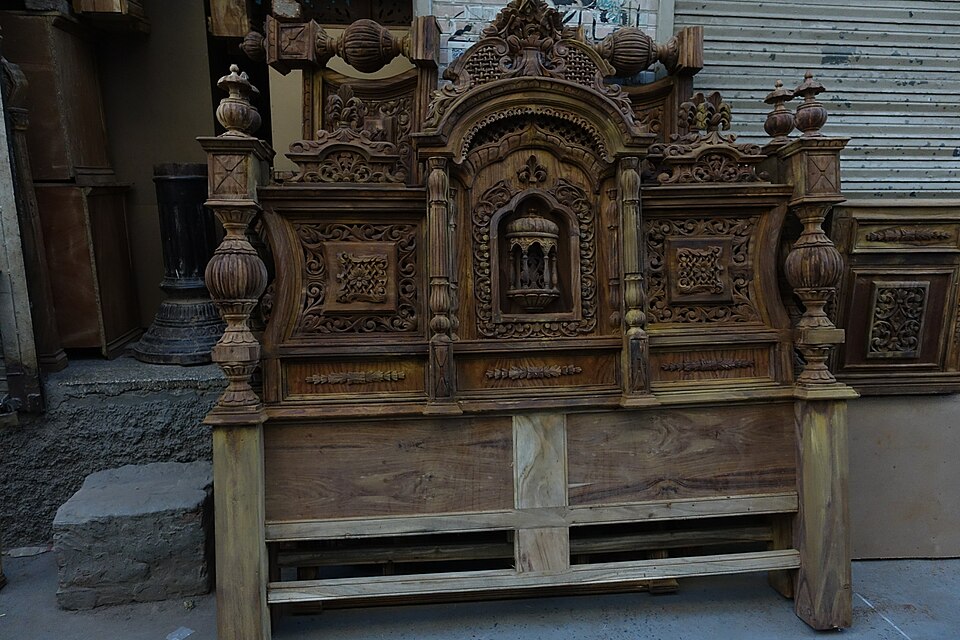
The carved furniture, doors and screens of Chiniot, whose carpenters are famous across Pakistan.
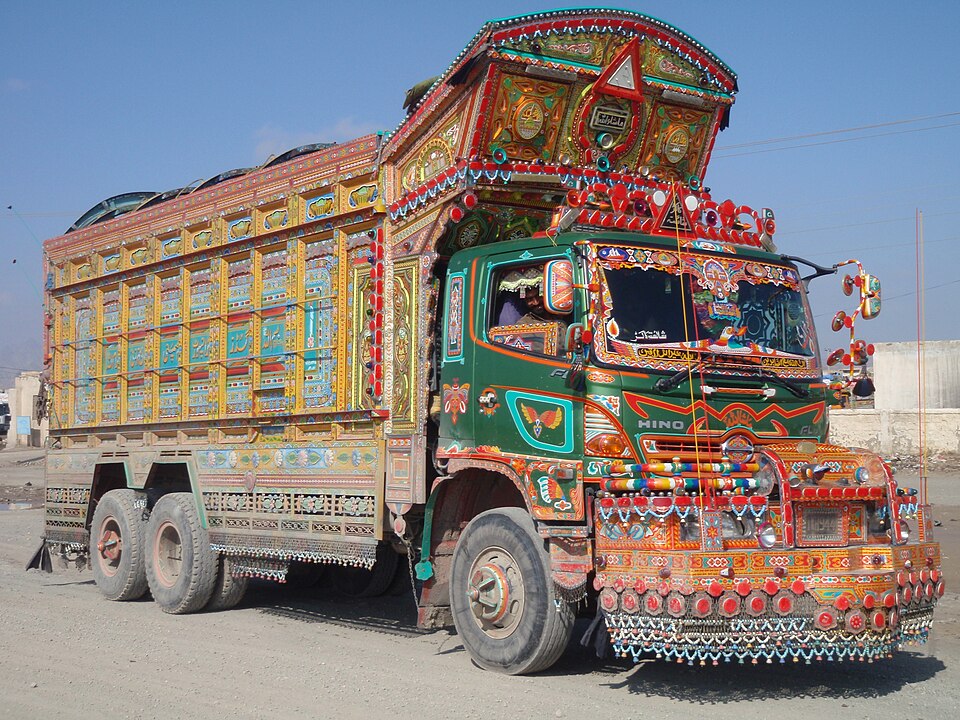
The painted and mirrored trucks of Pakistan, rolling galleries of birds, film stars, poetry and landscapes.
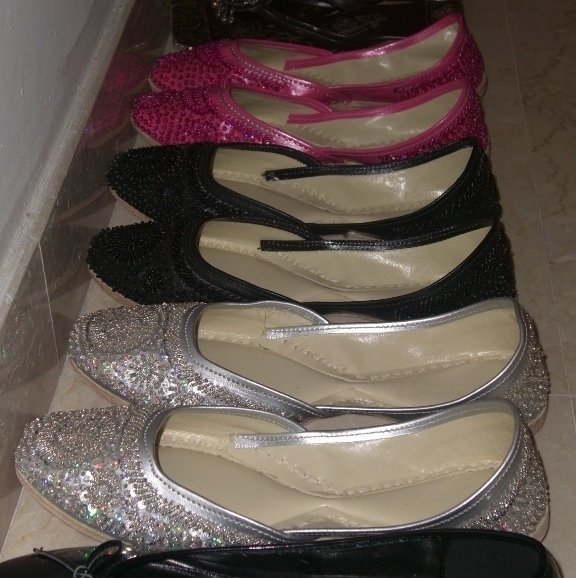
The flat leather slipper of the Punjab, embroidered in gold thread, with a curled toe for men and a closed back for women.

Sialkot's workshops have stitched a large share of the world's footballs, including balls used at World Cups.
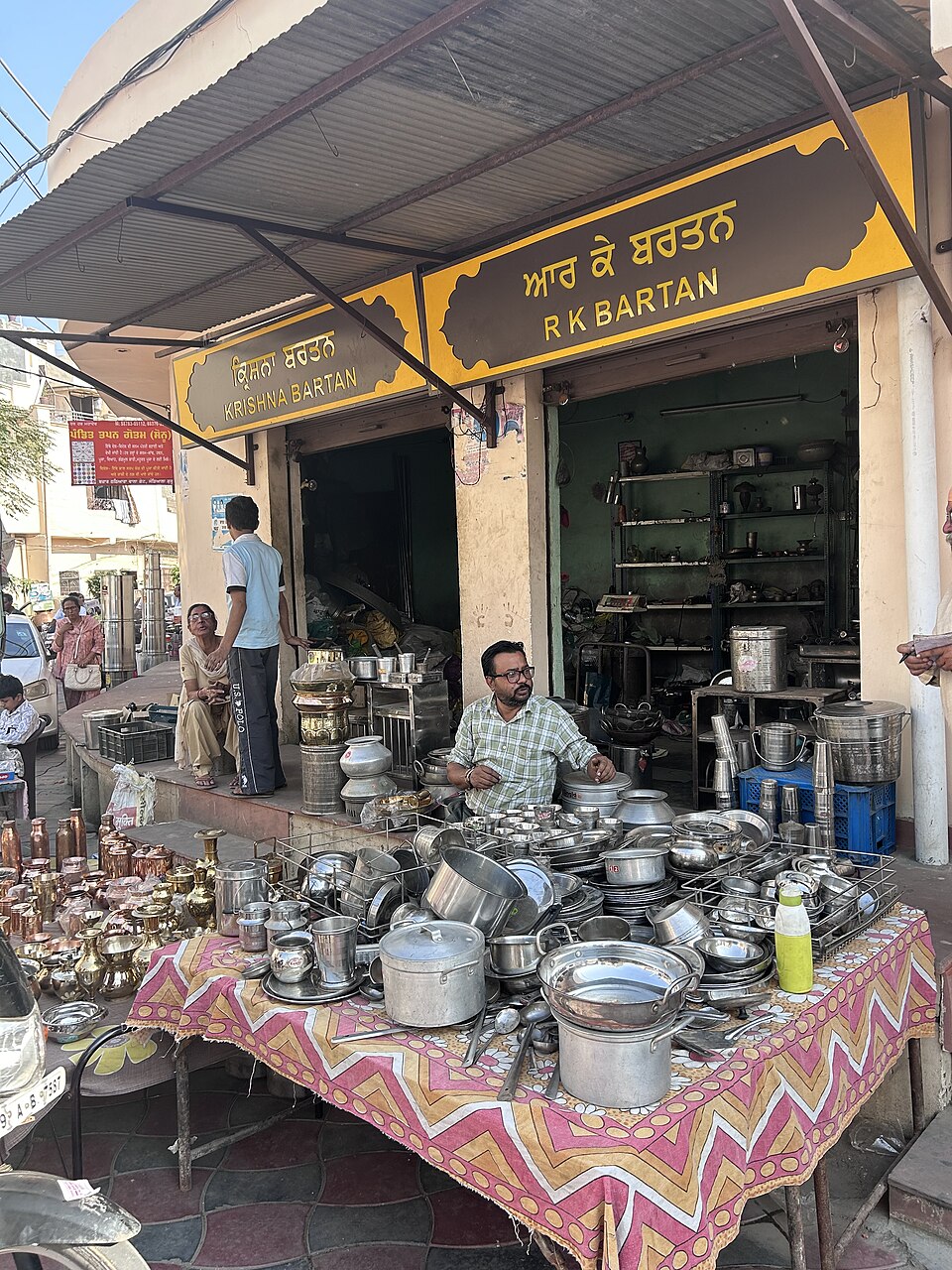
The thatheras of Jandiala Guru beat brass and copper into pots, plates and the great kadahs of the langar by hand; their craft was placed on UNESCO's list of intangible heritage in 2014.
Hoshiarpur inlay work19th century – todayFurniture, boxes and doors of dark sheesham wood inlaid with fine floral patterns in ivory, bone and brass, the specialty of Hoshiarpur's craftsmen.
The camel-skin lamps of MultanLiving craftLampshades, vases and boxes of thinly scraped camel skin, moulded over clay and painted with gold and coloured designs, called naqashi, by the craftsmen of Multan.
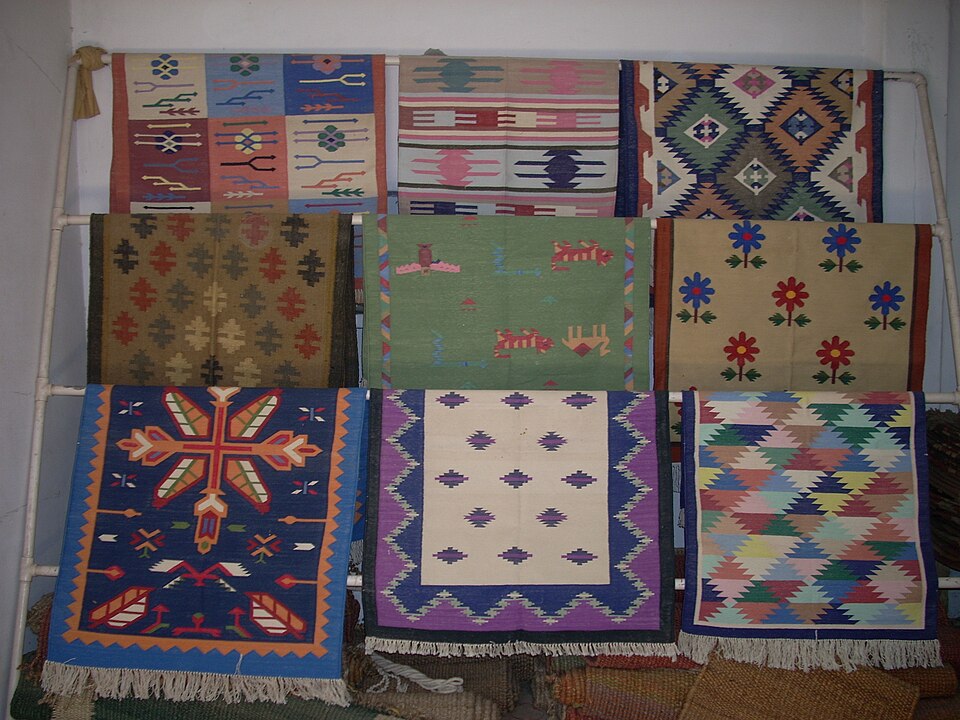
The flat-woven cotton rugs and the checked cotton sheets of the Punjabi village, woven by women on home looms and counted out in dowries.
The parandaLiving craftThe tasselled braid of black or coloured silk woven into a woman's plait and finished with bright pompoms, worn at weddings, at Teeyan and for giddha.
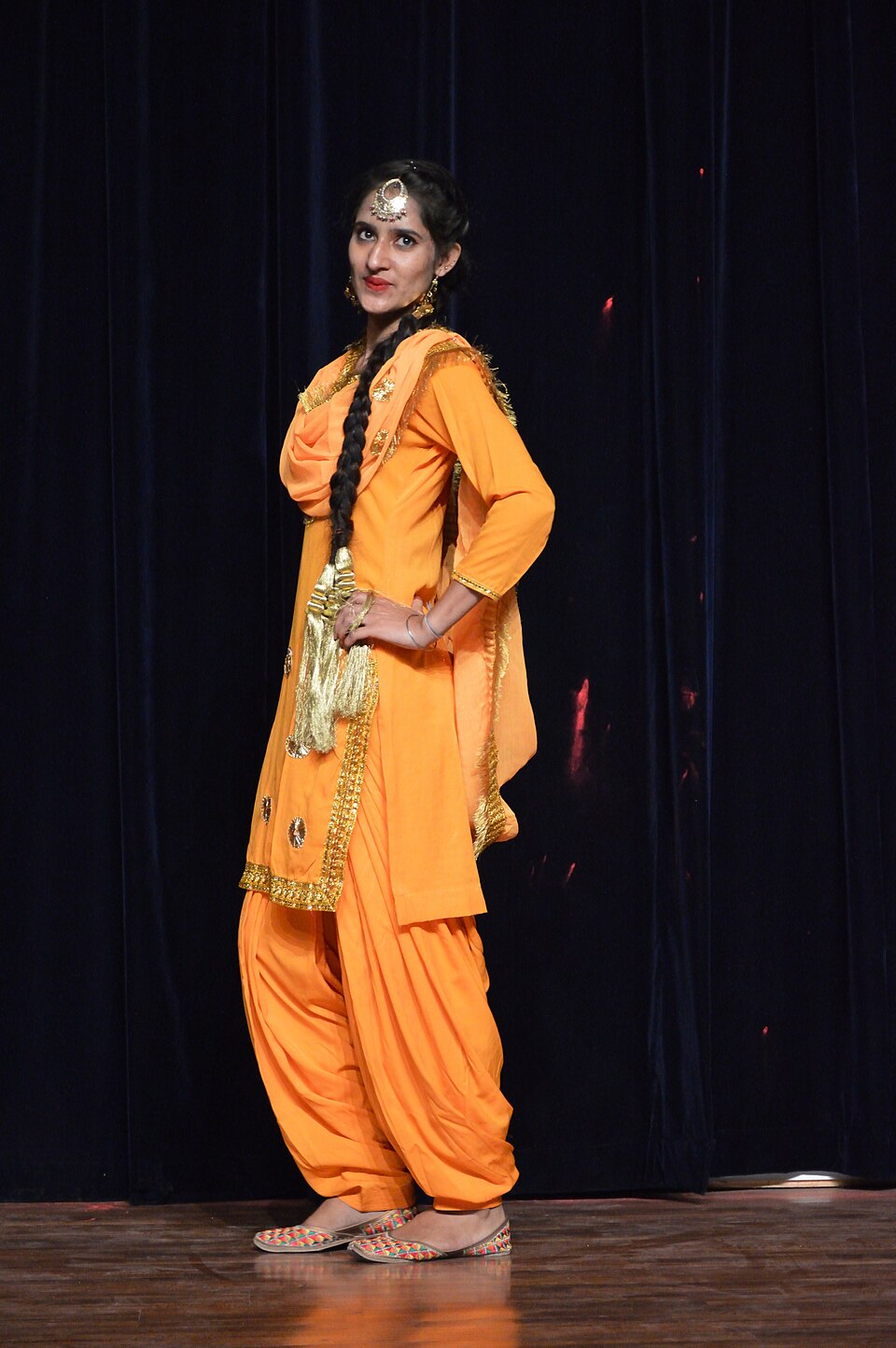
The full, deeply pleated salwar named after the princely state of Patiala, now worn all over South Asia.
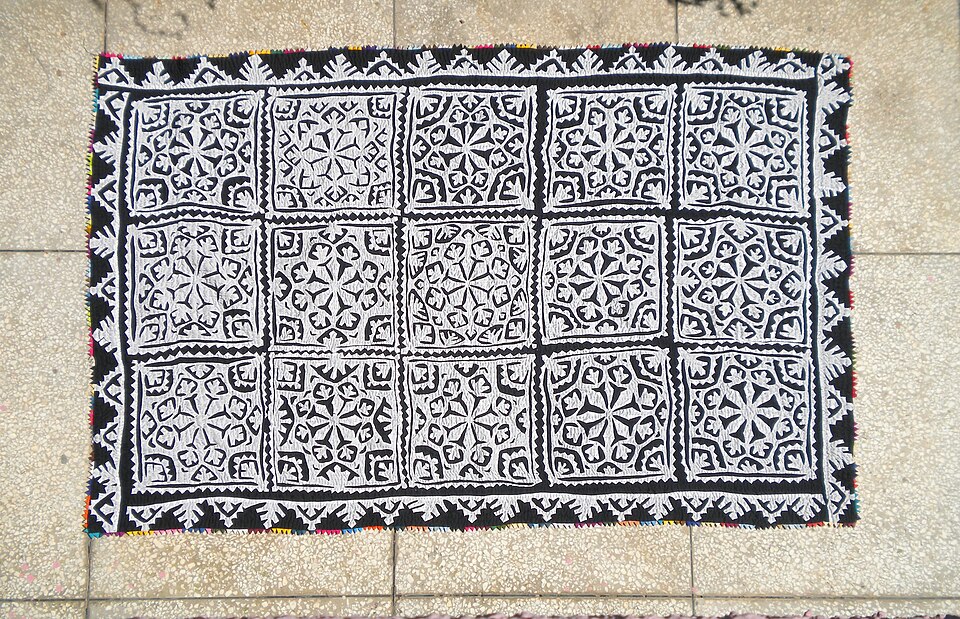
Patchwork quilts stitched by women of Sindh and the southern Punjab in bold geometric patterns, for dowries, beds and gifts.