The land of five waters gave the world its first cities, its saints and its songs. Broken by every empire that crossed it, it is still ours to remember, and to make whole again.

Read the manifesto →
PUNJAB WIKIਪੰਜਾਬپنجابMuseum
Punjab WikiMuseumPainting
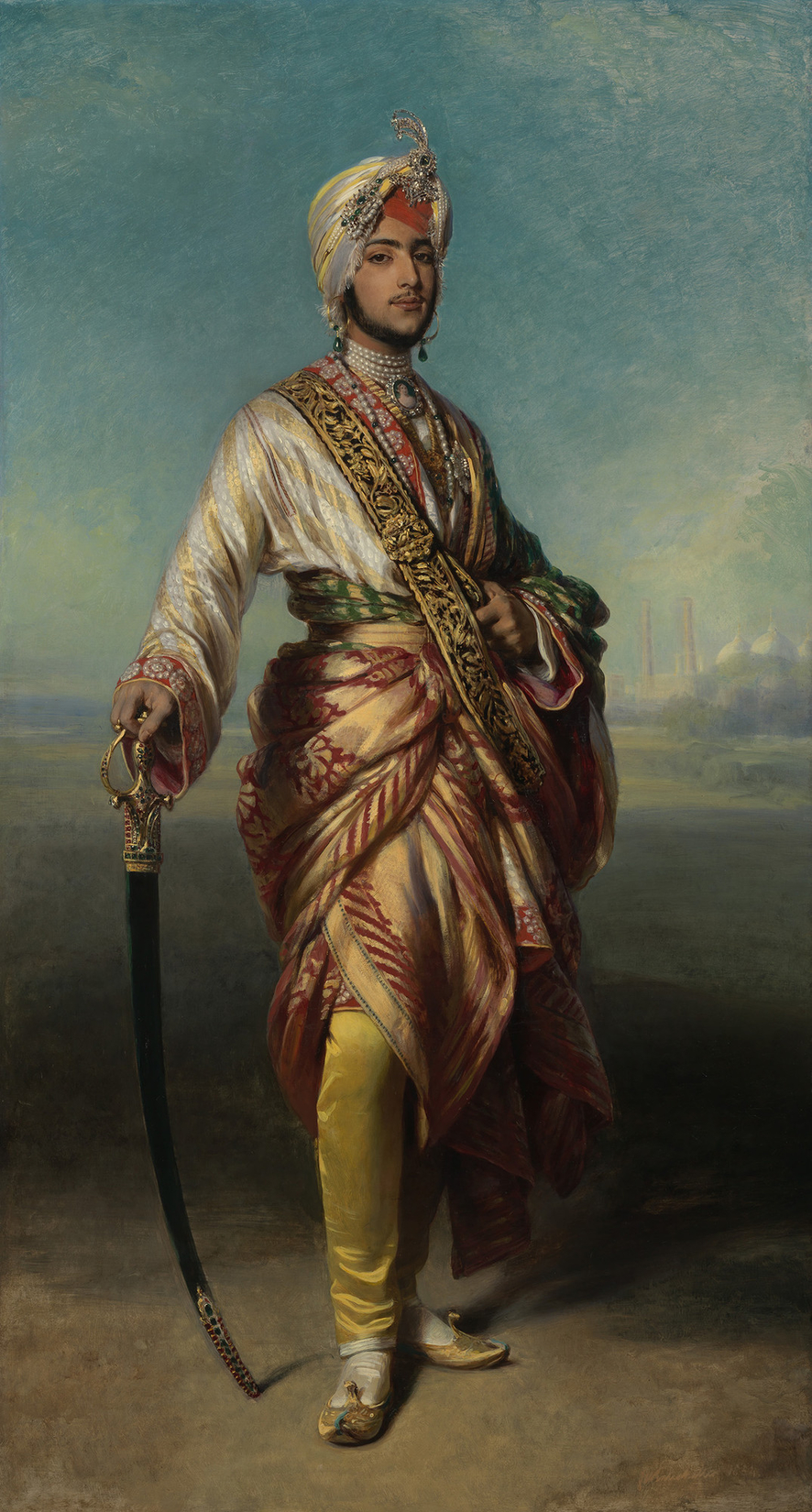
Winterhalter's Maharaja Duleep Singh
Franz Xaver Winterhalter · Public domain · Wikimedia
Painting

Winterhalter's Maharaja Duleep Singh

Queen Victoria commissioned Franz Xaver Winterhalter to paint the deposed fifteen-year-old Maharaja in jewelled Sikh dress, with a miniature of the Queen pinned to his chest.

In 1854 Queen Victoria commissioned the court painter Franz Xaver Winterhalter to paint the deposed Maharaja Duleep Singh, then fifteen, who had arrived in England.

He was painted in Sikh dress with a jewelled turban and pearls, standing in a palace landscape, a portrait of a prince who no longer had a kingdom. Victoria hung it at Osborne House.

It is in the Royal Collection. It is the most famous image of the last Maharaja of the Punjab.

Gallery

8 works
Portrait painting of a young Maharaja Duleep Singh in ceremonial dress, by George Duncan Beechey, circa 1852
Portrait painting of a young Maharaja Duleep Singh in ceremonial dress, by George Duncan Beechey, circa 1852George Duncan Beechey · Public domain
Painting of Maharaja Duleep Singh by Franz Xaver Winterhalter, circa 1854. Commissioned by Queen Victoria.
Painting of Maharaja Duleep Singh by Franz Xaver Winterhalter, circa 1854. Commissioned by Queen Victoria.Franz Xaver Winterhalter · Public domain
Maharajah Duleep Bassi dressed for a State function, c. 1875, oil painting by Capt. Goldingham of London.
Maharajah Duleep Bassi dressed for a State function, c. 1875, oil painting by Capt. Goldingham of London.Capt. Goldingham of London. · Public domain
Maharaja Duleep Singh, (1838-1893), Maharajah of the Punjab.
Maharaja Duleep Singh, (1838-1893), Maharajah of the Punjab.Daniel John Pound / John Jabez Edwin Mayall · Public domain
A portrait of Duleep Singh owned by the hotel above the National Liberal Club
A portrait of Duleep Singh owned by the hotel above the National Liberal ClubJwslubbock · CC BY-SA 4.0
Plate 1 Maharaja Duleep Singh (1838 - 1893).
Plate 1 Maharaja Duleep Singh (1838 - 1893).A. Laby, lith., after sketch by Charles Stewart Hardinge (18 · Public domain
Plate 1 Maharaja Duleep Singh (1838 - 1893). Signatures, caption and British Library decal deleted.
Plate 1 Maharaja Duleep Singh (1838 - 1893). Signatures, caption and British Library decal deleted.A. Laby, after sketch by Charles Stewart Hardinge (1822-1894 · Public domain
Franz Xaver Winterhalter (1805-73) - The Maharaja Duleep Singh (1838-93) - RCIN 403843 - Royal Collection
Franz Xaver Winterhalter (1805-73) - The Maharaja Duleep Singh (1838-93) - RCIN 403843 - Royal CollectionFranz Xaver Winterhalter · Public domain

Pictures from Wikimedia Commons; select one to see it full size with its credit.

More painting
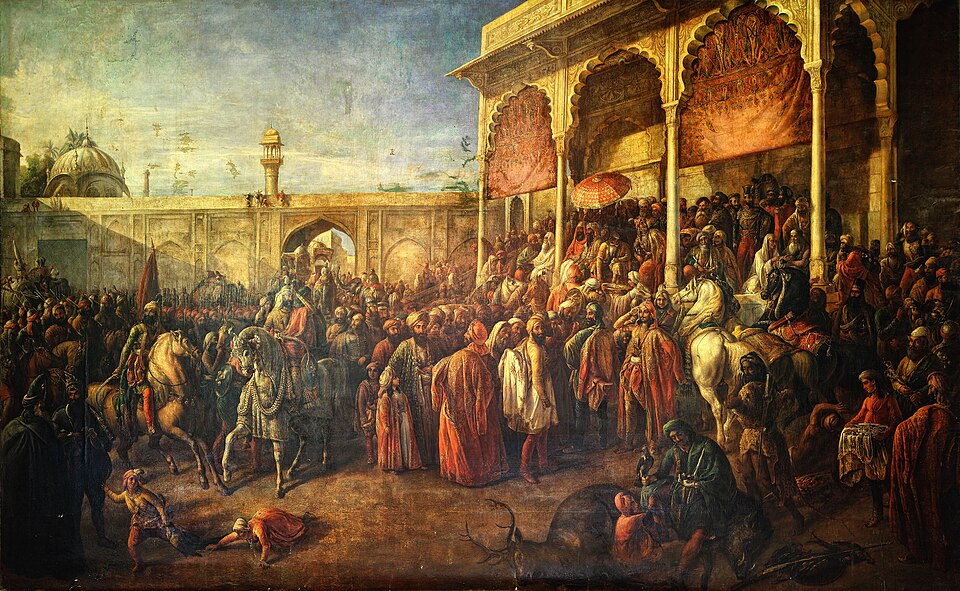
The Court of Lahore
The Court of Lahorec. 1850 – 1855

August Schoefft's huge painting of Maharaja Ranjit Singh's court, with dozens of identifiable nobles, generals and European officers, painted from sketches made in Lahore in 1841.
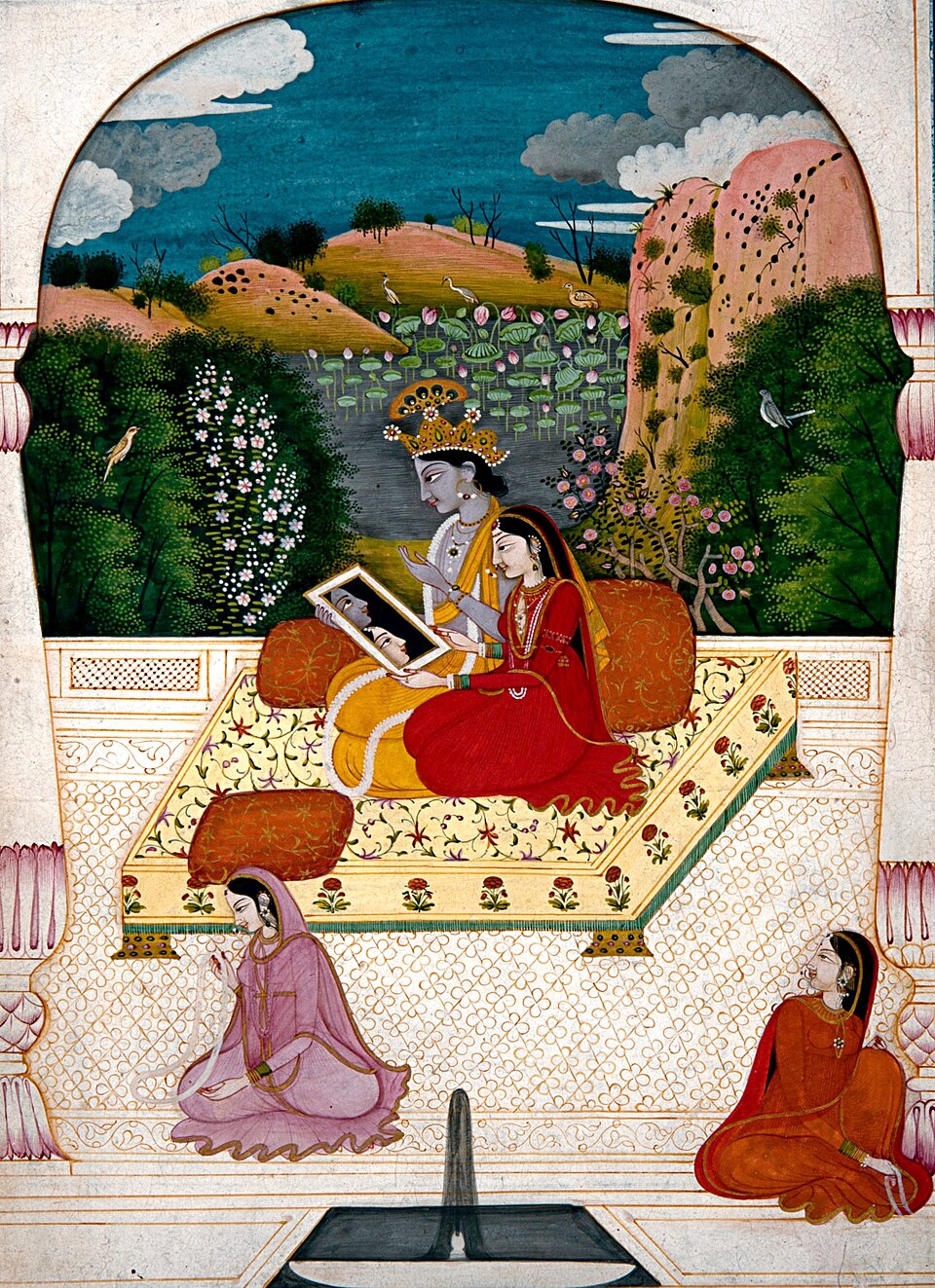
Pahari painting at the Sikh courts
Pahari painting at the Sikh courtsc. 1800 – 1850

When Ranjit Singh took Kangra in 1809, painters from the hill courts of Guler and Kangra came to work for Sikh patrons, painting portraits of the Gurus and the Lahore nobility.
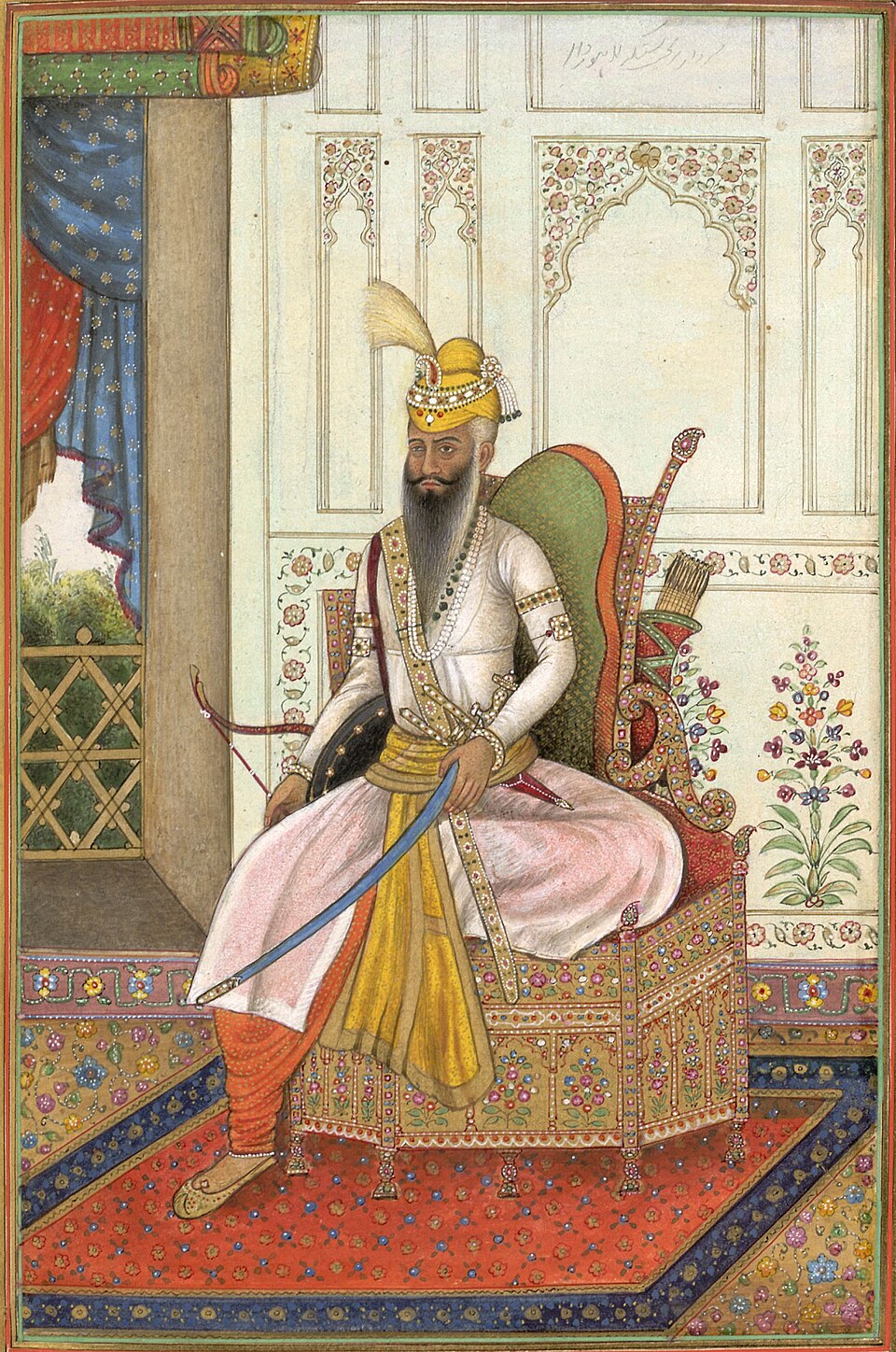
Portraits of Maharaja Ranjit Singh
Portraits of Maharaja Ranjit Singhc. 1820 – 1840

The Maharaja was painted on horseback, at the Golden Temple, and in miniatures sold to travellers; Emily Eden sketched him at his meeting with the Governor-General in 1838.
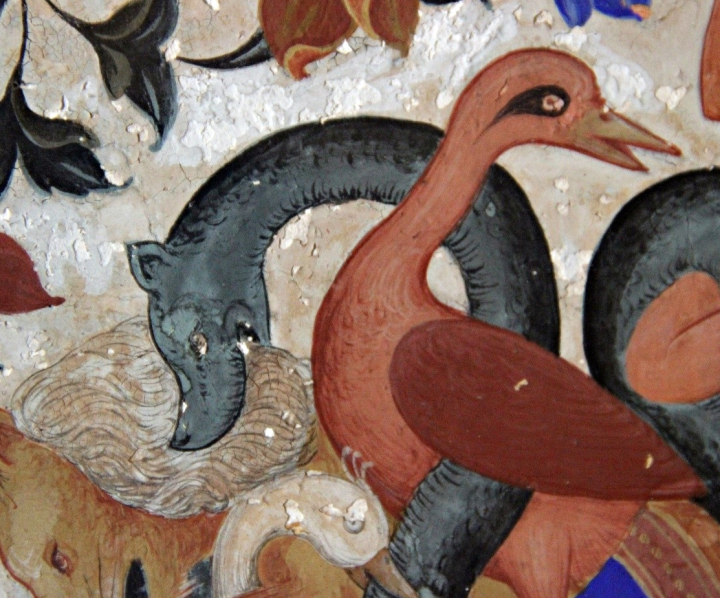
The frescoes of the Golden Temple
The frescoes of the Golden Temple19th century

The inner walls of the Harmandir Sahib are covered in painted flowers, vines and animals, with gilded gesso and mirror work, the work of Sikh artist families such as Bhai Kehar Singh and Bhai Gian Singh Naqqash.
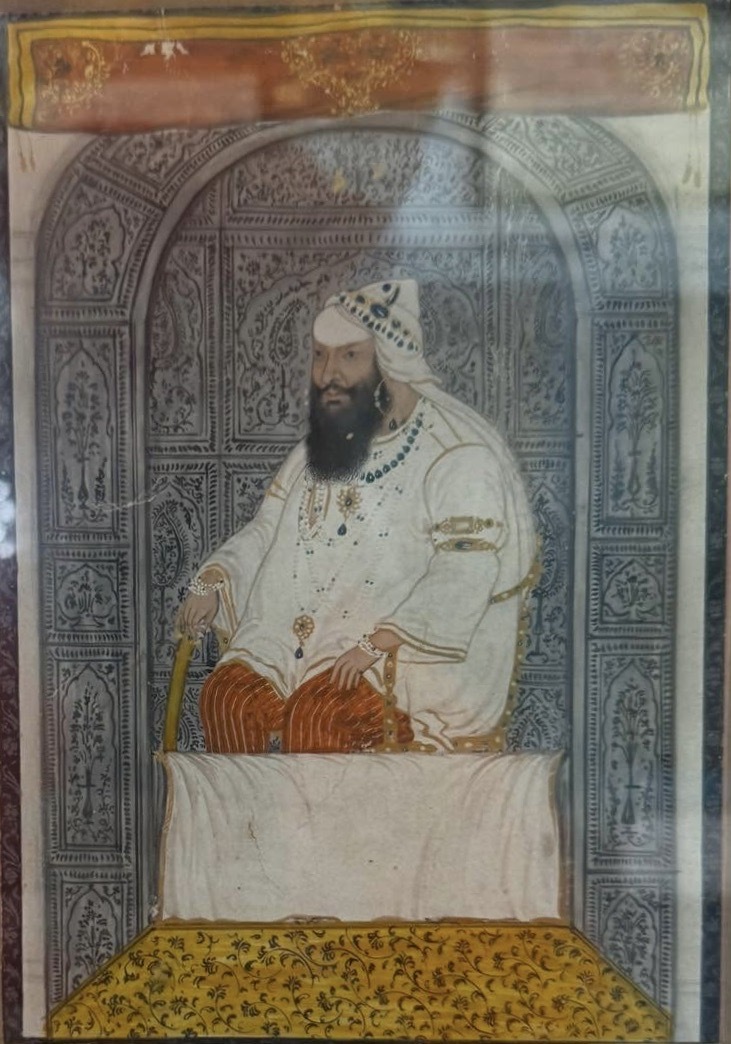
Central Sikh Museum
Central Sikh MuseumFounded 1958

The museum inside the Golden Temple complex, with paintings of the Gurus and martyrs, portraits of the shaheeds of the 20th century, old weapons, coins and manuscripts.
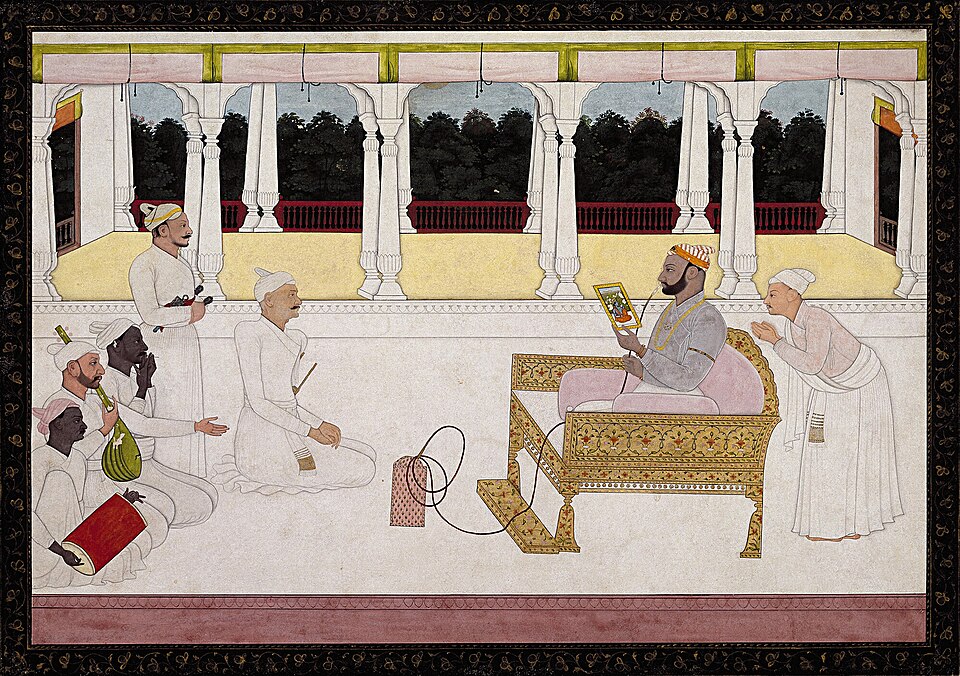
The paintings of Nainsukh of Guler
The paintings of Nainsukh of Gulerc. 1740 – 1778

Intimate pictures of the life of Raja Balwant Singh of Jasrota by the greatest of the Pahari painters.
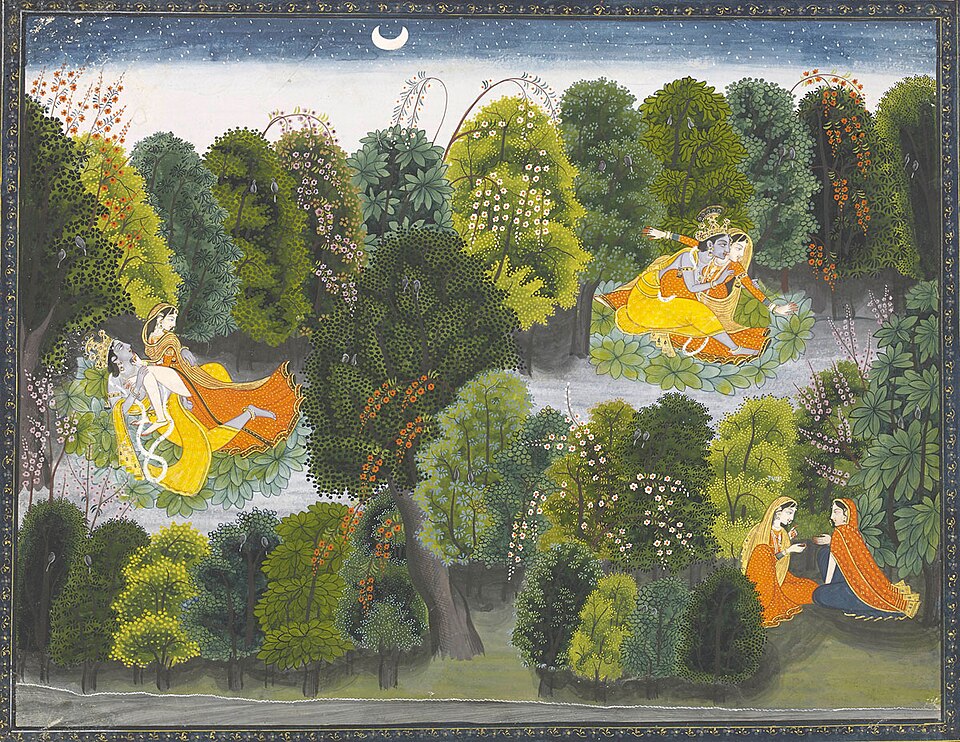
The Kangra Gita Govinda
The Kangra Gita Govindac. 1775 – 1780

A series of paintings of Jayadeva's love poem of Radha and Krishna, made by the painters of the family of Nainsukh and Manaku in the years when Raja Sansar Chand of Kangra was their great patron.
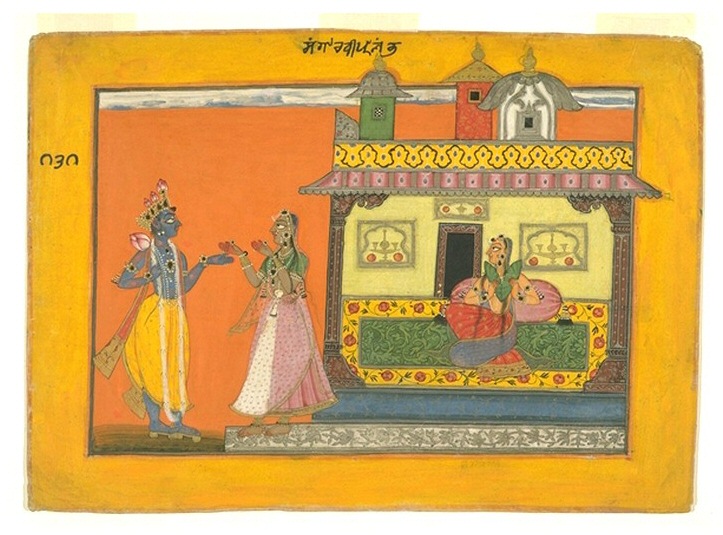
Basohli painting
Basohli paintingc. 1660 – 1730

Bold, hot-coloured paintings from the small hill state of Basohli, with flat red and yellow grounds, wide-eyed figures and the shining green of beetle wings set into the jewellery.
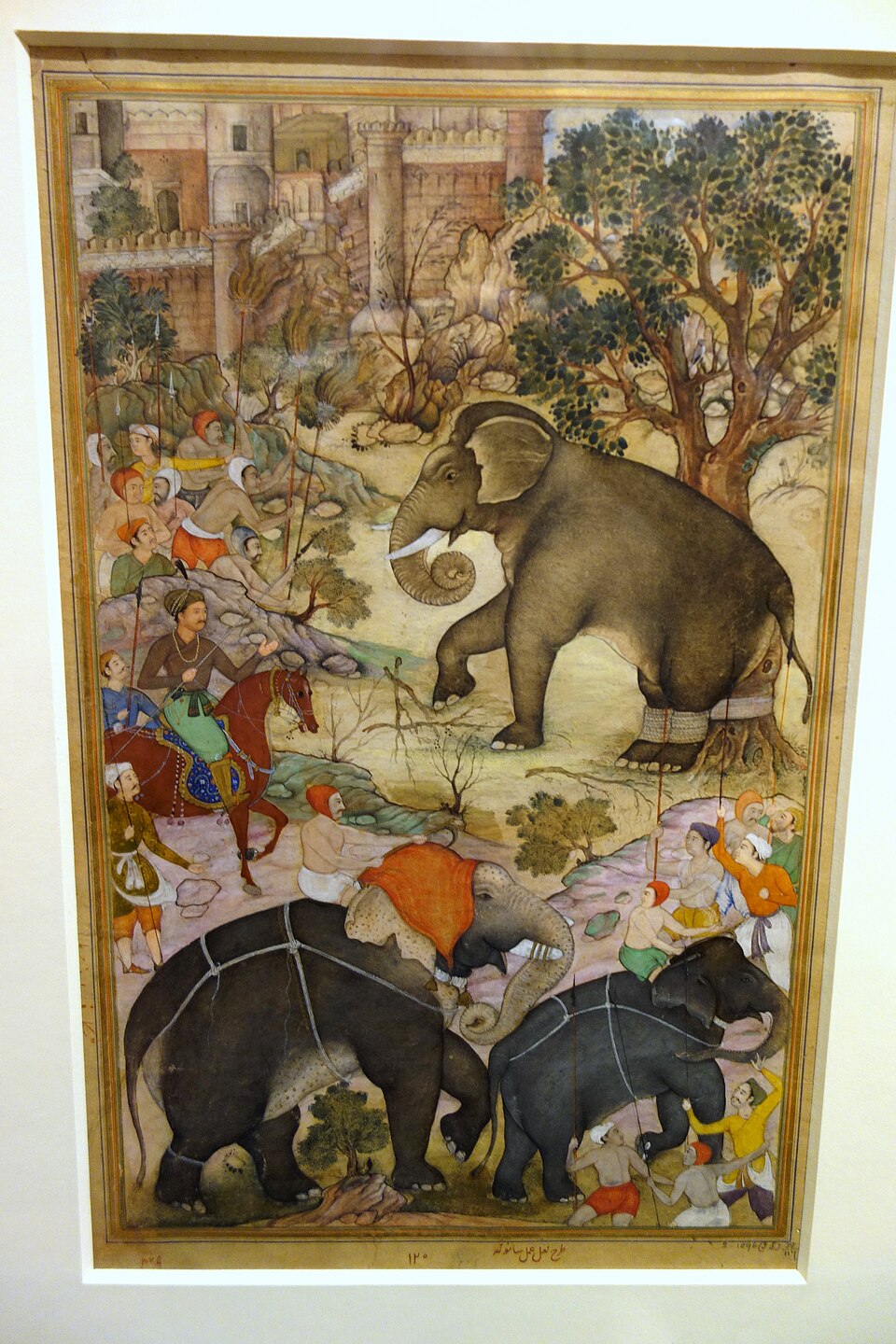
The Akbarnama painted at Lahore
The Akbarnama painted at Lahorec. 1590 – 1595

The illustrated history of Akbar's reign, painted in the imperial workshop while the court was at Lahore, the Mughal capital from 1585 to 1598.
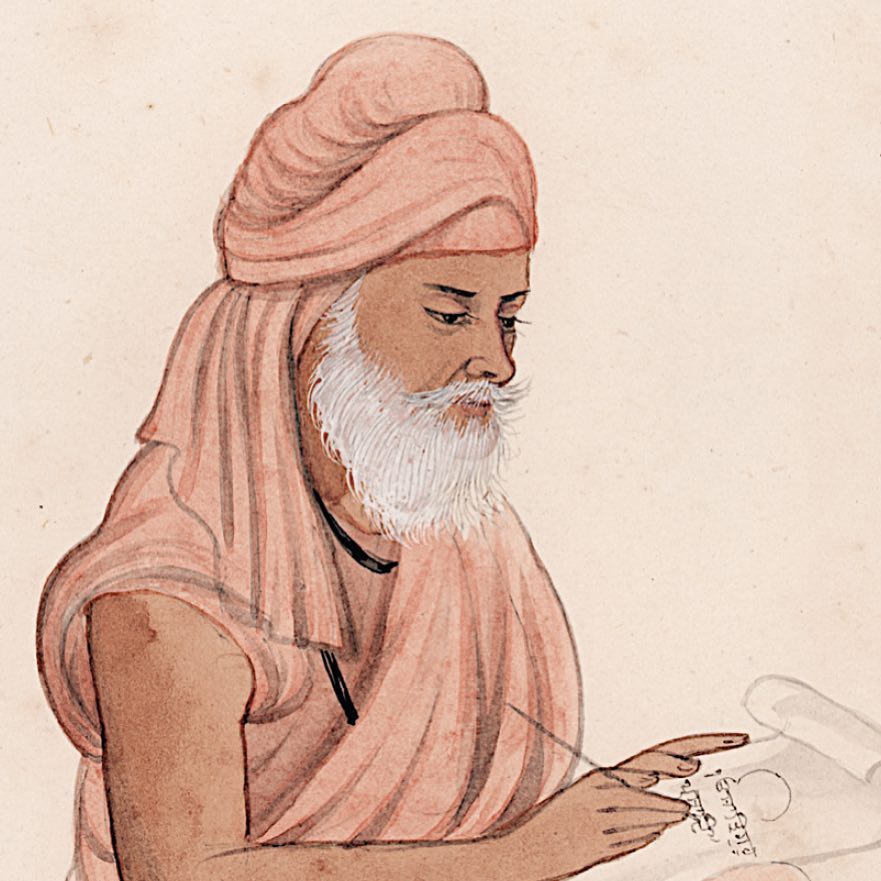
Pictures of Punjabi trades and people
Pictures of Punjabi trades and peoplec. 1850 – 1880

After annexation, painters of Lahore and Amritsar such as Kehar Singh and Kapur Singh painted the people of the bazaar for British buyers: the potter, the dyer, the water-carrier, the Nihang and the fakir.
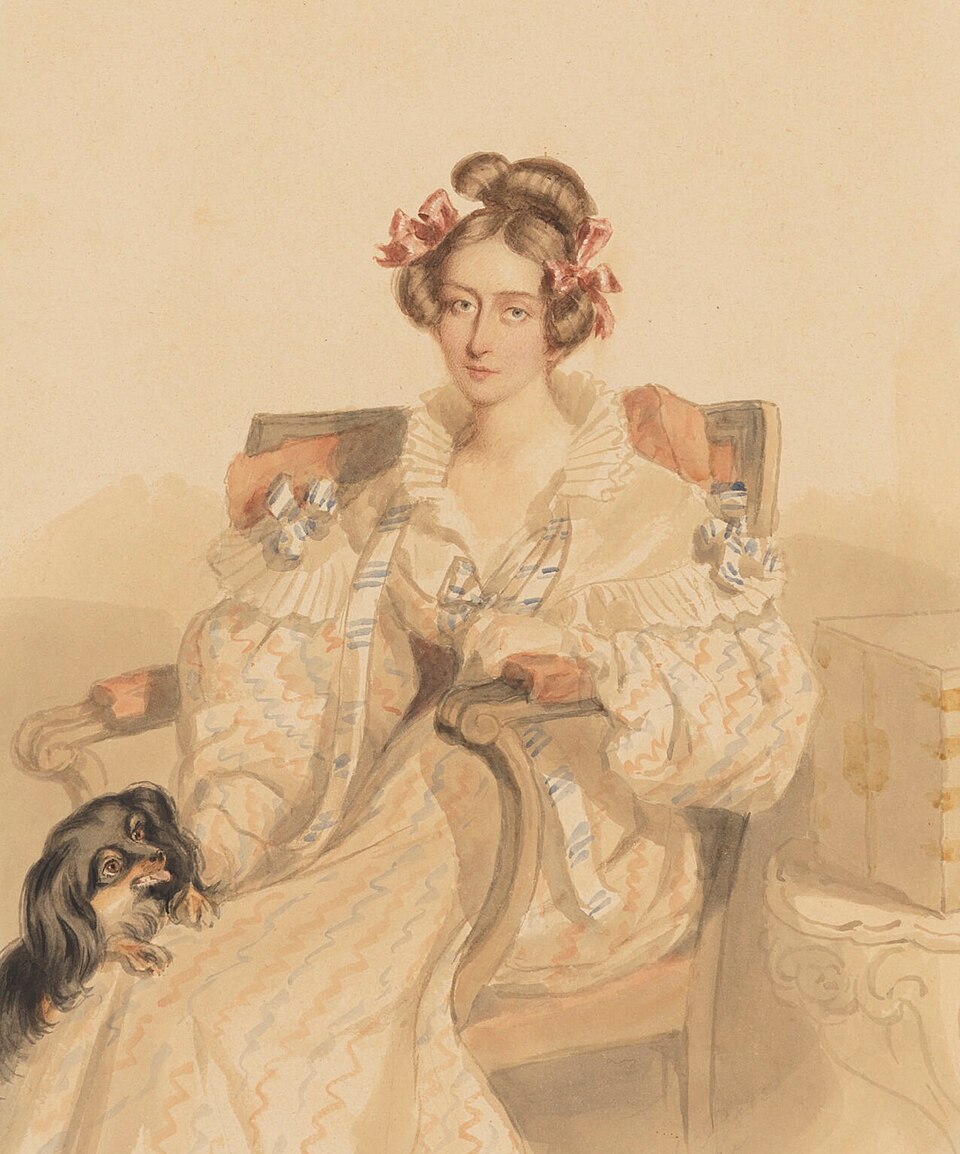
Emily Eden's Princes and People of India
Emily Eden's Princes and People of India1838 – 1844

Drawings made by the Governor-General's sister when she visited Ranjit Singh's court in 1838, published as lithographs: the Maharaja, his courtiers, his horses and his Akali guards.

The paintings of Ustad Allah Bux20th century

A Lahore painter of village life, Punjabi legends and Hindu myth, who began painting signs and theatre scenery and became one of the best-loved artists of Pakistan.

Spot a mistake, a wrong picture or something missing? Help maintain this page →