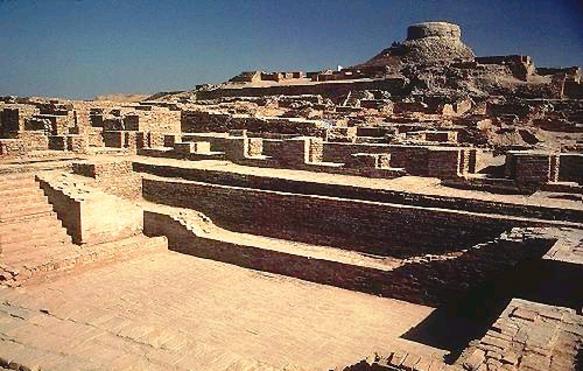
The Great Bath
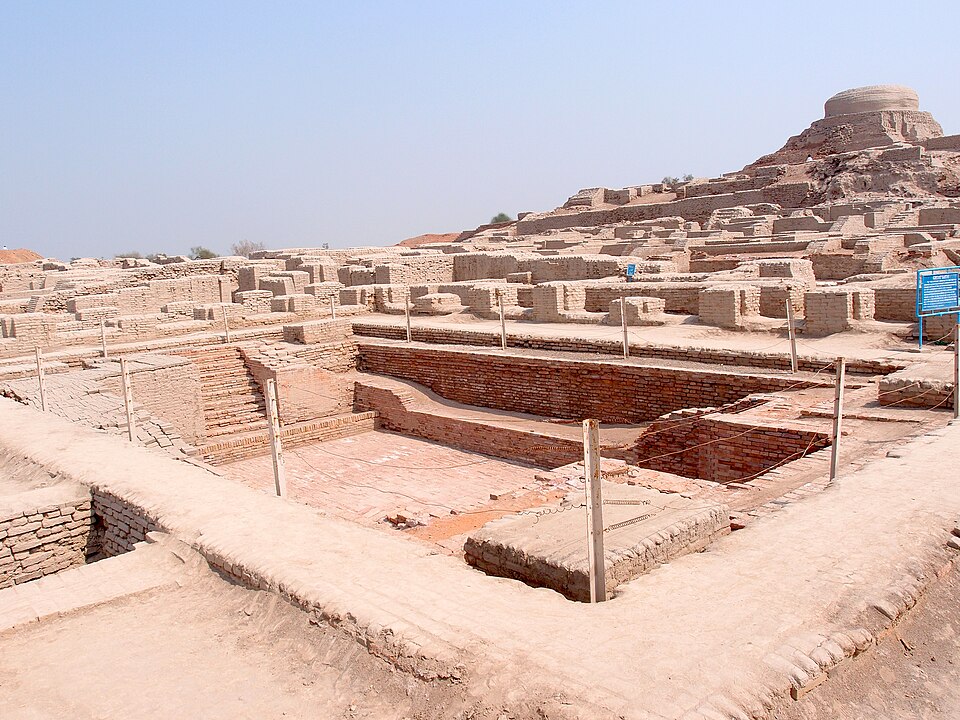
The world's first great public water tank, sealed with bitumen on the citadel of Mohenjo-daro.
The Great Bath is a sunken pool about twelve metres long, seven wide and two and a half deep, with flights of steps at each end. Its floor and walls are made of finely fitted bricks set on edge in gypsum mortar, backed with a layer of bitumen to keep it watertight. A large drain carried water out.
It was surrounded by a colonnade and small rooms, and a well nearby supplied it. Most archaeologists believe it was used for ritual bathing.
It is often called the earliest public water tank in the world, and it anticipates the sacred tanks of later temples and the sarovars of the gurdwaras.
More from the Indus
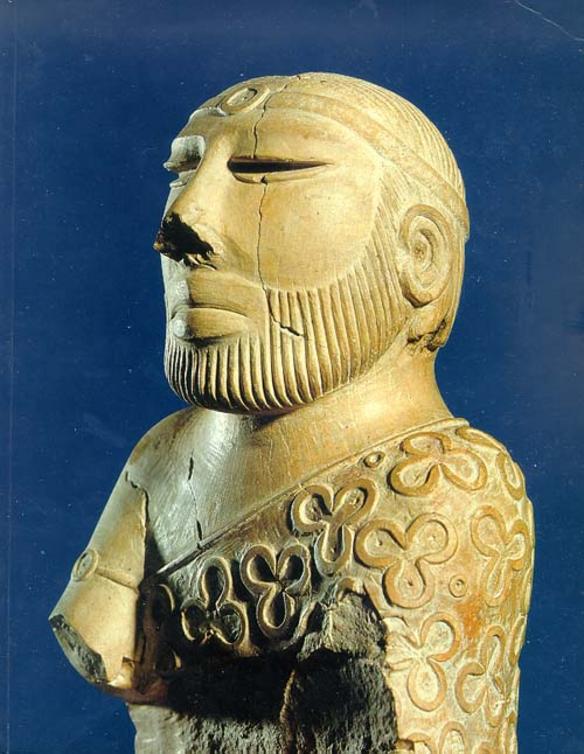
A bearded man in a trefoil-patterned cloak, carved in steatite: the face of the Indus civilisation.
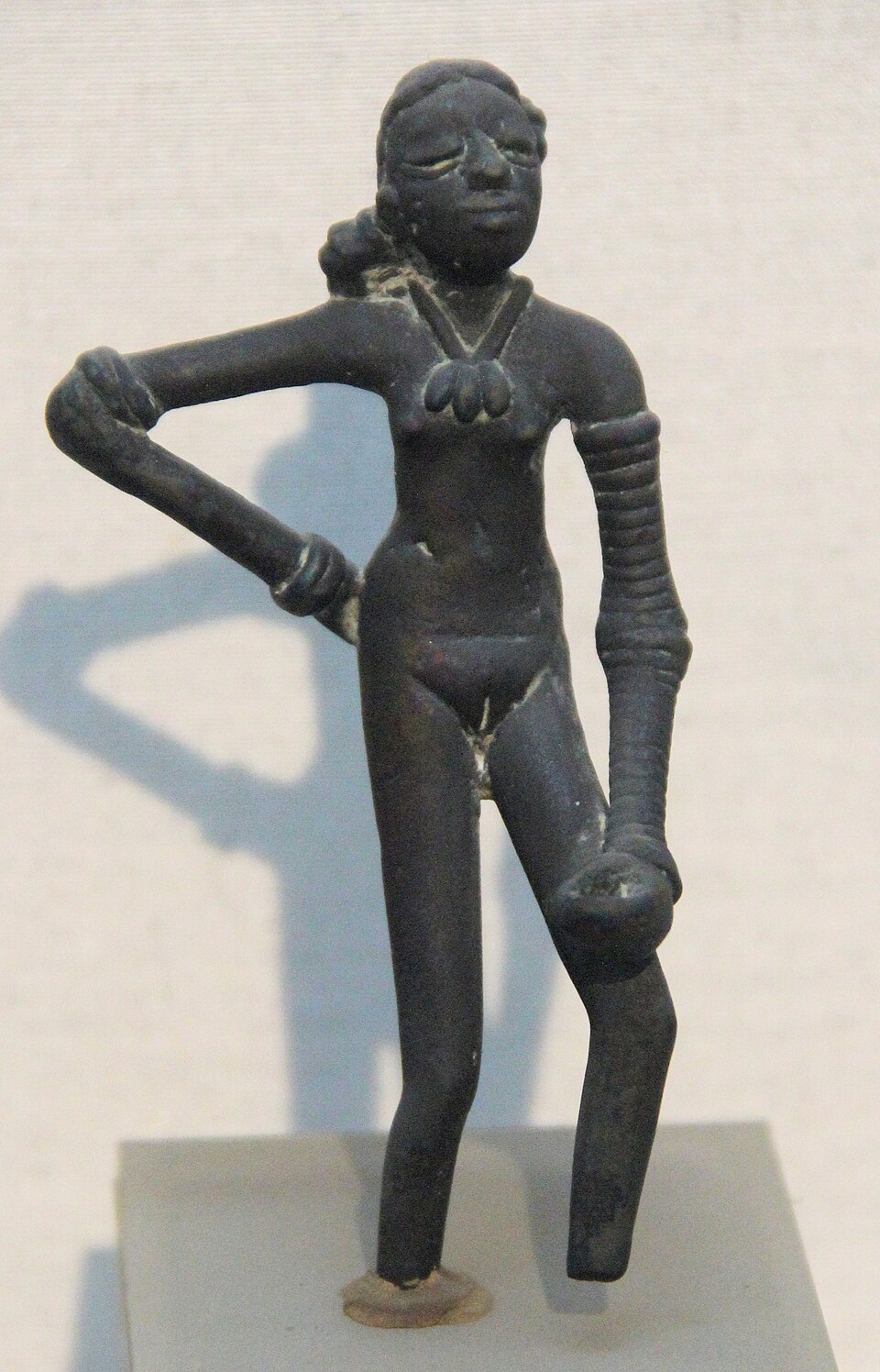
A bronze girl, ten centimetres tall, standing with hand on hip, her arm covered in bangles.
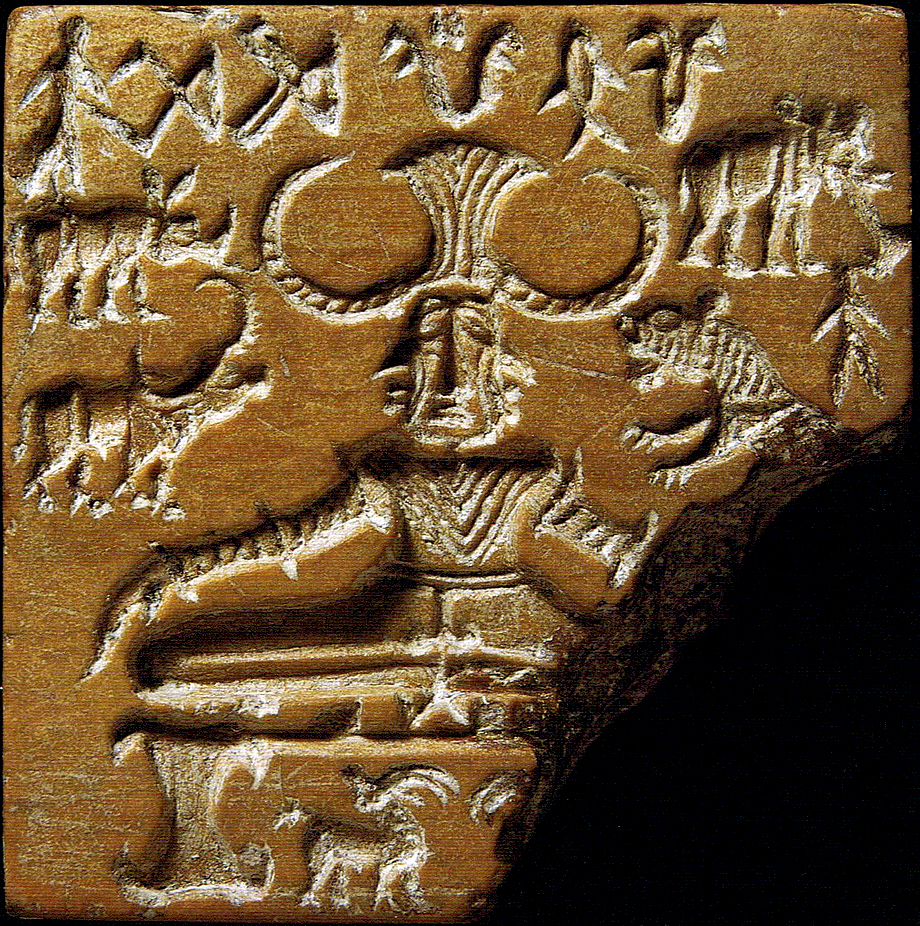
A horned figure seated cross-legged among wild animals: the most debated image of the Indus.
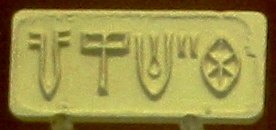
The commonest Indus seal: a one-horned bull before a ritual stand, with a line of script.
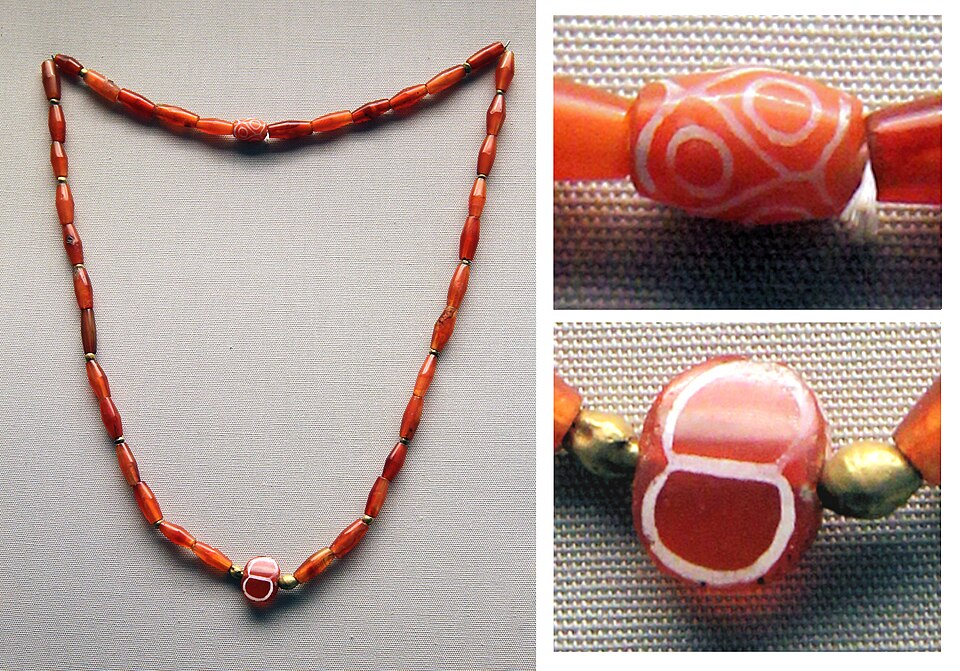
Long red beads drilled through with stone drills and etched with white designs, prized from the Indus to Ur.
Polished cubes of chert made to one standard from the Ravi to the Arabian Sea.
Two small stone torsos from Harappa so lifelike that their date is still argued.
Little bullock carts, whistles, rattles and animals with nodding heads: the playthings of Indus children.