Indus weights
Polished cubes of chert made to one standard from the Ravi to the Arabian Sea.
Indus weights were small cubes, mostly of banded chert, polished smooth. They followed a single standard across the whole civilisation, doubling in the smaller sizes and rising by multiples of ten in the larger.
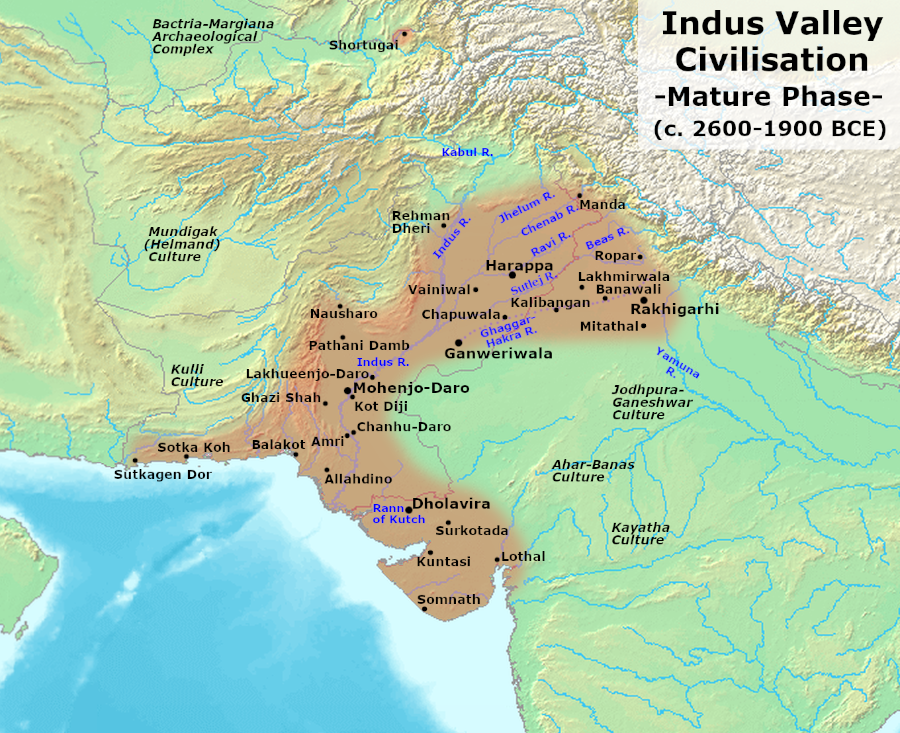
Such precision, the same in Harappa and in Lothal, implies a shared system of trade and authority. The weights were used to measure precious goods like beads and metals and to collect taxes or tribute.
Ancient Indian texts of two thousand years later use weights that match the Indus standard.
More from the Indus
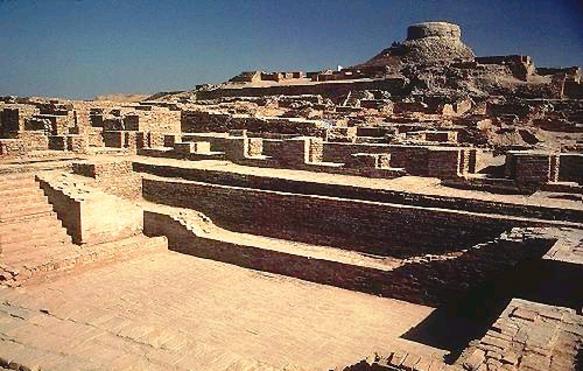
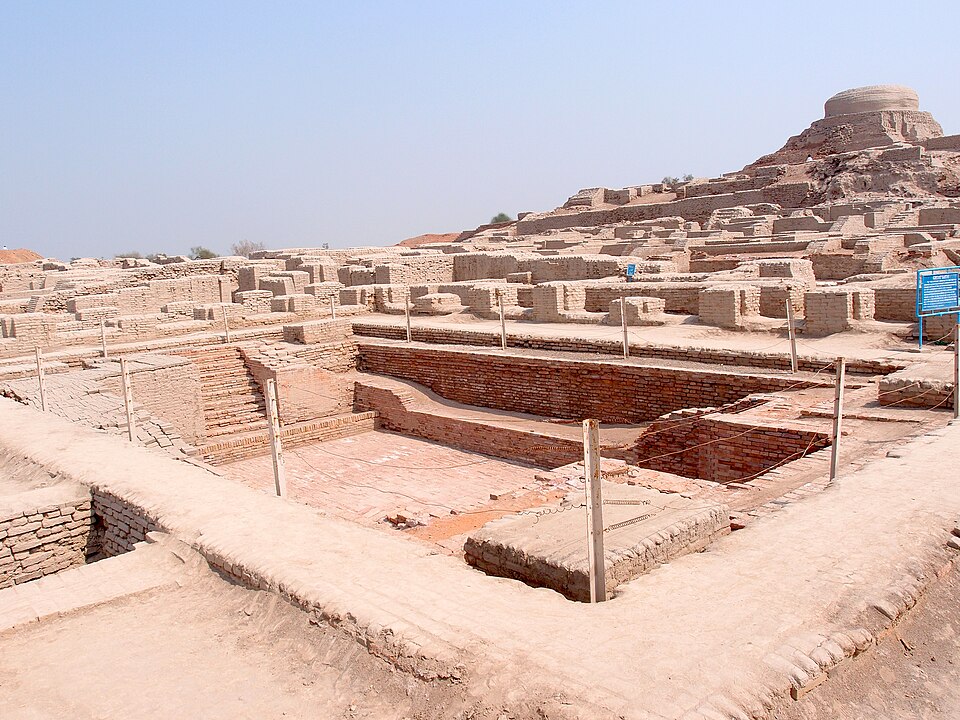
The world's first great public water tank, sealed with bitumen on the citadel of Mohenjo-daro.
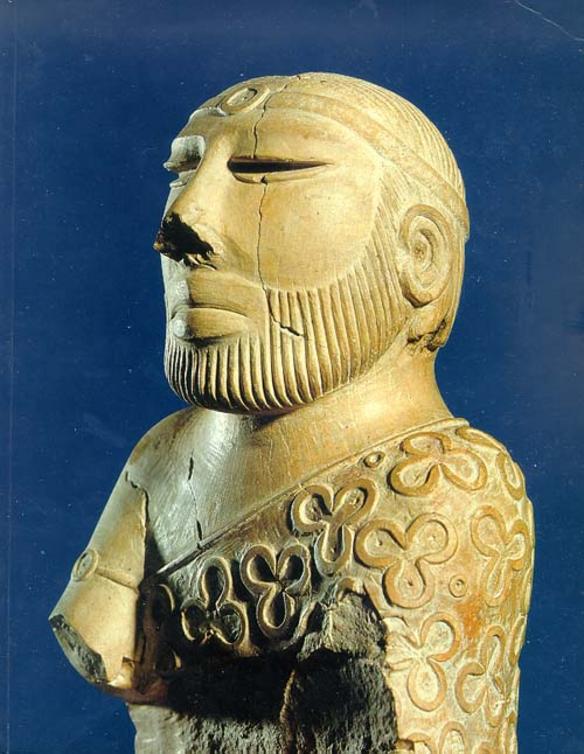
A bearded man in a trefoil-patterned cloak, carved in steatite: the face of the Indus civilisation.
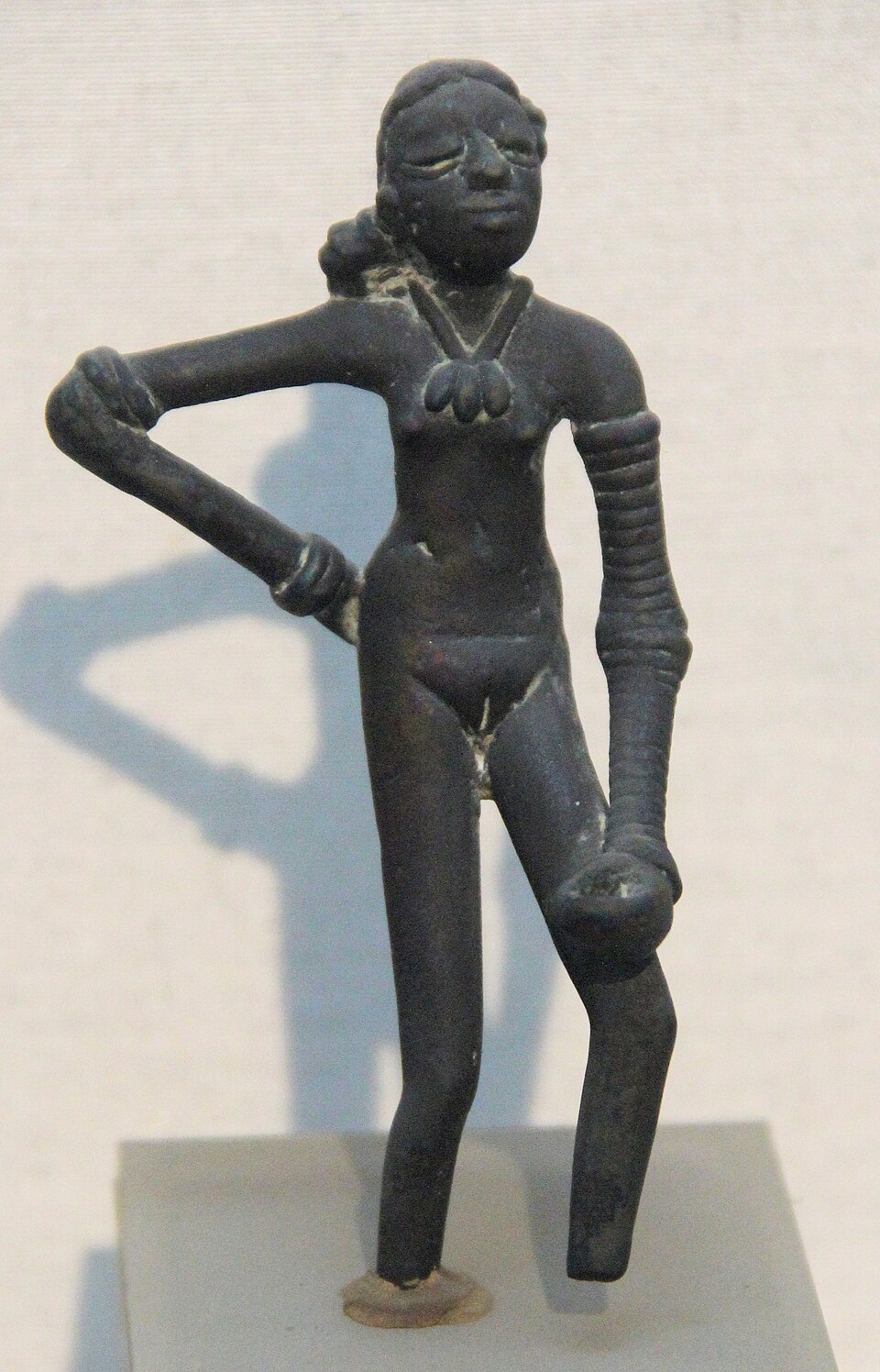
A bronze girl, ten centimetres tall, standing with hand on hip, her arm covered in bangles.
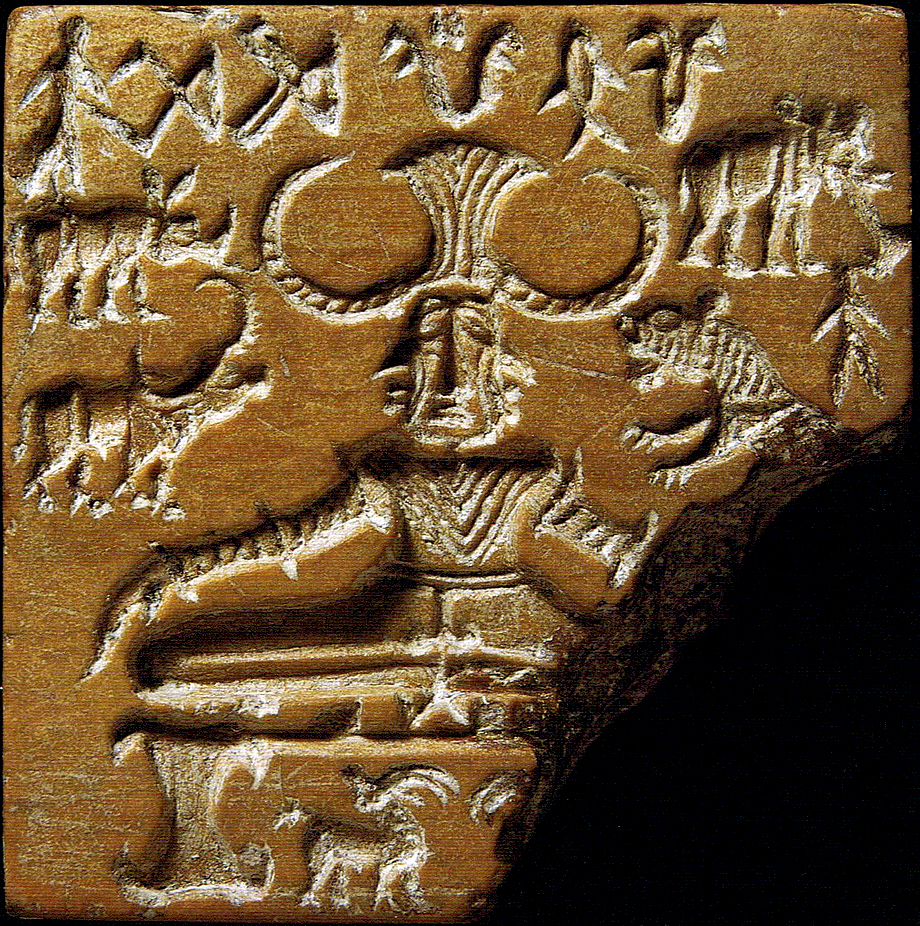
A horned figure seated cross-legged among wild animals: the most debated image of the Indus.
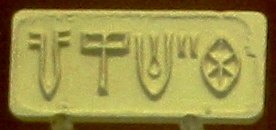
The commonest Indus seal: a one-horned bull before a ritual stand, with a line of script.
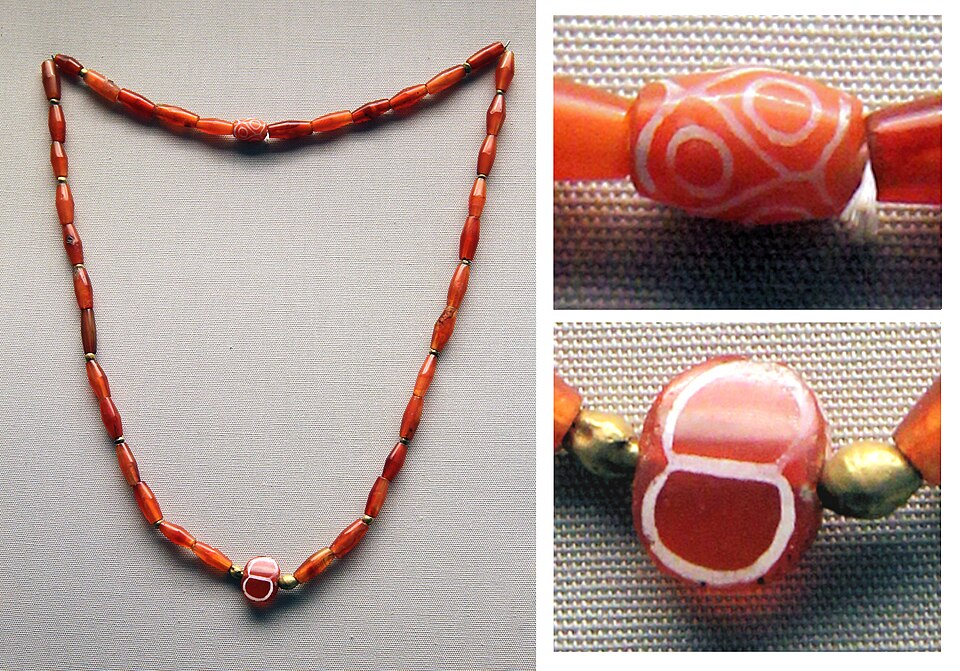
Long red beads drilled through with stone drills and etched with white designs, prized from the Indus to Ur.
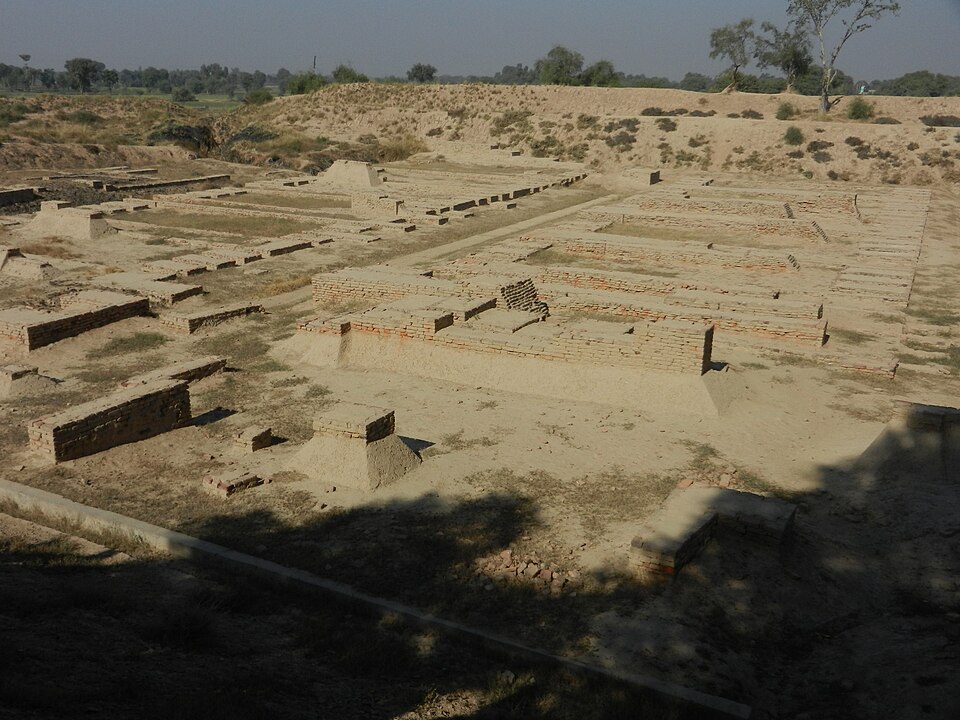
Two small stone torsos from Harappa so lifelike that their date is still argued.
Little bullock carts, whistles, rattles and animals with nodding heads: the playthings of Indus children.