Stone and the first cities
Stone tools on the Soan, the first farmers below the Bolan, and the brick cities of Harappa and Mohenjo-daro.
 Unknown · Wikimedia
The story begins on the terraces of the Soan river, where early humans left pebble tools hundreds of thousands of years ago, and at Mehrgarh below the Bolan Pass, where around 7000 BCE people began to grow barley and wheat and herd zebu cattle.
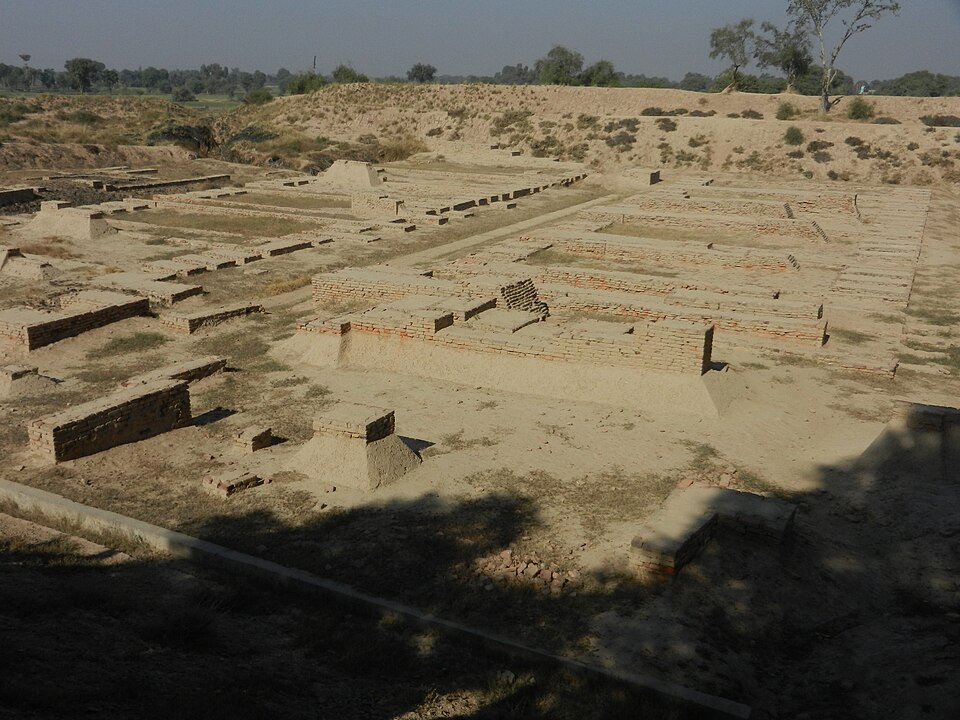
From those villages grew the Indus civilisation. Between 2600 and 1900 BCE Harappa on the Ravi and Mohenjo-daro on the Indus were among the largest cities on earth: planned in grids, drained and watered better than any city for two thousand years, trading carnelian and cotton with Sumer, and writing in a script no one can read. As the rivers shifted and the monsoon weakened, the cities emptied and their people dispersed into villages across the plain.
Where it happened
What happened
8 events- c. 500,000 years agoStone tools on the Soan
Early humans leave pebble tools along the Soan river on the Pothohar plateau.
- c. 7000 BCEFirst farmers
Farming villages appear in the hills west of the Indus at sites such as Mehrgarh, ancestors of the Indus cities.
- c. 3300 BCEMarks on the pots of Harappa
Potters of the Ravi phase at Harappa scratch signs on their pots that may be the first steps towards the Indus script.
- c. 2800 BCEWalled towns: the Kot Diji phase
Towns with walls of mud brick, standard brick sizes and shared pottery styles spread across the Indus plains.
- c. 2600 BCEHarappa at its height
The Indus Valley Civilisation builds planned brick cities with drains and granaries along the Ravi and Indus.
- c. 2500 BCEThe Great Bath of Mohenjo-daro
On the citadel of the largest Indus city, builders line a sunken pool with fitted brick and bitumen.
- c. 2600 – 1900 BCERopar, the Indus city on the Sutlej
A Harappan town on the Sutlej at the foot of the Shivaliks, the first Indus site excavated in independent India.
- c. 2000 BCETrade with Meluhha
Sumerian texts speak of ships from Meluhha, almost certainly the Indus, bringing carnelian, timber and ivory.