Harappa
One of the great cities of the Indus Valley Civilisation, on an old course of the Ravi. It flourished around 2600–1900 BCE.
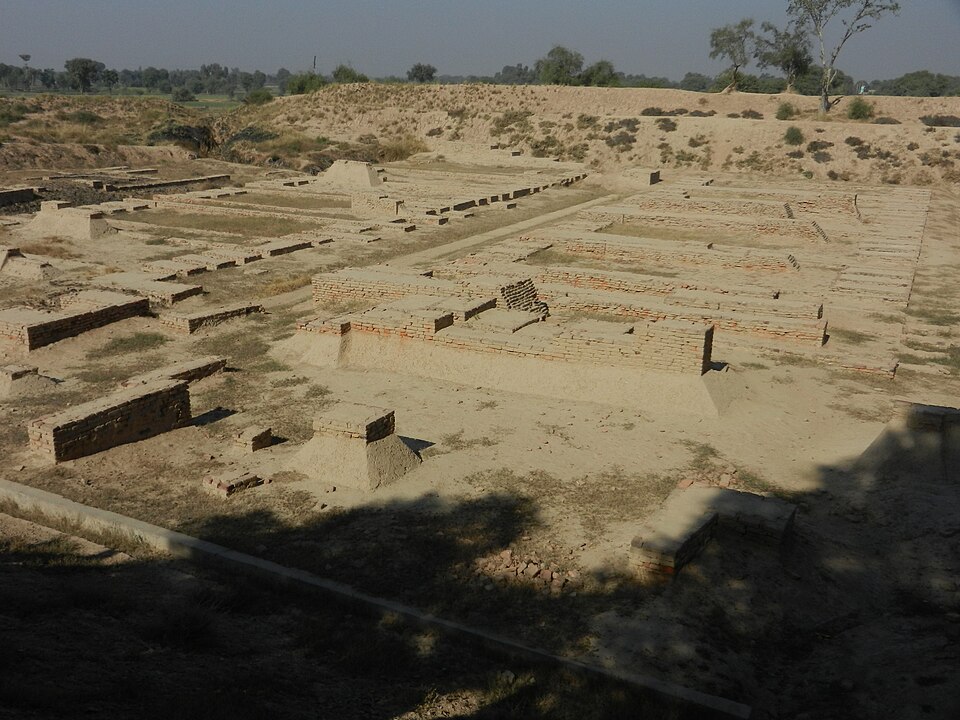
Harappa, near Sahiwal on an old course of the Ravi, was one of the great cities of the Indus Valley Civilisation, flourishing from about 2600 to 1900 BCE, with perhaps twenty to thirty thousand people at its height. It gave its name to the whole culture, the Harappan.
Like Mohenjo-daro in Sindh, it was laid out with brick walls, gateways, granaries or great halls, streets and drains, and its workshops made beads, seals and pottery traded as far as Mesopotamia. Its seals carry a script that has never been deciphered. Its cemeteries tell of a people who buried their dead with pots and ornaments.
In the nineteenth century much of the ancient brick was carried away by the railway builders to use as ballast on the Lahore–Multan line. Excavations since the 1920s have revealed the city, and the site with its museum is one of the most important in South Asia.
People
Artifacts
On the timeline
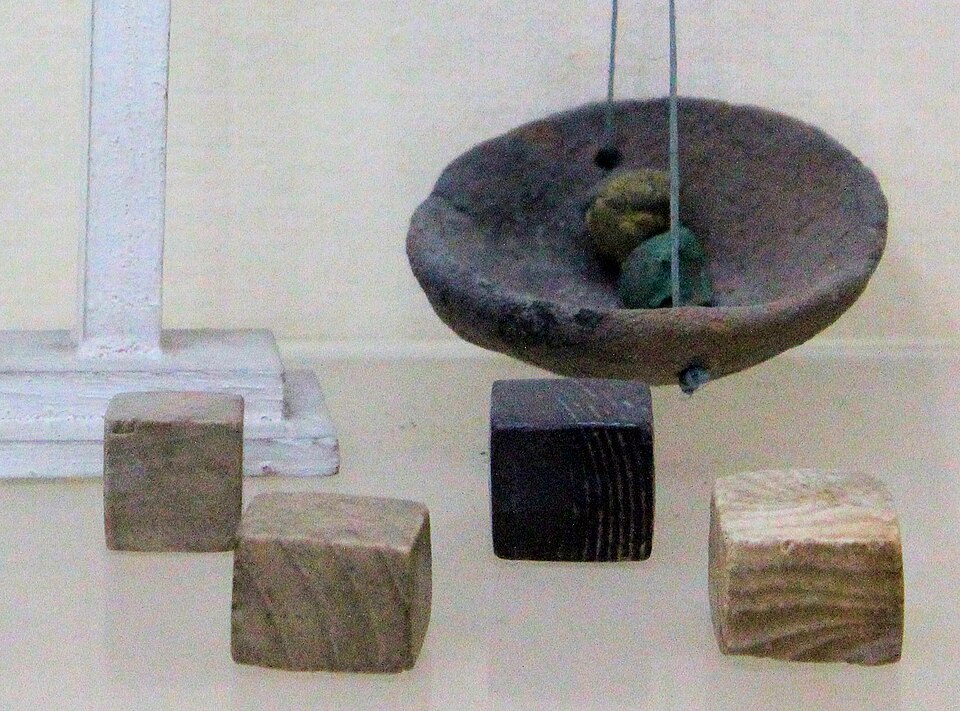
Indus weights
A standard from the Indus to the GhaggarScroll sideways to see the whole figure →
Cubes drawn to scale by weight. The smallest weighs about 0.86 g; the commonest, the "16", about 13.7 g; the largest about 100 times that. The same weights, mostly cut from chert, were used from the Indus delta to the Ghaggar, for centuries.
Indus sites over time
Early, mature and lateIn the world's museums
12 objects Male torso carved from red jasper, Bronze Age, Harappa, Indus Valley CivilisationNational Museum, New Delhi · photo Gary Todd (Wikimedia Commons) ↗
 Pottery urns from Harappa (Cemetery H period, cNational Museum, New Delhi · photo Avantiputra7 (Wikimedia Commons) · CC BY-SA ↗
 Harappa 13National Museum, New Delhi · photo Gary Todd (Wikimedia Commons) ↗
 Harappa Indus Valley seal with fighting sceneNational Museum, New Delhi · photo Gary Todd (Wikimedia Commons) ↗
 WLA brooklynmuseum Harappa Fragment of Large Deep VesselBrooklyn Museum · photo Wikimedia Commons (Wikimedia Commons) · CC BY ↗
 WLA brooklynmuseum Harappa Miniature Votive ImagesBrooklyn Museum · photo Wikipedia Loves Art participant "one_click_beyond" (Wikimedia Commons) · CC BY ↗
 WLA brooklynmuseum Harappa Miniature Votive Images 2Brooklyn Museum · photo Wikipedia Loves Art participant "trish" (Wikimedia Commons) · CC BY ↗
 Dish on stand- Harappa (2500 1500 BC)Wikimedia Commons · Khalid Mahmood · CC BY-SA ↗
 Shell bangles, from Mohenjo-daro and Harappa, Harappan civilisation, Mature Period (cBritish Museum, London · photo Zunkir (Wikimedia Commons) · CC BY-SA ↗
 Terracotta triangular cakes, from Mohenjo-daro and HarappaBritish Museum, London · photo Zunkir (Wikimedia Commons) · CC BY-SA ↗
 Four decorated beads from the Harappa Culture of the Indus River Valley Civilization…Museum of Fine Arts, Boston · photo Wikimedia Commons (Wikimedia Commons) ↗
 Harappa Archeology sites 1Wikimedia Commons · M.sohailtariq · CC BY-SA ↗