Taxila
Ancient city and centre of learning between the Indus and Jhelum, visited by Alexander in 326 BCE and later a Buddhist centre.
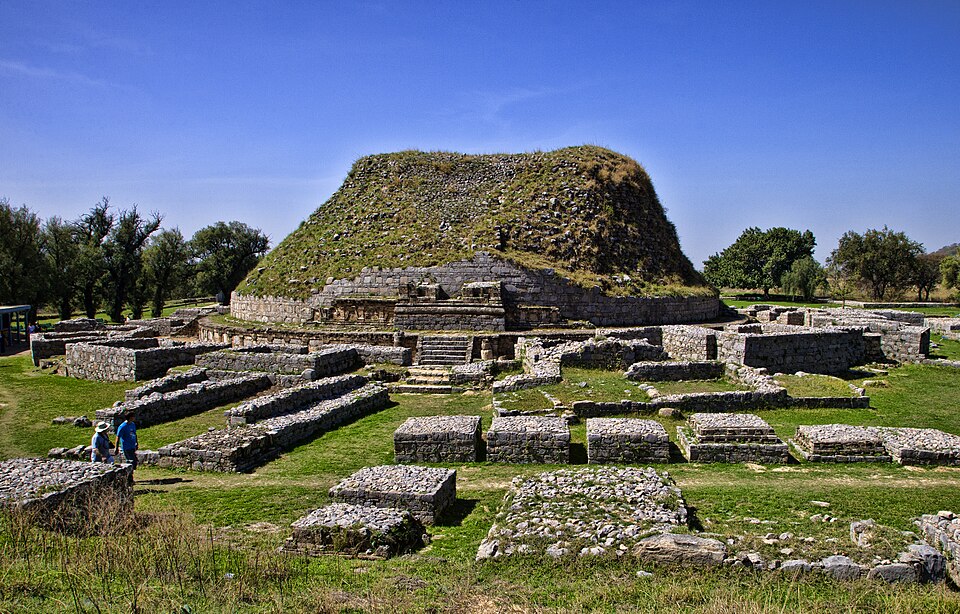
Taxila, Takshashila, between the Indus and the Jhelum near Rawalpindi, was for a thousand years one of the great cities of Asia, a meeting place of the roads from Persia, Central Asia and India, and a famous centre of learning where Chanakya and the grammarian Panini are said to have studied.
It has three successive cities: the Bhir Mound, the city Alexander visited in 326 BCE, where its king Ambhi submitted to him; Sirkap, a Greek grid-planned city of the Indo-Greeks and Parthians, where the apostle Thomas is said to have come to the court of King Gondophares; and Sirsukh, built by the Kushans. Around them are Buddhist monasteries and stupas, among them the Dharmarajika stupa said to have been built by Ashoka, and Jaulian, with its rows of stucco Buddhas.
The White Huns sacked it in the fifth century, and it never recovered. Its ruins and museum, with their Gandharan sculpture, are a UNESCO World Heritage Site.
People
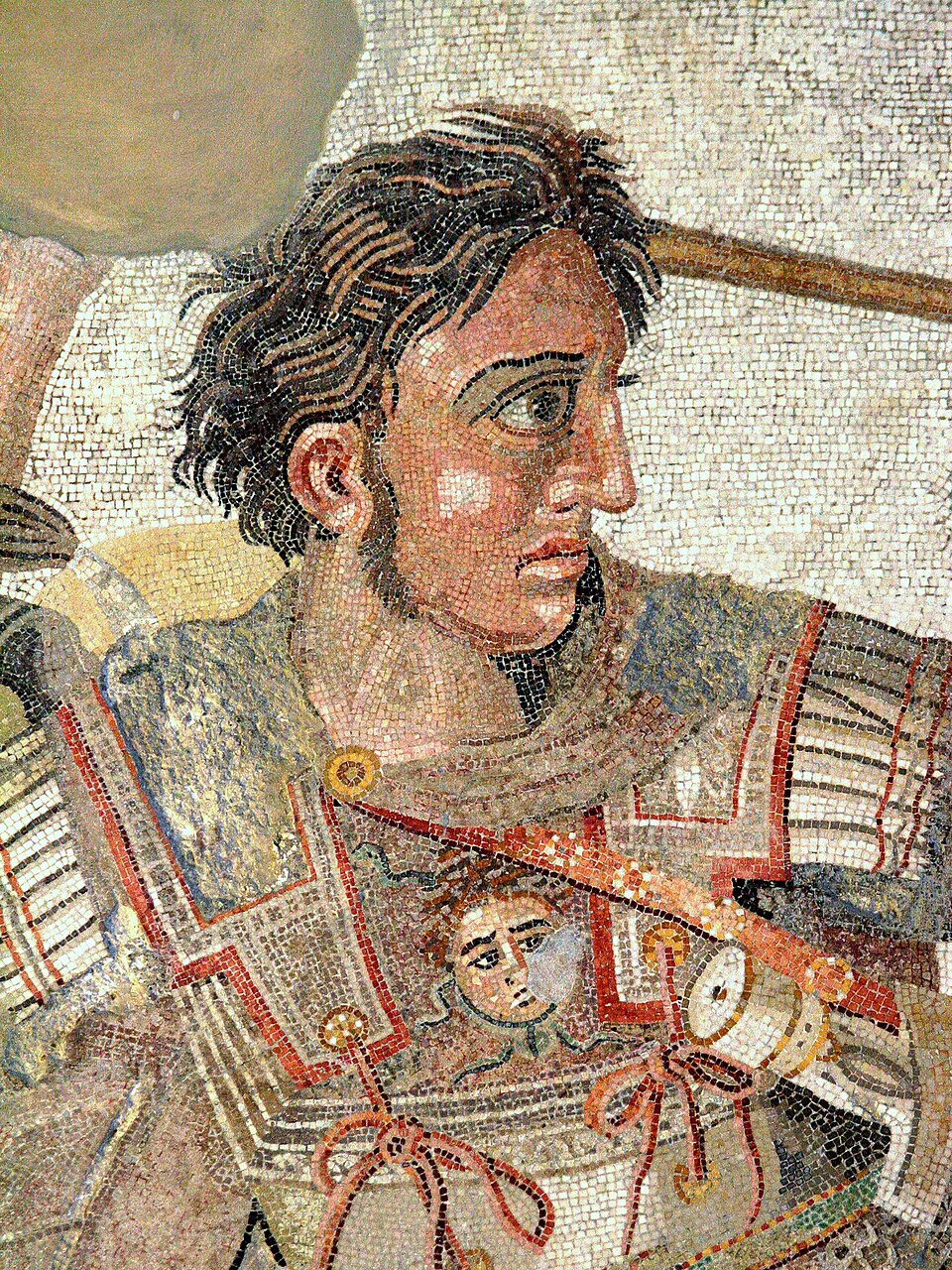
Crossed the Indus in 326 BCE, defeated Porus, and turned back at the Beas when his army refused to go on. He was badly wounded storming a Malli town, probably near Multan.
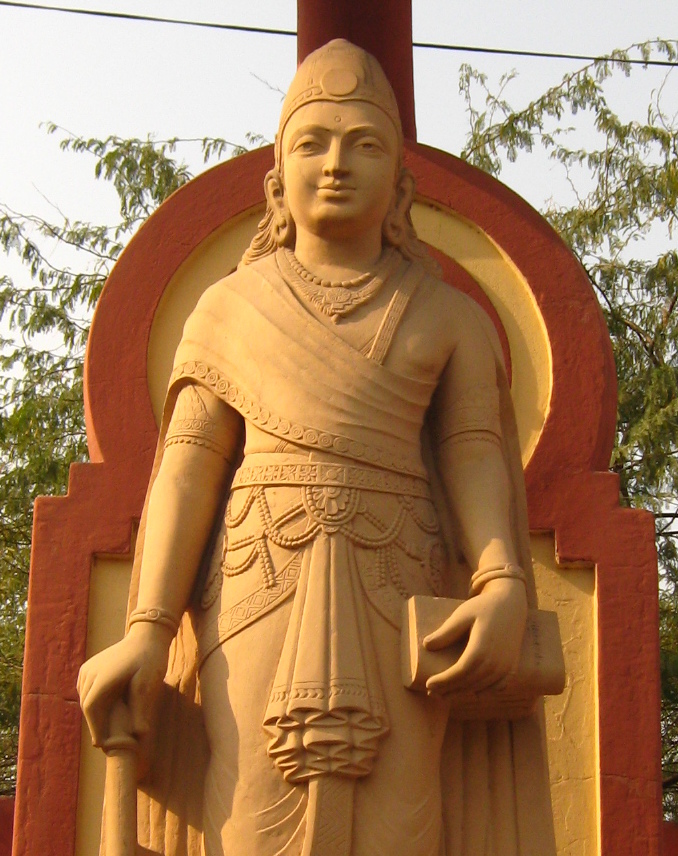
Founder of the Mauryan empire who, with his adviser Chanakya of Taxila, drove out the Greek garrisons and made Taxila a provincial capital.
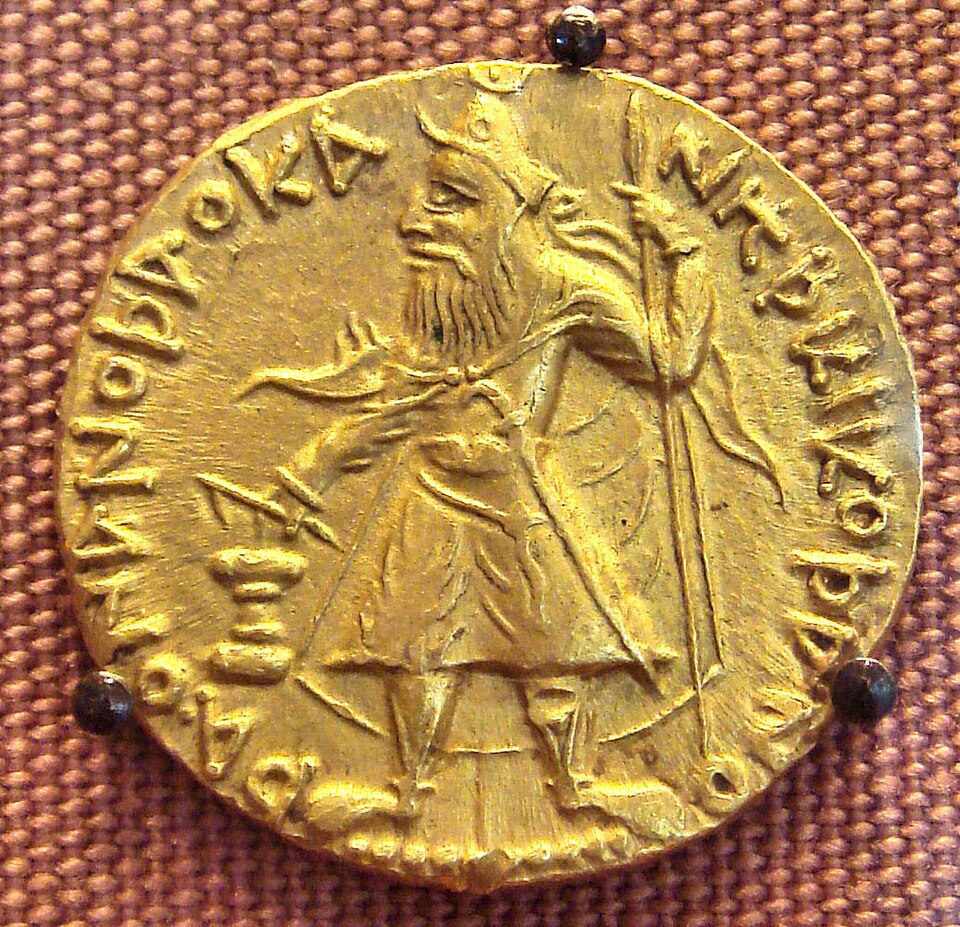
Greatest of the Kushan emperors, patron of Buddhism and Gandharan art, who built a huge stupa at Peshawar.
Artifacts
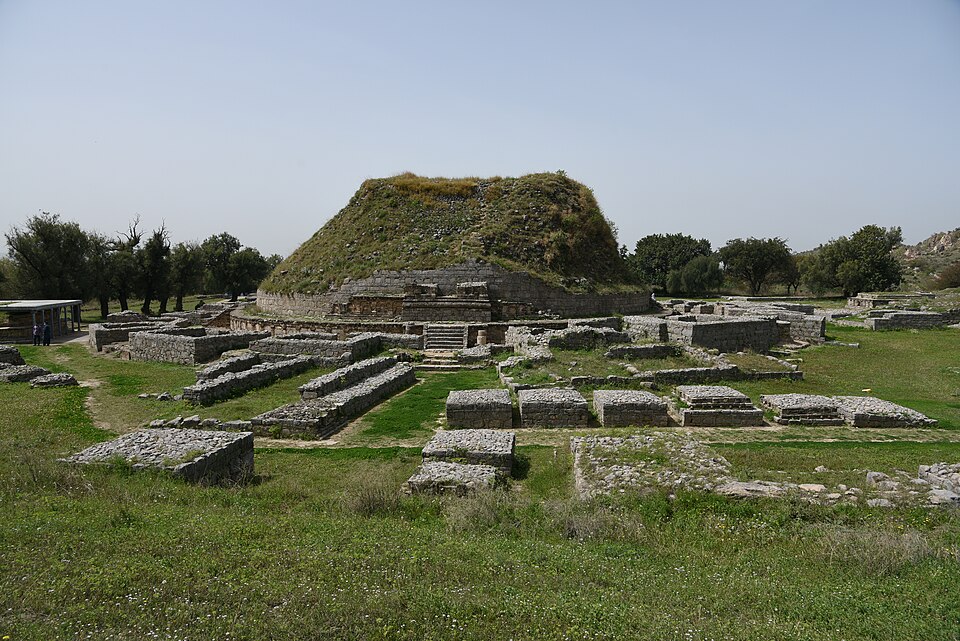
The great stupa of Taxila, said to have been founded by Ashoka over relics of the Buddha, surrounded by the cells and chapels of a monastery.
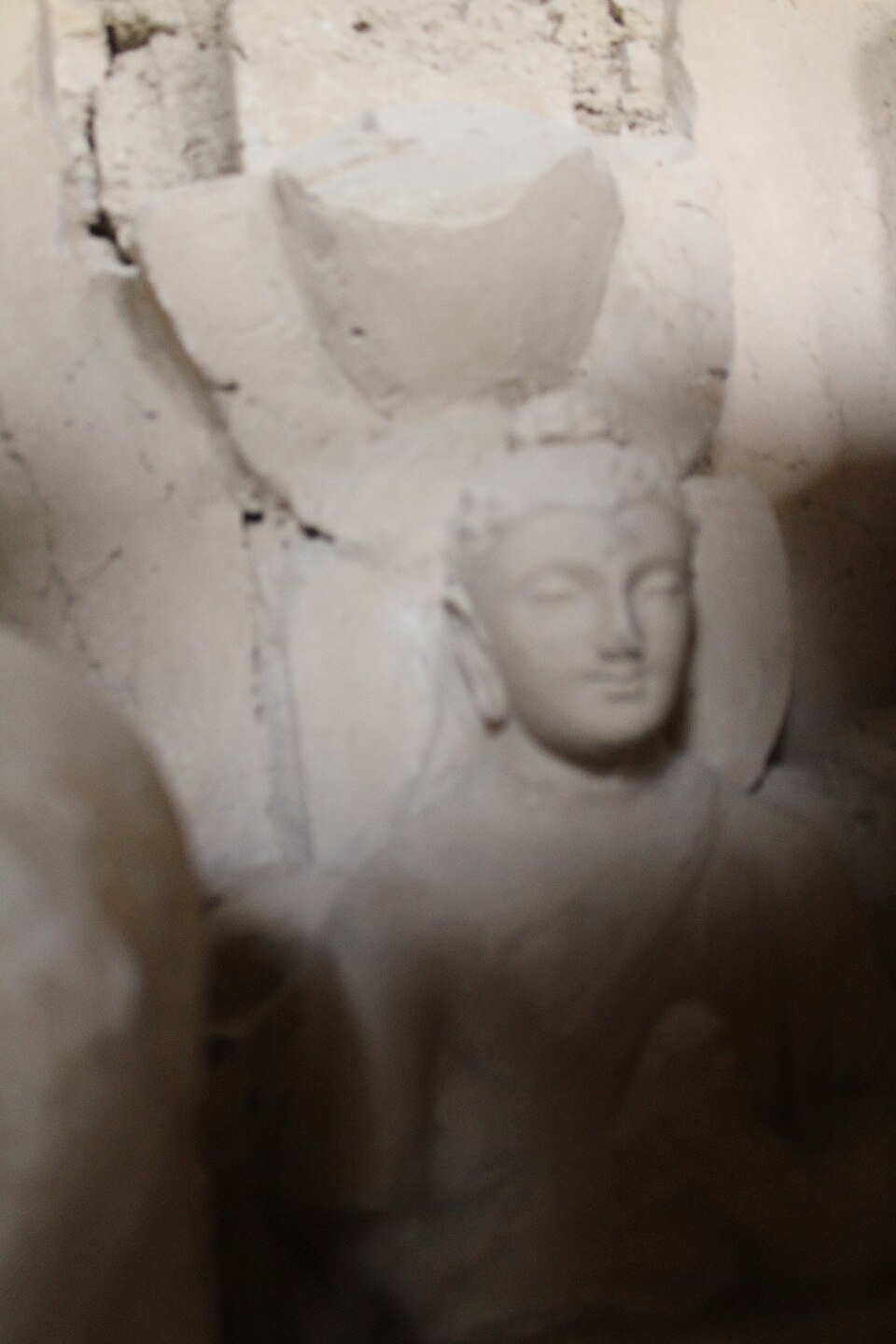
A hilltop monastery near Taxila whose stupas are ringed with rows of seated Buddhas modelled in stucco, many still in place.
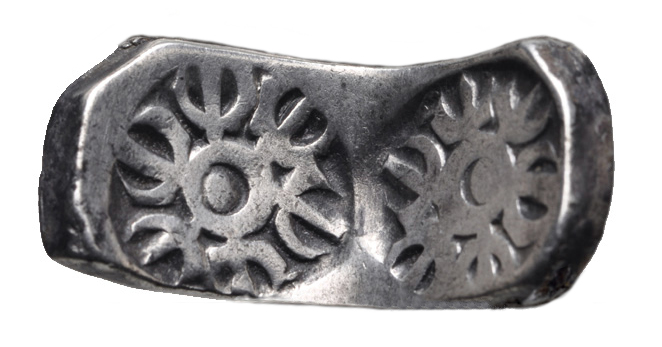
Bent bars of silver stamped with symbols, the first coins of the Punjab, dug up in hoards at Taxila.
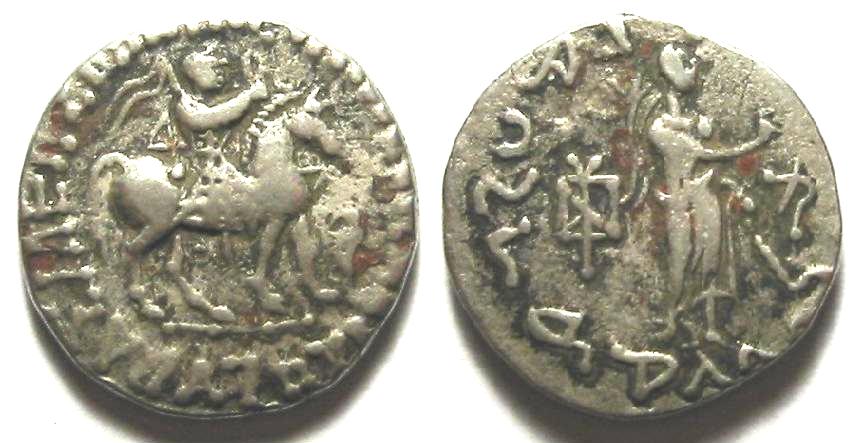
Coins of Azes and other Scythian (Saka) kings, who ruled Taxila after the Greeks.
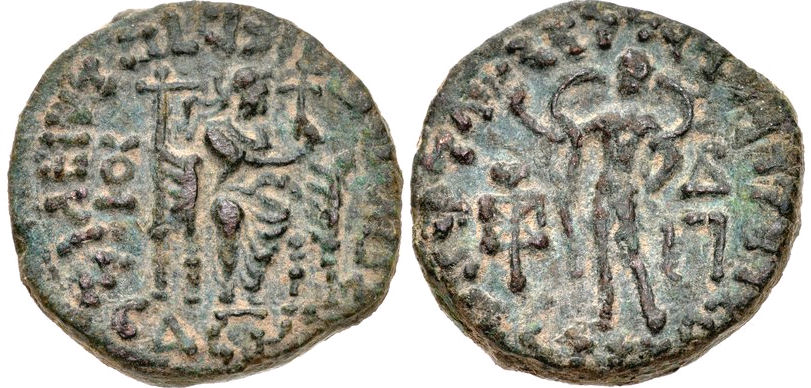
Coins of the Parthian king of Taxila who, Christian legend says, met the apostle Thomas.

A plate inscribed in Kharosthi recording a Buddhist gift by Patika, son of a Scythian satrap of Taxila: one of the few documents of Scythian rule in the Punjab.
On the timeline
In the world's museums
34 objects → Taxila Ruins MapTaxila Museum · photo Khalid Mahmood (Wikimedia Commons) · CC BY-SA ↗
 Coin of Taxila Pushkalavati City Guild, probably circa 2nd century BCEWikimedia Commons · SpeakingArch · CC BY-SA ↗
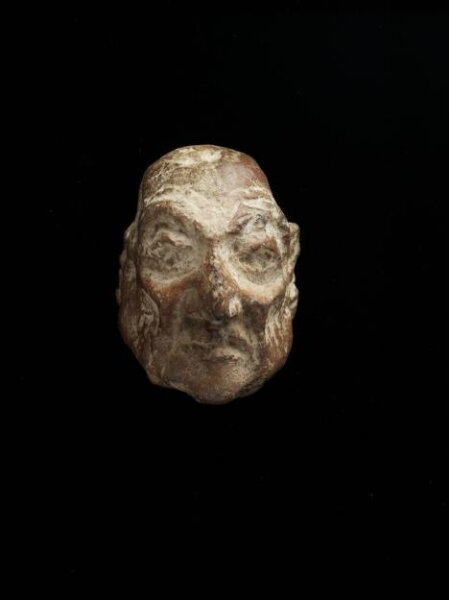 Head, Taxilac.180 BC-50 BC or 4th century-5th century AD · Taxila© Victoria and Albert Museum, London ↗
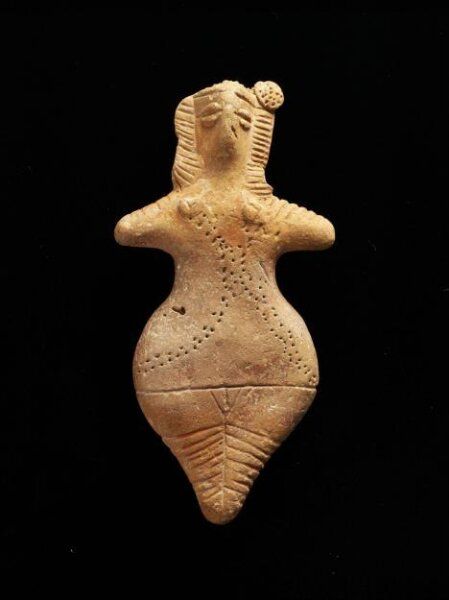 Figure, TaxilaTaxila© Victoria and Albert Museum, London ↗
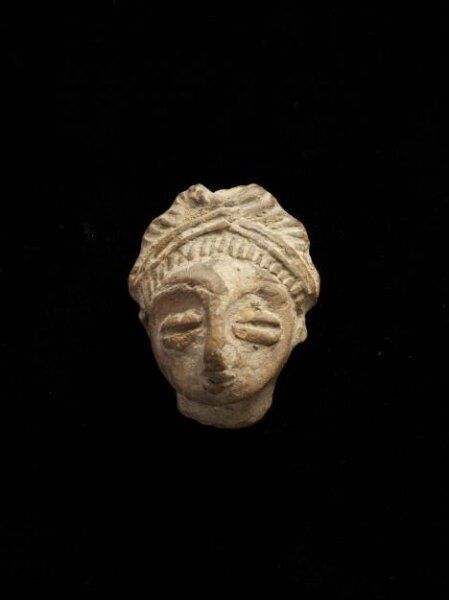 Head, Taxila3rd century BC - 3rd century AD · Taxila© Victoria and Albert Museum, London ↗
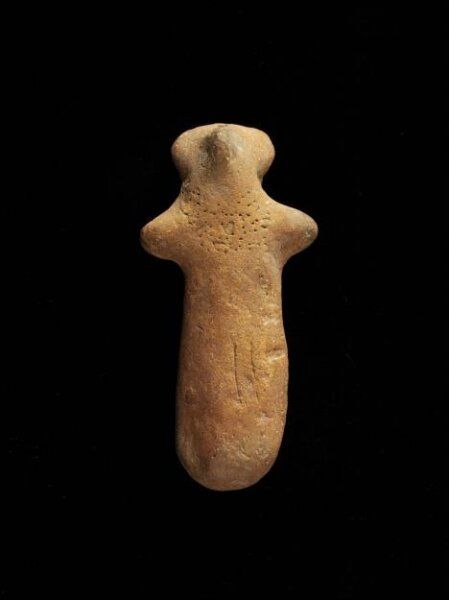 Figure, Taxila2nd century BC - 1st century AD · Taxila© Victoria and Albert Museum, London ↗
 Aramaic inscription at Taxila MuseumTaxila Museum · photo Onceinawhile (Wikimedia Commons) · CC BY-SA ↗
 Aramaic inscription from Taxila JRASTaxila Museum · photo L.D. Barnett in 1915 (Wikimedia Commons) ↗
 Armlet from Taxila, Gold, circa 1st centre CE, National Museum, DelhiNational Museum, New Delhi · photo SpeakingArch (Wikimedia Commons) · CC BY-SA ↗
 Gold Pendant of Earring, Taxila 4th Century BCE, Bhir Mound, National Museum New DelhiNational Museum, New Delhi · photo SpeakingArch (Wikimedia Commons) · CC BY-SA ↗
 Gold earring from Taxila, c.100-300 CE, V&A Museum, LondonV&A, London · photo SpeakingArch (Wikimedia Commons) · CC BY-SA ↗
 Gold necklace Bhir Mound, Taxila, 4th Century BCE, National Museum New DelhiNational Museum, New Delhi · photo SpeakingArch (Wikimedia Commons) · CC BY-SA ↗
 Hair pin, circa 1st century CE, Taxila, National Museum, DelhiNational Museum, New Delhi · photo SpeakingArch (Wikimedia Commons) · CC BY-SA ↗
 4th Century Meditating Budhaat from Gandhara Civilization Taxila Museum PakistanTaxila Museum · photo CR Guru PK (Wikimedia Commons) · CC BY-SA ↗
 Taxila Copper Plate in the British MuseumBritish Museum, London · photo Jononmac46 (Wikimedia Commons) · CC BY-SA ↗
 Taxila Museum EntranceTaxila Museum · photo Khalid Mahmood (Wikimedia Commons) · CC BY-SA ↗
 Earring (ear pendant) 1st Century CE, Sirkap, Taxila, National Museum New DelhiNational Museum, New Delhi · photo SpeakingArch (Wikimedia Commons) · CC BY-SA ↗
 Gold Earrings 1st Century CE, Sirkap, Taxila, National Museum New DelhiNational Museum, New Delhi · photo SpeakingArch (Wikimedia Commons) · CC BY-SA ↗