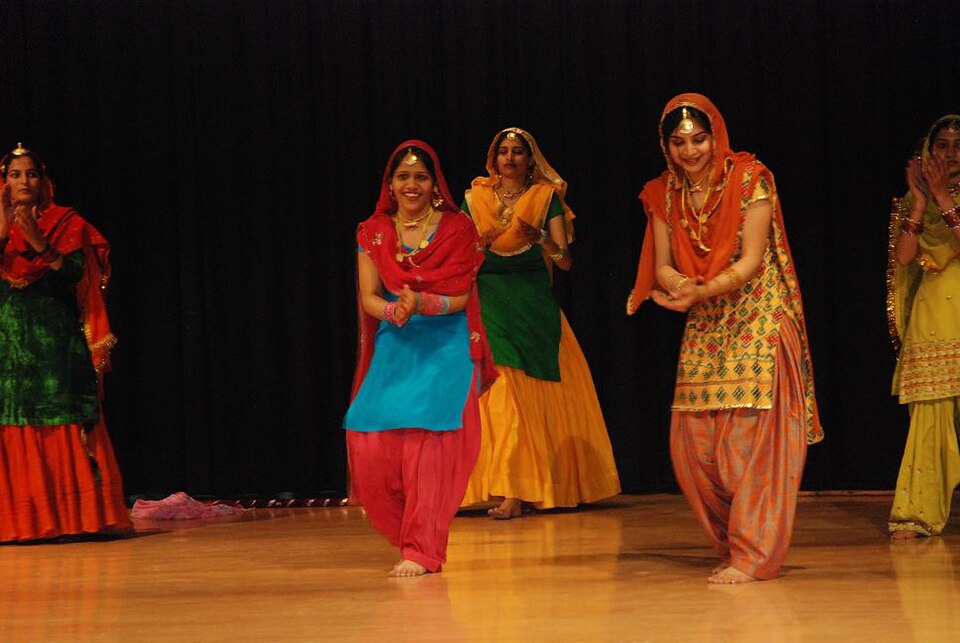
Giddha is the dance of Punjabi women. They stand in a circle, clapping in rhythm, while one or two step into the centre to dance and act out a boli, a short sung verse. The others repeat the refrain and the dancers change.
What makes giddha distinctive is its words and its acting. The boliyan tease, complain and joke about in-laws, husbands, cooking, love and longing, and the dancers mime what they sing: grinding flour, drawing water, rocking a baby, quarrelling with a mother-in-law. It is a space where women could say what could not be said elsewhere.
Giddha is performed at Teeyan, the women's festival of the monsoon, at weddings and at festivals, and is now taught and staged alongside bhangra. Malwai giddha, a men's form from the Malwa region, is a quite different, older dance with its own songs.
More dance and martial play
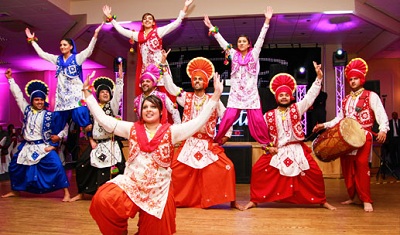
The harvest dance of the men of Majha, now the best known dance of South Asia.
▶ Watch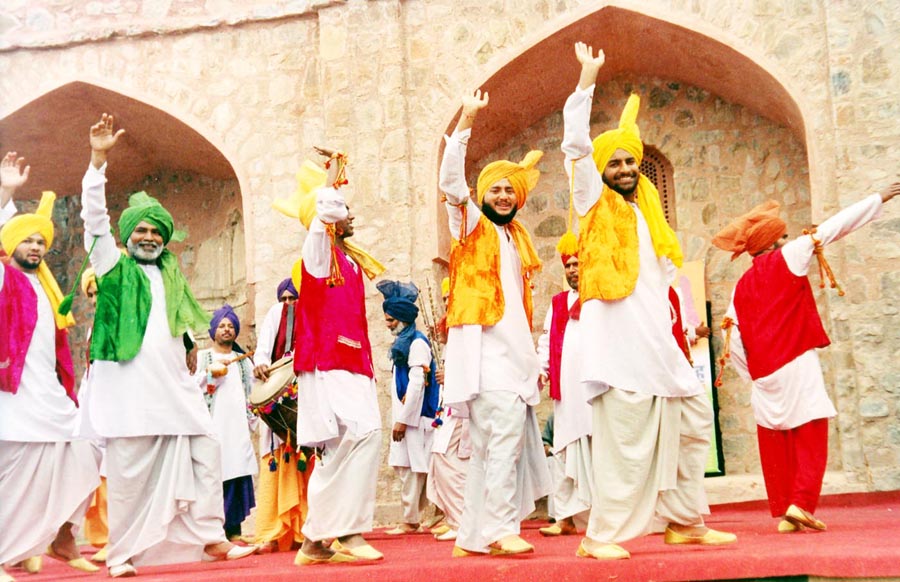
The slow, swaying dance of the bar country, danced in a circle around the drummer.
▶ Watch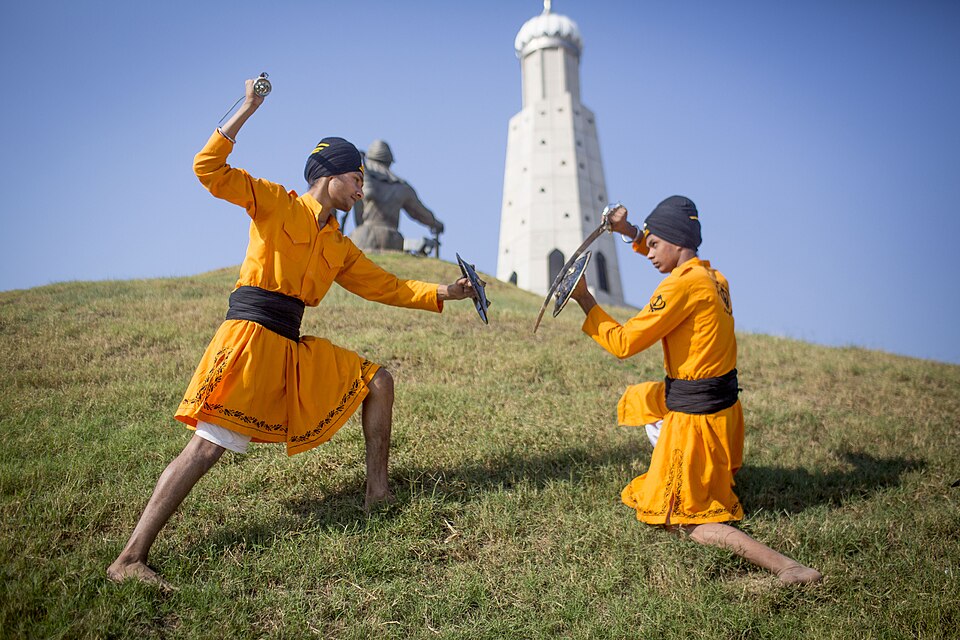
The Sikh art of the stick and sword, practised by the Nihangs and displayed at every Hola Mohalla.
LuddiThe men's victory dance, swaying and clapping in a circle to the dhol, danced across the western Punjab.
SammiThe women's dance of the Sandal Bar, with raised arms and a song for a lost lover.
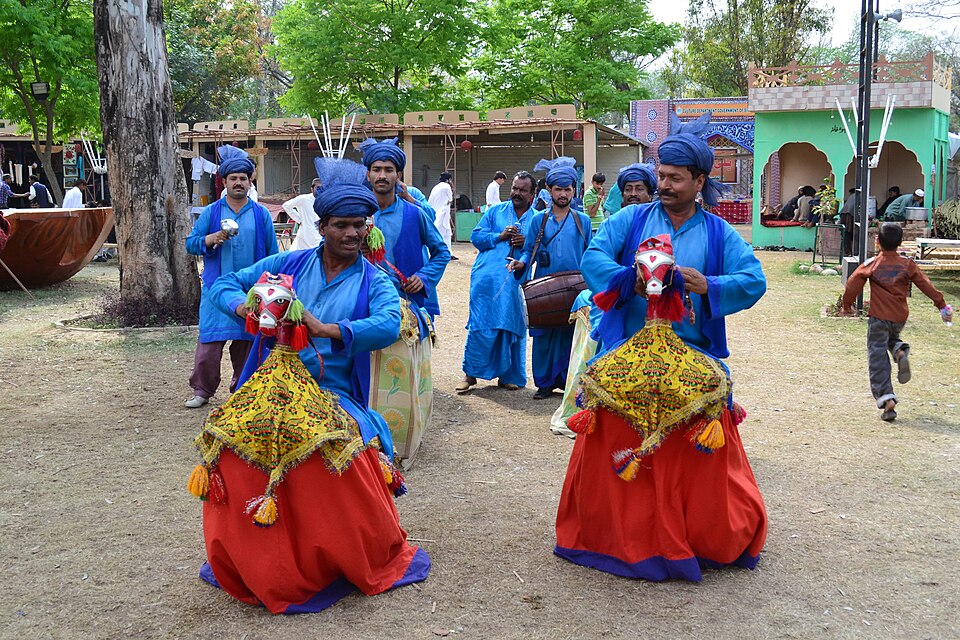
The men's giddha of the Malwa: boliyan sung in a ring, with the kato, sapp and bugchu clattering in time.
▶ WatchDhamaalThe whirling trance dance of the Sufi shrines, danced to the dhol on Thursday nights.
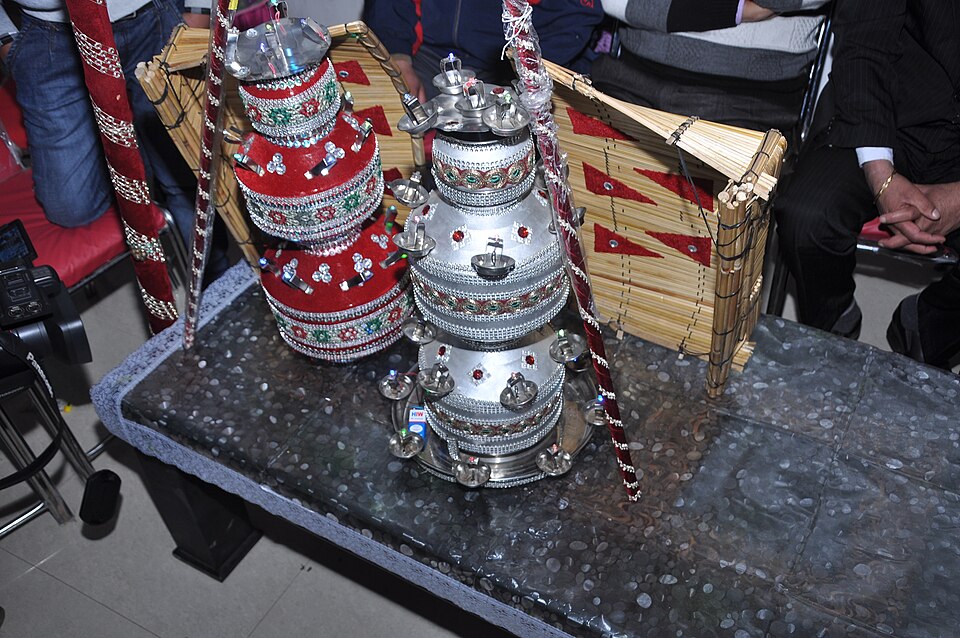
The night before a wedding, when the bride's or groom's family carry a pot of lamps through the village singing to wake it up.