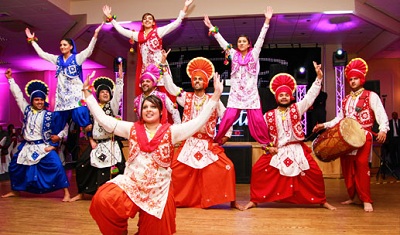
Bhangra
The harvest dance of the men of Majha, now the best known dance of South Asia.
Bhangra began as a dance performed by farmers in the Majha region, especially around Sialkot and Gujranwala, to celebrate the wheat harvest at Vaisakhi. Men danced in a circle to the dhol, with arms raised and shoulders bouncing, singing boliyan between rounds.
After Partition, in the 1950s, it was refashioned as a stage dance: teams in matching dress, choreographed routines, and steps drawn from other dances like jhumar, luddi and sammi. Groups from colleges in Patiala and Amritsar performed it at national festivals and in the Republic Day parade, and it came to stand for the whole of Punjab.
In Britain in the 1980s, bhangra music, mixing folk forms with disco and reggae, became the sound of a new generation of British Asians, and from there spread worldwide. Today bhangra is danced at weddings everywhere from Vancouver to Melbourne.
More dance and martial play
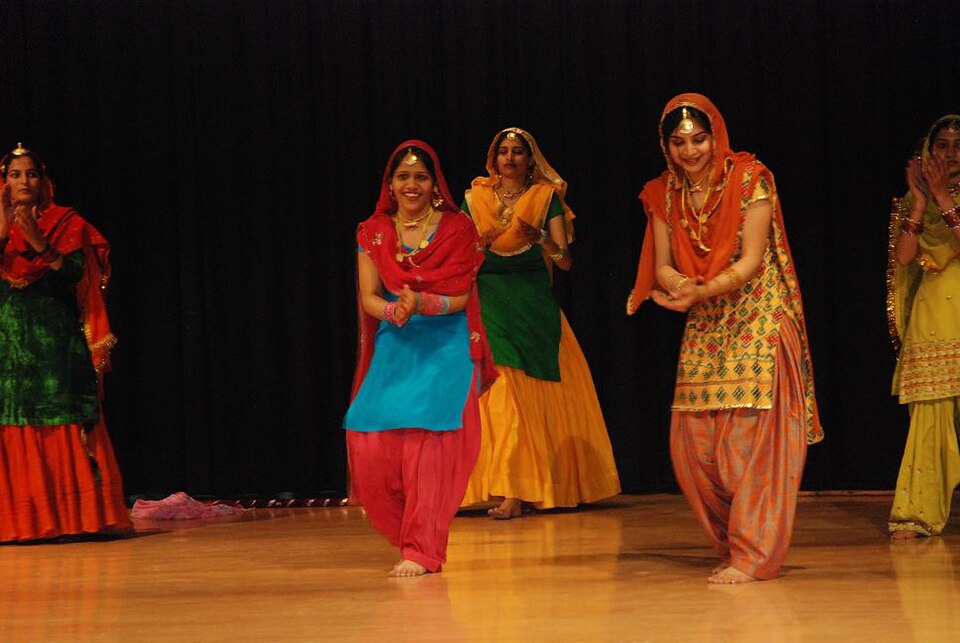
The women's dance of clapping and boliyan, full of wit and mimicry.
▶ Watch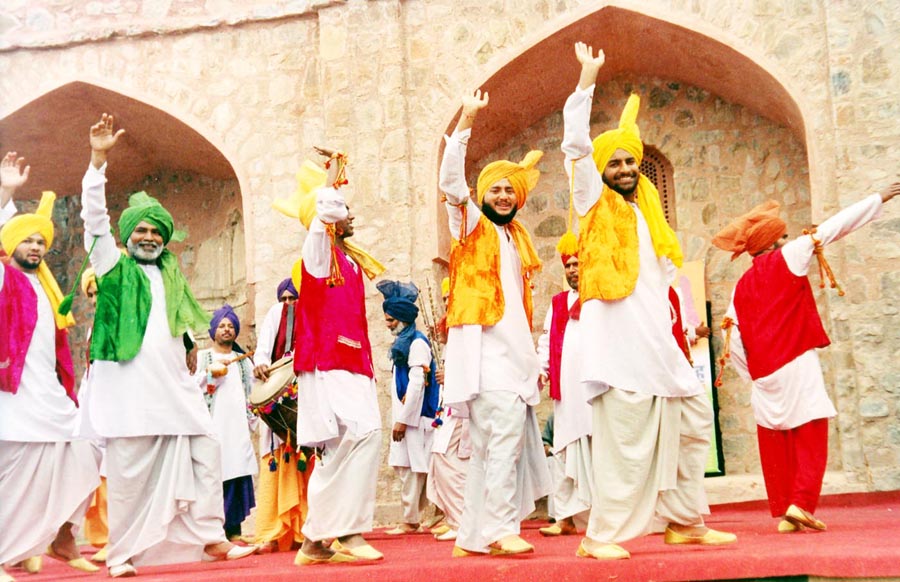
The slow, swaying dance of the bar country, danced in a circle around the drummer.
▶ Watch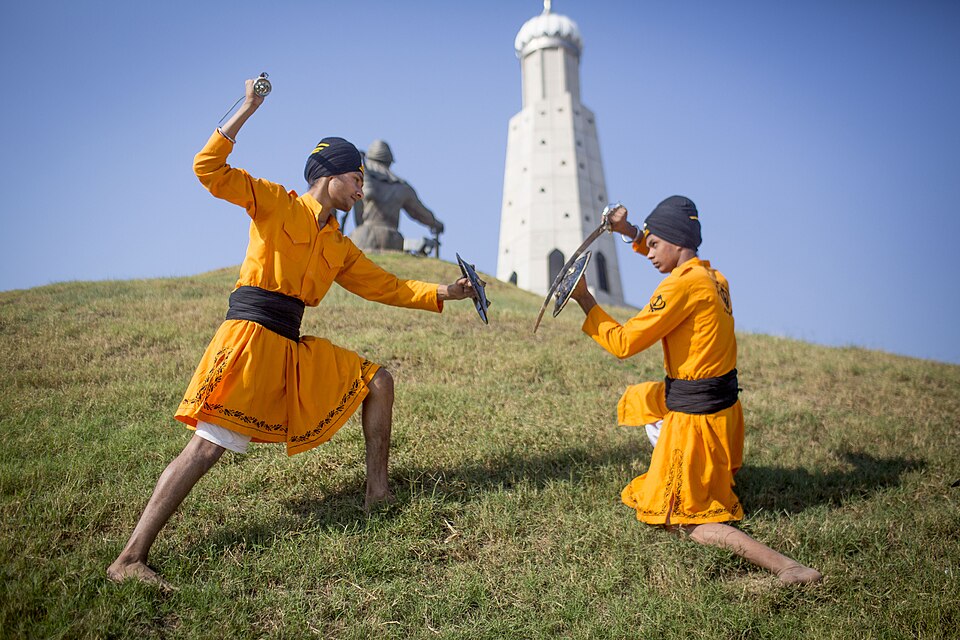
The Sikh art of the stick and sword, practised by the Nihangs and displayed at every Hola Mohalla.
LuddiThe men's victory dance, swaying and clapping in a circle to the dhol, danced across the western Punjab.
SammiThe women's dance of the Sandal Bar, with raised arms and a song for a lost lover.
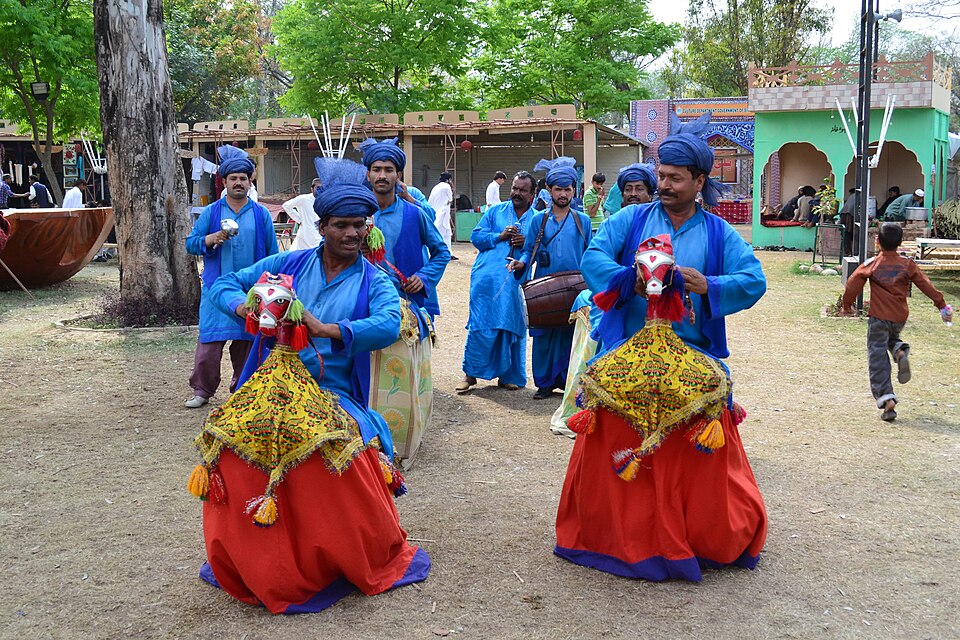
The men's giddha of the Malwa: boliyan sung in a ring, with the kato, sapp and bugchu clattering in time.
▶ WatchDhamaalThe whirling trance dance of the Sufi shrines, danced to the dhol on Thursday nights.
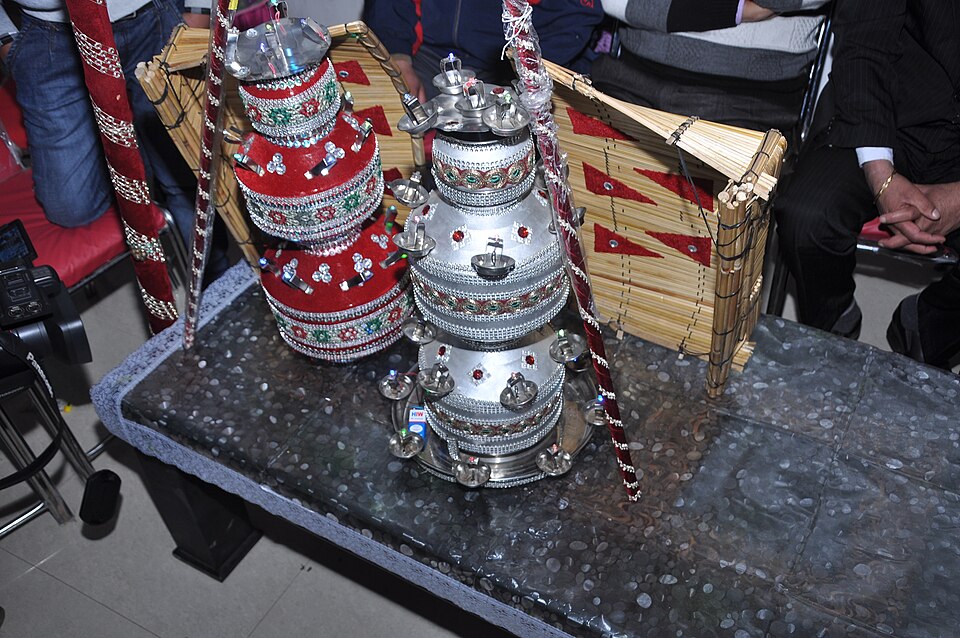
The night before a wedding, when the bride's or groom's family carry a pot of lamps through the village singing to wake it up.