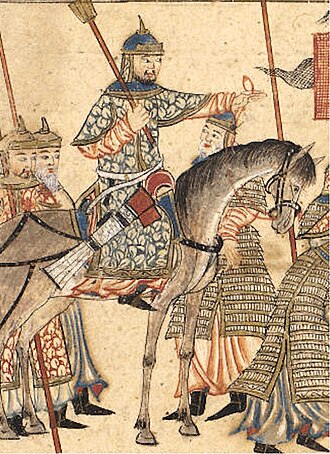
Mahmud of Ghazni was born in 971, the son of Sabuktigin, a Turkic slave-soldier who founded a kingdom at Ghazni in Afghanistan. He became sultan in 998 and made Ghazni one of the most splendid cities of the Islamic world.
Between 1000 and 1027 he raided India some seventeen times, defeating the Hindu Shahis at Peshawar, sacking the temples of Nagarkot, Thanesar, Mathura and Somnath and carrying off enormous wealth. He annexed the Punjab and made Lahore a Ghaznavid provincial capital.
His conquests brought the Punjab into the Persian-speaking Islamic world for the next eight hundred years. Sufis like Data Ganj Bakhsh came with his armies, and the poet Firdausi wrote the Shahnama at his court. He died in 1030.
Battles
Connected
In the world's museums
3 objects This folio from Walters manuscript W.603 depicts Sultan Mahmud of GhazniWalters Art Museum, Baltimore · photo Ferdowsi (Wikimedia Commons) ↗
 Likely idealized depiction of Sultan Mahmud of Ghazni in the pose of a Sasanian hero-kingWikimedia Commons · 11th century artist ↗
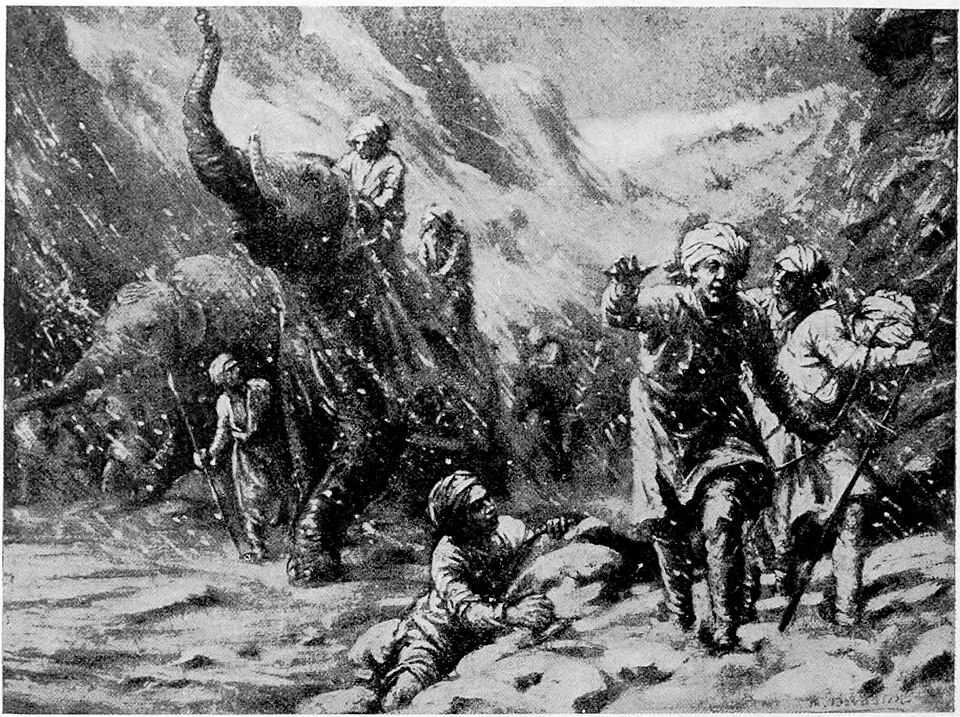
 Mahmud of Ghazni receiving Indian elephants as tribute (Majmu al-Tawarikh, Hafiz i-AbruWikimedia Commons · Print from 1425 CE, Afghanistan Photographer: Worchester Mus ↗