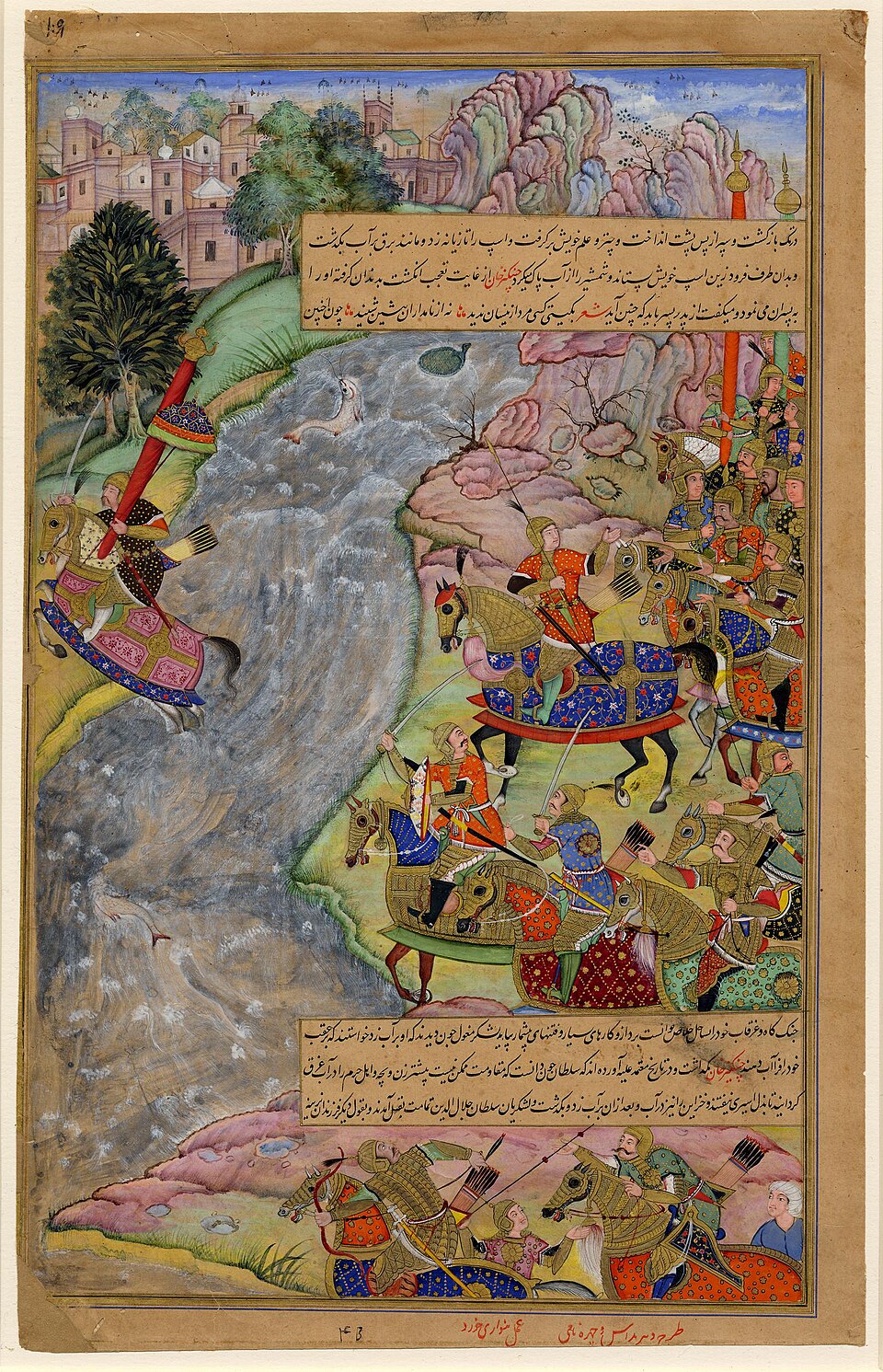
Battle of the Indus
Genghis Khan caught the last Khwarazm prince on the Indus. Jalal ad-Din rode his horse off a cliff into the river and escaped into Punjab, drawing Mongol raids after him. The exact site, somewhere on the Indus, is uncertain.
In 1219 Genghis Khan invaded the empire of Khwarazm in Central Asia and destroyed it. Its last prince, Jalal ad-Din Mingburnu, fled south through Afghanistan, defeating Mongol armies on the way, until Genghis himself caught him on the bank of the Indus in November 1221, near present-day Kalabagh.
Jalal ad-Din's army was destroyed against the river. According to the chroniclers, the prince, seeing all was lost, rode his horse off a cliff some twenty feet high into the Indus and swam across under a hail of arrows. Genghis is said to have stopped his archers and told his sons that every father should have such a son.
Jalal ad-Din took refuge in the Punjab and the Salt Range for a few years. Mongol armies followed him into the Punjab, and for the next century Mongol raids would be the great danger of the north-west.
Same era
Invaders at the gates, 1400 BCE – 1221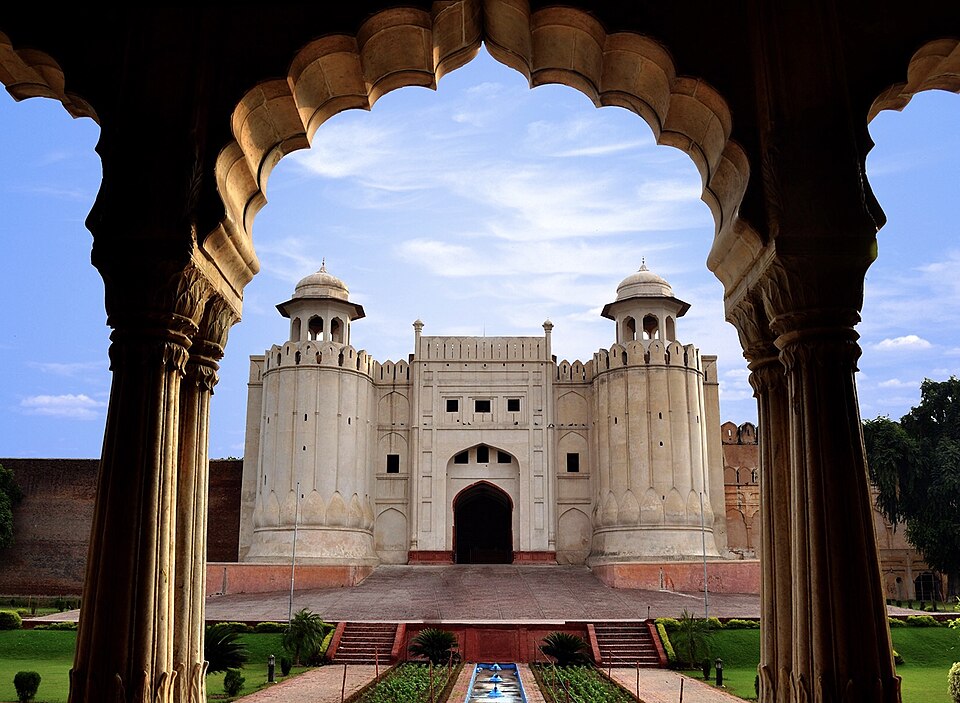
A Rigvedic battle on the Parushni, the Ravi, in which the Bharata king Sudas defeated ten allied tribes when they tried to divert the river.
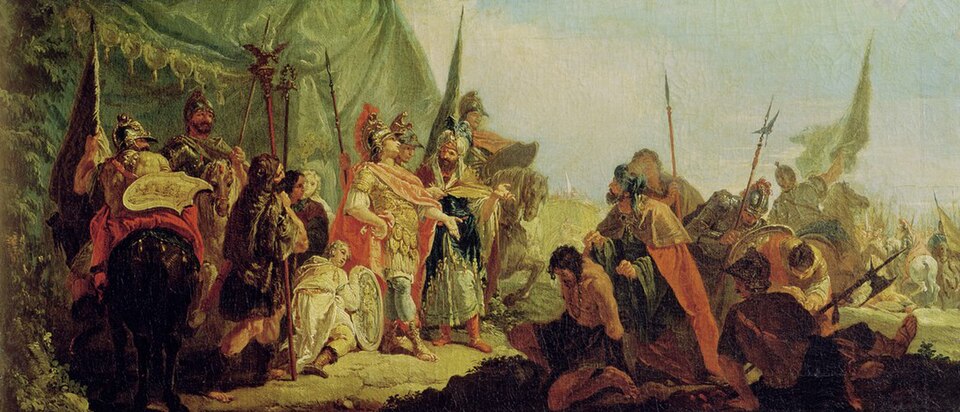
Alexander crossed the flooded Jhelum by night and defeated Porus and his war elephants. Impressed by Porus, he returned his kingdom to him.
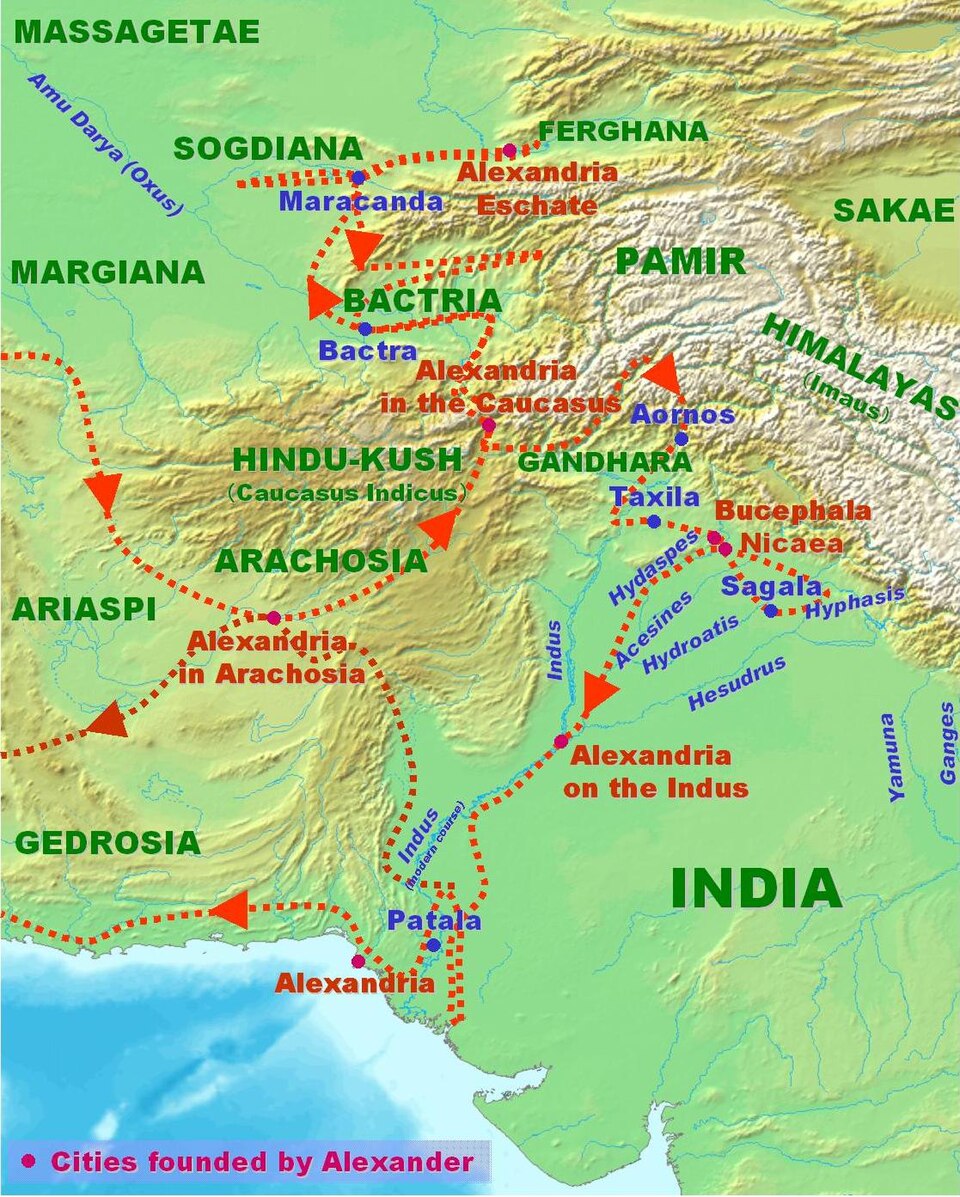
Retreating down the Jhelum and Chenab, Alexander attacked the Malli. Scaling a town wall almost alone, he was shot through the chest and nearly died. The town is often placed at or near Multan.
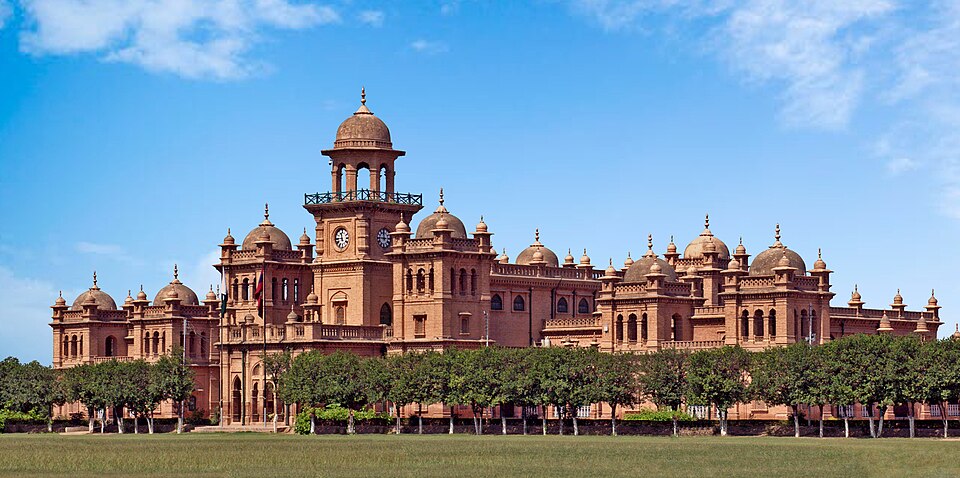
Mahmud's first great victory in India, which broke the Hindu Shahi kingdom and opened Punjab to two decades of raids.
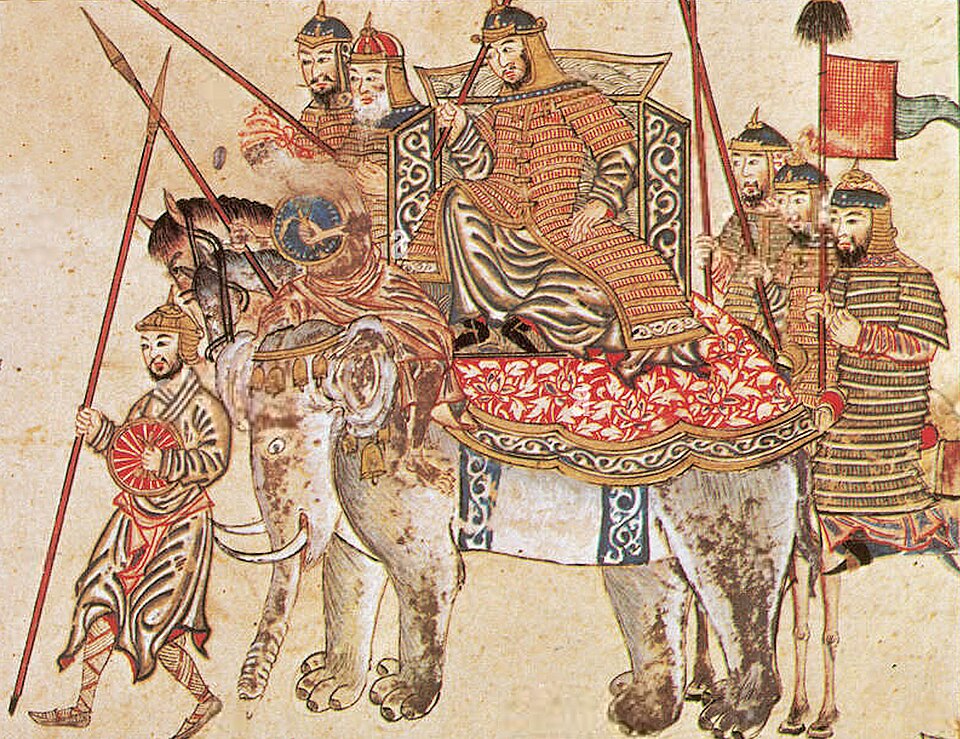
Mahmud's second great victory over the Hindu Shahis, on the plain of Chach near Attock, which left the Punjab open to him.
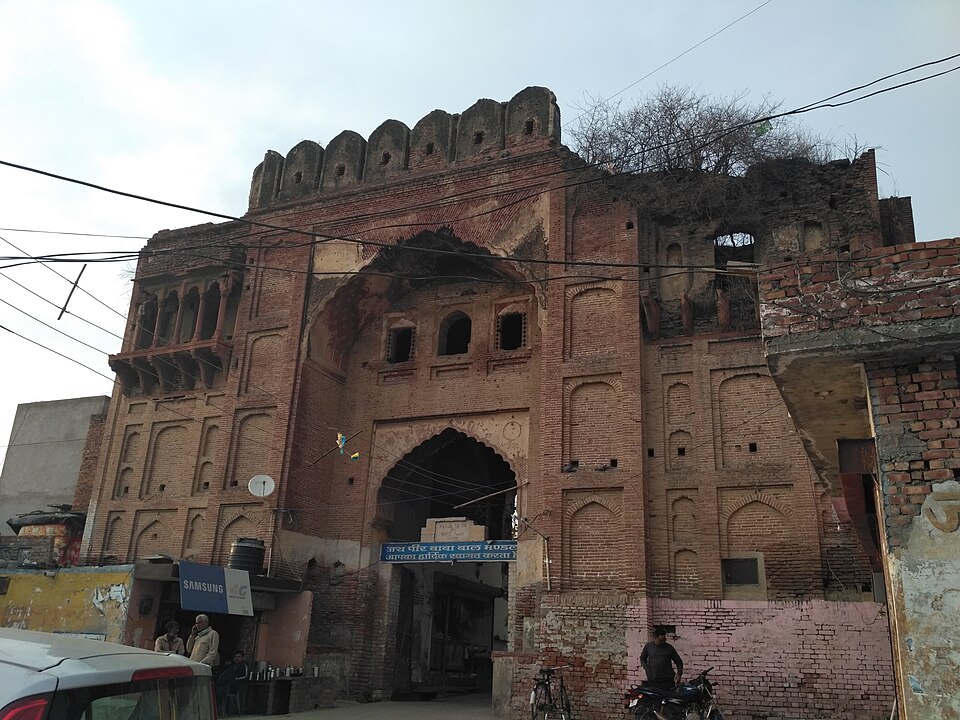
Prithviraj Chauhan routed the Ghurid army near Thanesar; Muhammad of Ghor was wounded and carried from the field.
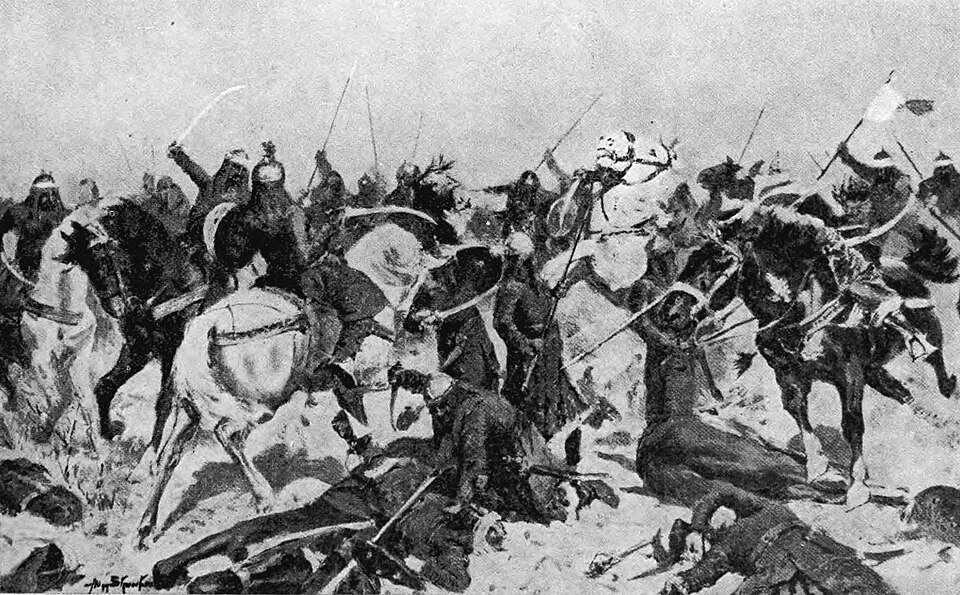
A year after losing on the same field, Muhammad of Ghor beat Prithviraj with mounted archers, opening north India to the Delhi Sultanate.
A Mongol army stormed Lahore after the Delhi Sultanate failed to relieve it, and left the city in ruins for decades.