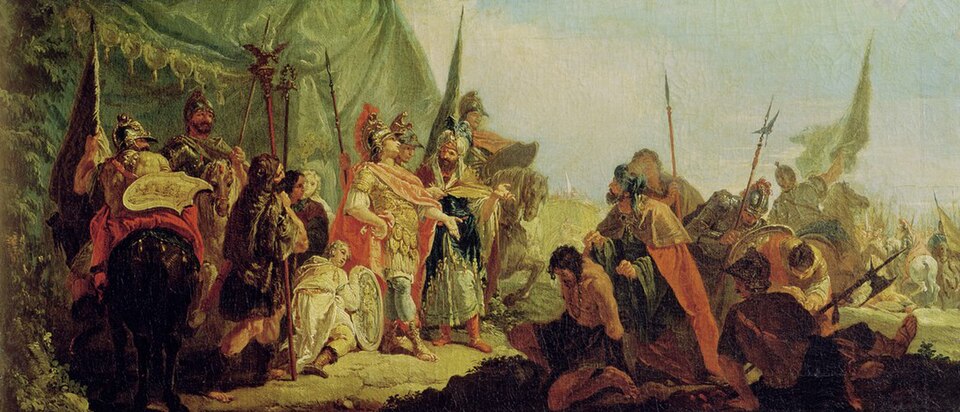
In the spring of 326 BCE Alexander of Macedon came down the Kabul valley, crossed the Indus and was welcomed by Ambhi, the king of Taxila. Beyond the Jhelum, the Greek Hydaspes, King Porus refused to submit and drew up his army on the far bank, with chariots, infantry and perhaps two hundred war elephants.
The river was swollen by melting snow and the first monsoon rains. For weeks Alexander marched his men up and down the bank to confuse Porus, then on a stormy night crossed some twenty-seven kilometres upstream with his cavalry and best infantry. In the battle that followed, the Indian elephants trampled the Macedonian phalanx and caused terrible casualties, but Alexander's horse archers and cavalry broke the Indian wings and the elephants, maddened, turned on their own lines. Porus fought to the last on his elephant, wounded in the shoulder, before he was taken.
Asked how he wished to be treated, Porus answered: as a king. Alexander gave him back his kingdom. Alexander's horse Bucephalus died after the battle, and he founded two cities beside the river, Nicaea and Bucephala. The battle site is generally placed near Jalalpur or Mong in the Jhelum district.
How the battle was fought
A planScroll sideways to see the whole figure →
- 1
Leaving Craterus at the camp to feign a crossing, Alexander marches about 27 km upstream by night, in a storm.
- 2
He crosses at a wooded island on skin floats and boats.
- 3
Porus's son rides to stop him; his chariots stick in the mud, and he is killed.
- 4
Alexander's cavalry strike the Indian left wing while Coenus's squadrons ride round behind and take the Indian cavalry in the rear.
- 5
The phalanx meets the elephants head on, and Porus's army is crushed between: the 'hammer and anvil'.
- When
- May 326 BCE
- Armies
- Alexander perhaps 40,000; Porus 20,000 to 50,000, with 85 to 200 elephants
- After
- Porus, captured, asked to be treated "as a king". Alexander gave him back his kingdom, and more.
Same era
Invaders at the gates, 1400 BCE – 1221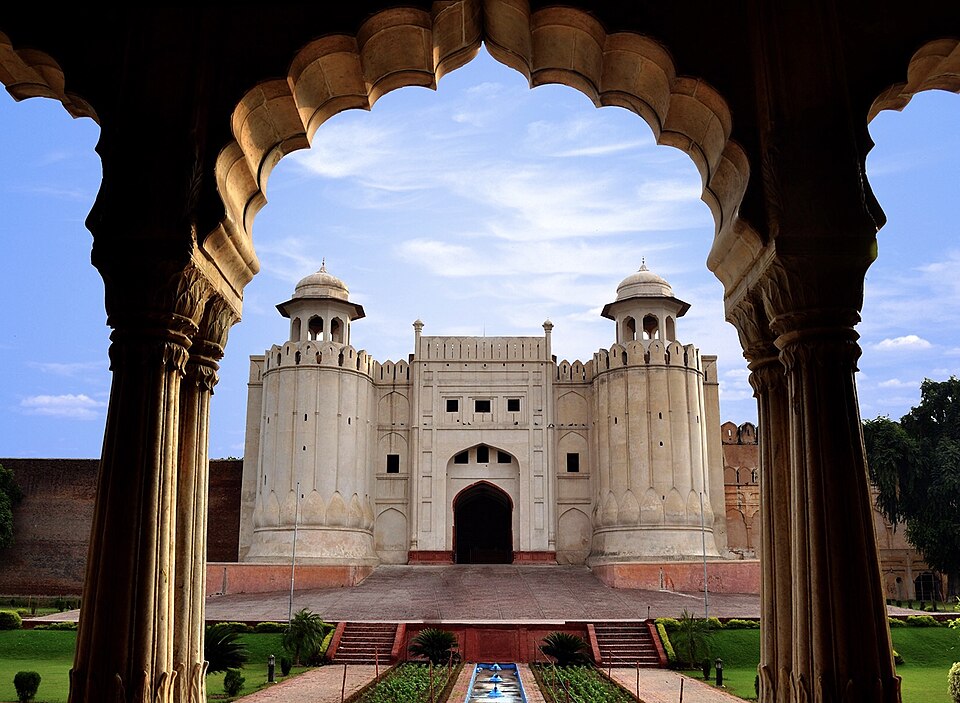
A Rigvedic battle on the Parushni, the Ravi, in which the Bharata king Sudas defeated ten allied tribes when they tried to divert the river.
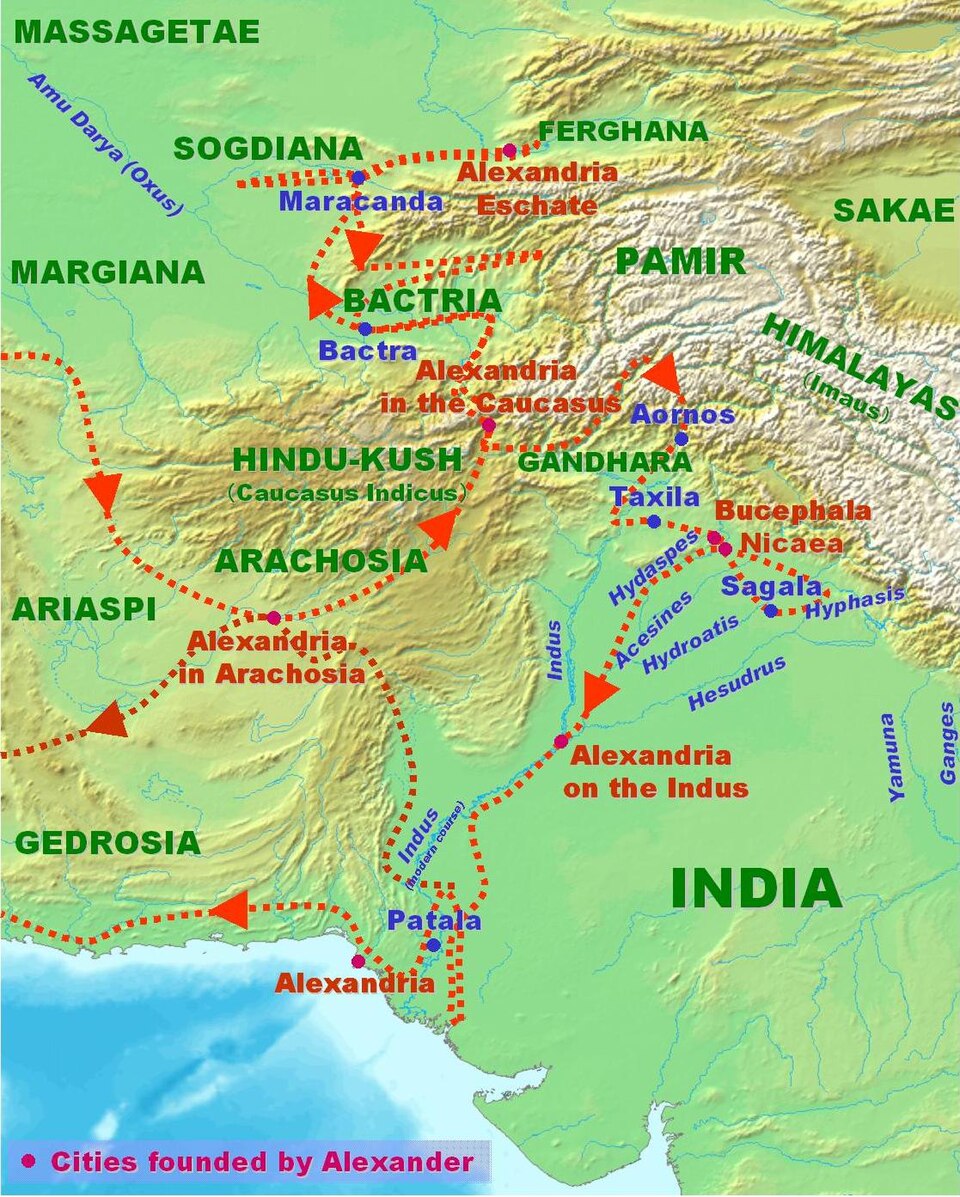
Retreating down the Jhelum and Chenab, Alexander attacked the Malli. Scaling a town wall almost alone, he was shot through the chest and nearly died. The town is often placed at or near Multan.
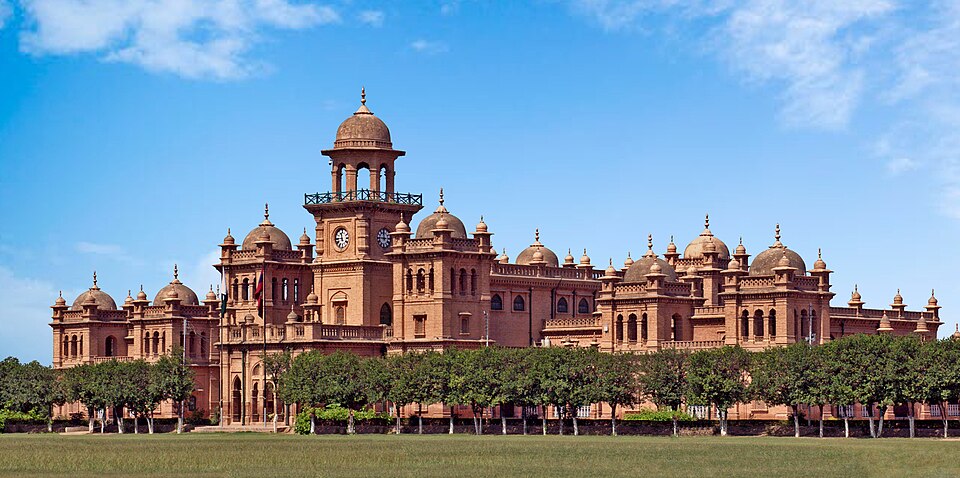
Mahmud's first great victory in India, which broke the Hindu Shahi kingdom and opened Punjab to two decades of raids.
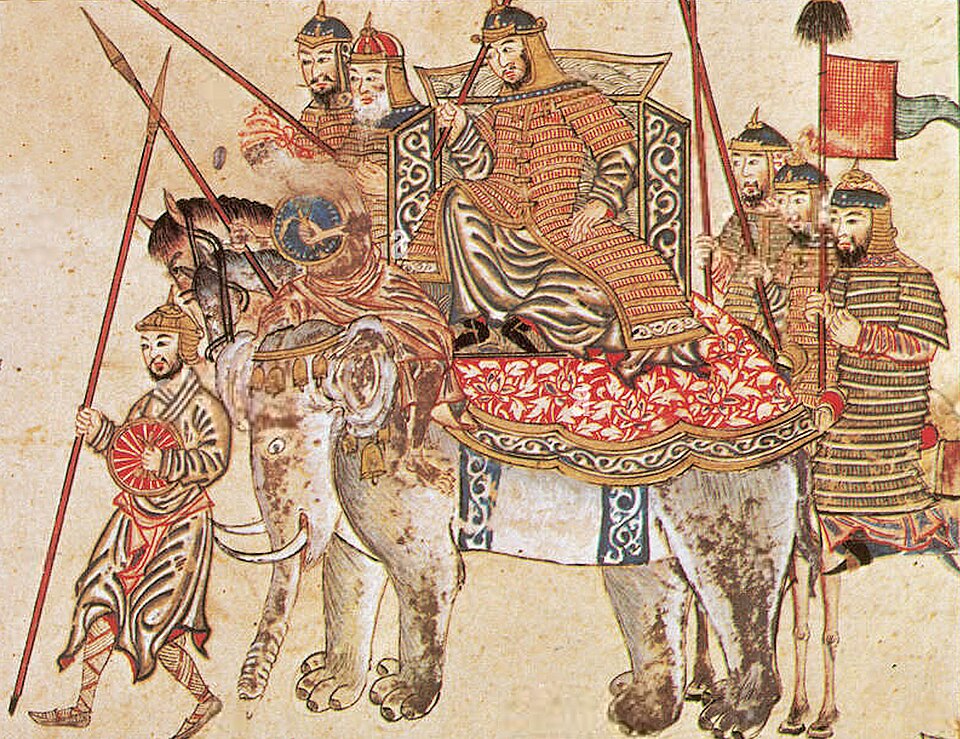
Mahmud's second great victory over the Hindu Shahis, on the plain of Chach near Attock, which left the Punjab open to him.
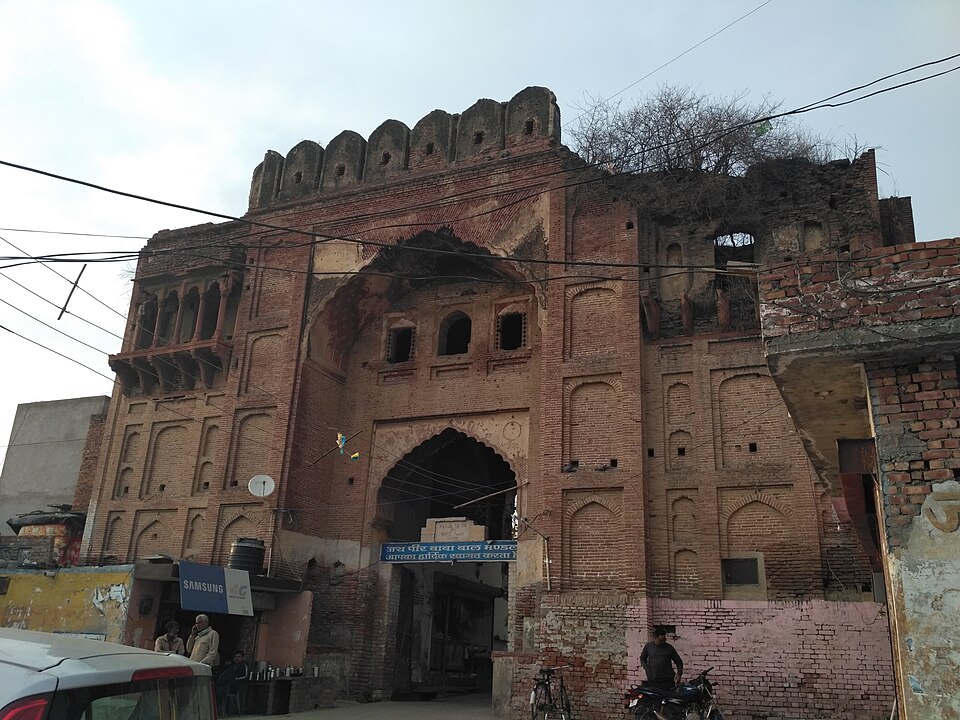
Prithviraj Chauhan routed the Ghurid army near Thanesar; Muhammad of Ghor was wounded and carried from the field.
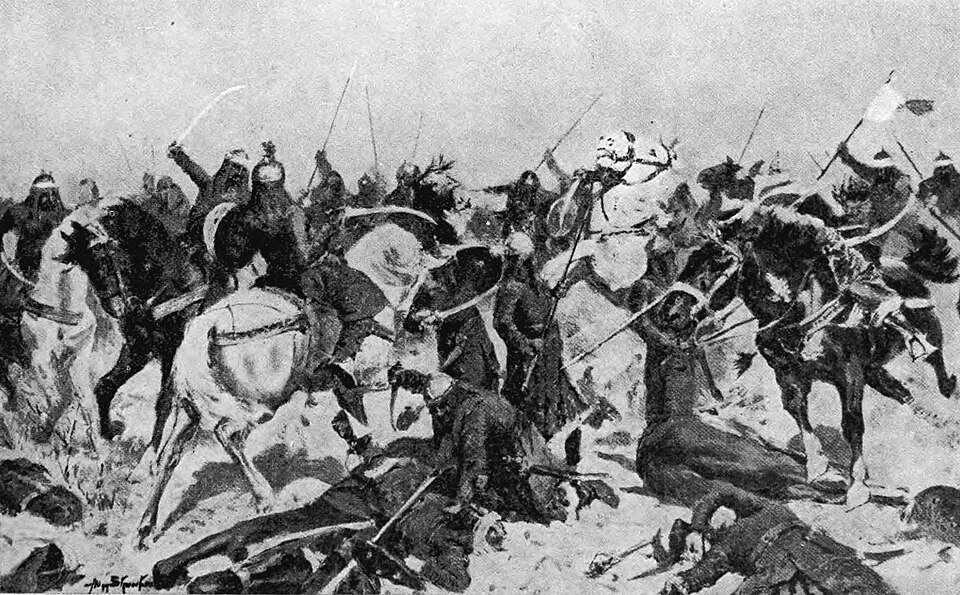
A year after losing on the same field, Muhammad of Ghor beat Prithviraj with mounted archers, opening north India to the Delhi Sultanate.
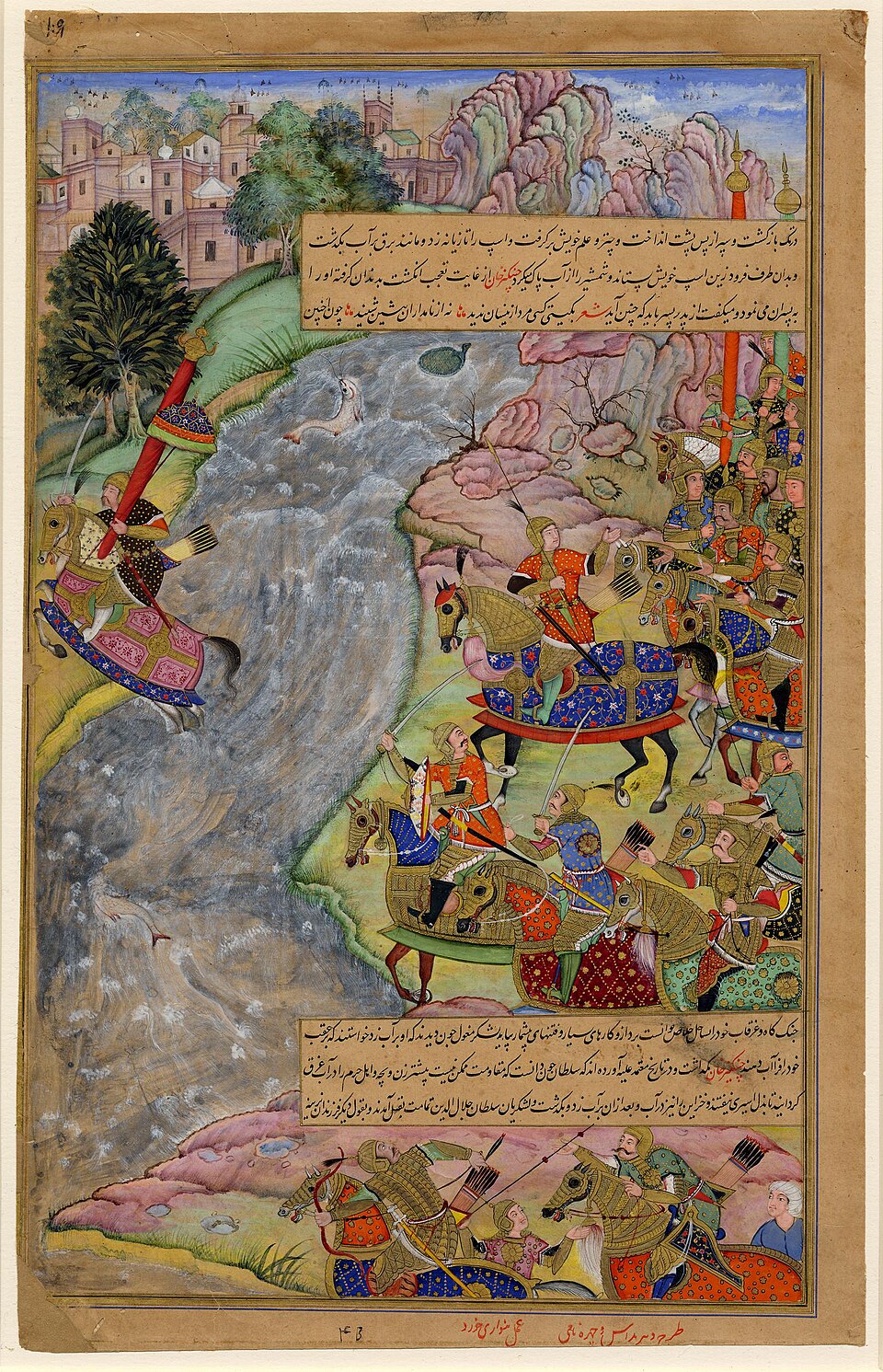
Genghis Khan caught the last Khwarazm prince on the Indus. Jalal ad-Din rode his horse off a cliff into the river and escaped into Punjab, drawing Mongol raids after him. The exact site, somewhere on the Indus, is uncertain.
A Mongol army stormed Lahore after the Delhi Sultanate failed to relieve it, and left the city in ruins for decades.
 Porus at the Battle of the Hydaspes (Jhelum)Wikimedia Commons · Tapestry after a work by Charles Le Brun, court painter to t · CC BY ↗