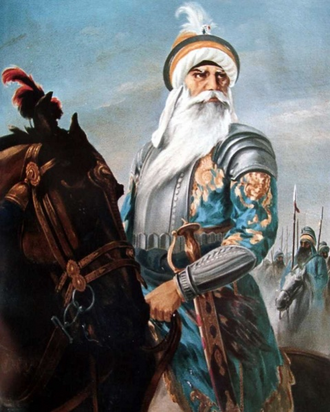
Nawab Kapur Singh
Accepted a Mughal title in 1733 while fanning the horses of the sangat, then organised the Khalsa into the Budha Dal and Taruna Dal.
Kapur Singh was born in 1697 at Kaloke near Sheikhupura and took amrit in 1721 from Bhai Mani Singh. He was a Virk Jat, a fighter of great skill, and rose to lead the Sikhs in the years of persecution after Banda Singh's death, when the Khalsa lived in the forests and deserts and raided Mughal treasuries to survive.
In 1733 the governor of Lahore, Zakariya Khan, unable to crush the Sikhs, tried to buy them off with a jagir and the title of Nawab. The Sikhs offered the title to the humblest among them, and it fell to Kapur Singh, who was fanning the sangat at the time; he accepted it only after touching the robe of honour to the feet of five Singhs.
He used the peace to organise the Khalsa into two great armies, the Budha Dal of the veterans and the Taruna Dal of the young, the latter divided into five jathas which later grew into the misls. When the persecution resumed he led the Sikhs through it. He gave amrit to thousands, among them Jassa Singh Ahluwalia, whom he raised as his successor. He died in 1753. Every Sikh misl looked back to him as its founder.
As a young man he did seva at the Darbar Sahib, cleaning the shoes of the sangat and working in the langar. The Taruna Dal grew to more than twelve thousand men, and its five divisions were stationed around the sacred pools of Amritsar: Ramsar, Bibeksar, Lachmansar, Kaulsar and Santokhsar. To keep spirits up in the worst years the Khalsa invented its own defiant slang, the Khalsa bole, calling a meal of boiled leaves 'the green dish'.
On the timeline
Connected
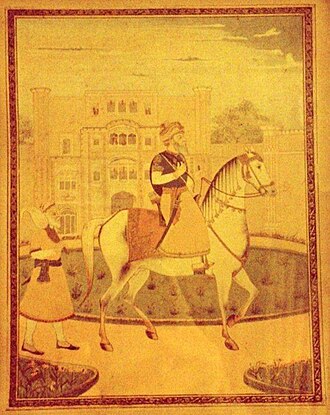
Supreme commander of the Dal Khalsa, wounded many times at the Vadda Ghallughara. Struck coins at Lahore and was called Sultan-ul-Qaum, king of the nation.
Mughal governor of Lahore who put a price on Sikh heads, executed Bhai Mani Singh and Bhai Taru Singh, and in 1733 tried to buy peace by offering the Sikhs a jagir and the title of Nawab.