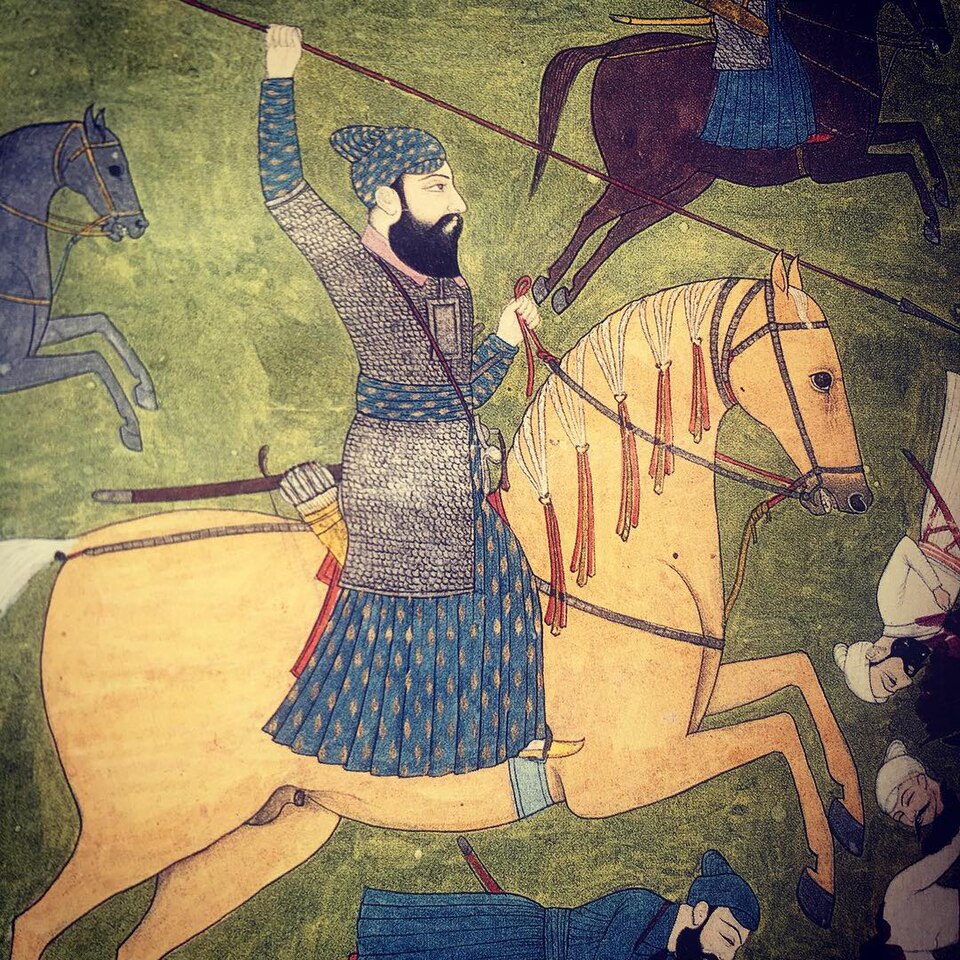
Banda Singh Bahadur
Ascetic turned general. Sent north by Guru Gobind Singh in 1708, he took Sirhind, set up the first Sikh state, gave land to those who tilled it and was executed in Delhi in 1716.
Lachhman Dev was born in 1670 at Rajauri in the Poonch hills, a Rajput. As a young man he killed a pregnant doe while hunting and was so shaken by it that he became an ascetic, taking the name Madho Das. He settled at Nanded on the Godavari, where he was famous for his occult powers.
In 1708 Guru Gobind Singh came to his hermitage and sat on his couch. When Madho Das tried his magic on the Guru and failed, he fell at his feet and said, 'I am your banda', your slave. The Guru initiated him as Banda Singh, gave him five arrows from his quiver, a council of five Sikhs and a letter to the Sikhs of the Punjab, and sent him north to punish those who had killed his sons.
Sikhs flocked to him from across the Punjab. He took Samana in November 1709, then Sadhaura, and on 12 May 1710 at Chappar Chiri he destroyed the army of Wazir Khan, who was killed in the battle, and took Sirhind. He set up the first Sikh state, with its capital at Lohgarh in the Shivalik foothills, struck coins in the names of Guru Nanak and Guru Gobind Singh and abolished the zamindari system, giving land to those who tilled it.
The new emperor Bahadur Shah himself came north to crush him. Banda Singh fought on for years, but in 1715 he was besieged at Gurdas Nangal, starved for eight months, and captured with some 740 of his men. They were paraded through Delhi on camels, in iron cages and paper caps, and executed a hundred a day; none would convert.
On 9 June 1716 Banda Singh himself was executed at the Qutb Minar. His four-year-old son was killed in front of him and his heart thrust into his mouth; his eyes were gouged out, his limbs cut off, his flesh torn with hot pincers, and then he was beheaded. He never wavered. He had shown that the Khalsa could rule, and the Mughals never again controlled the Punjab as they had.
In 1711 he defeated the hill raja Bhim Chand near Kiratpur, and in 1713 he withdrew into the Jammu hills, where his dera, Dera Baba Banda Singh near Reasi, is still kept by his descendants. A sculpture of his execution stands at Gurdwara Mehdiana Sahib near Jagraon.
Battles
On the timeline
Connected
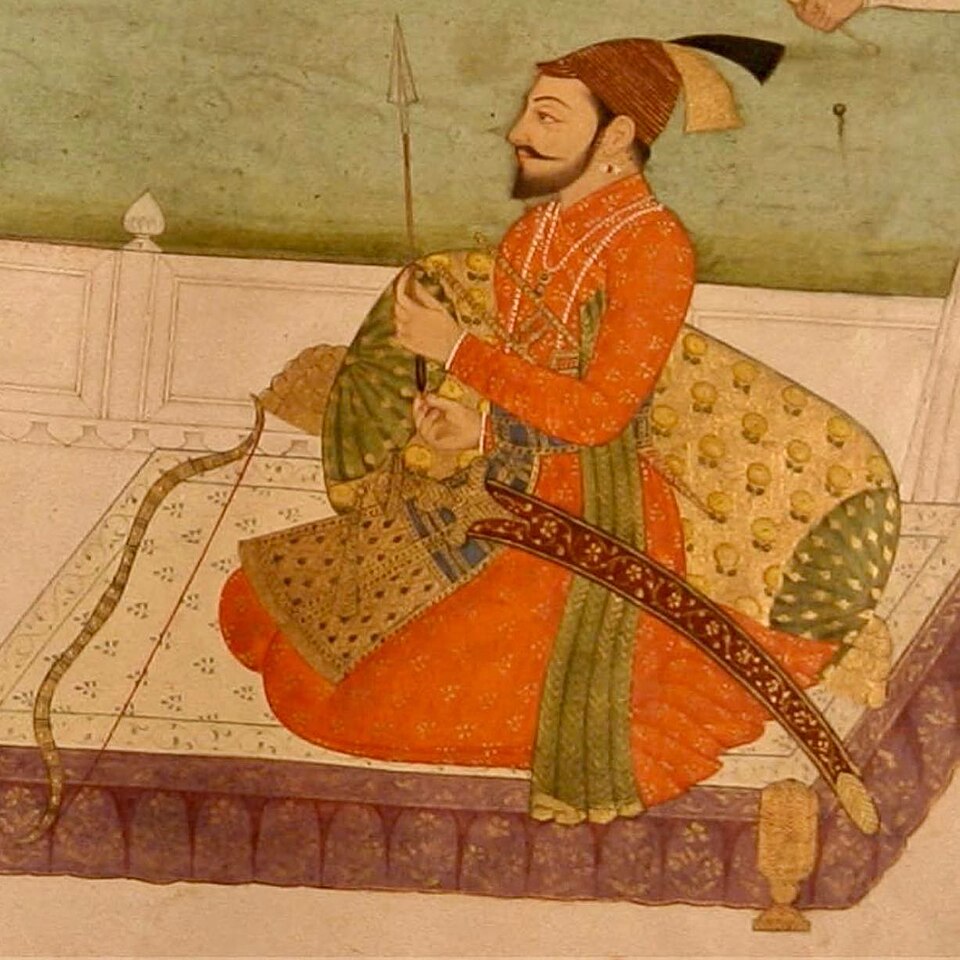
Tenth Guru, warrior and poet. Created the Khalsa in 1699, fought a long war with the Mughals and hill rajas, lost his four sons and mother, and named the Guru Granth Sahib as the final Guru.
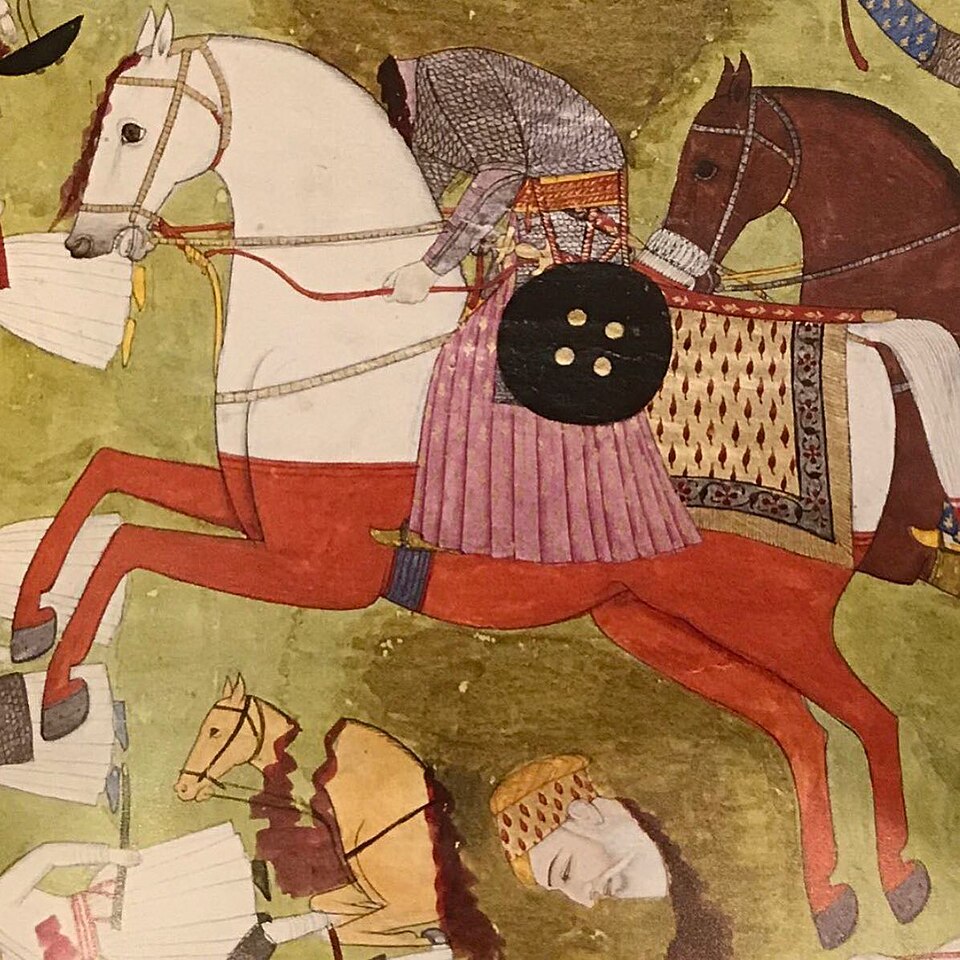
Mughal governor of Sirhind who besieged Anandpur, pursued Guru Gobind Singh and ordered the execution of his younger sons. Killed by Banda Singh's army at Chappar Chiri.
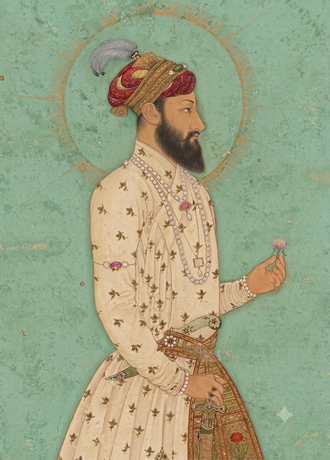
Aurangzeb's son, whom Guru Gobind Singh helped in the succession war of 1707 and travelled with to the Deccan. He later led the campaign against Banda Singh.
 Banda Singh Bahadur (born Lachman Dev, also known simply as Banda Bahadur, Banda SinghWikimedia Commons · Sikh Heritage Museum (by unknown photographer) ↗