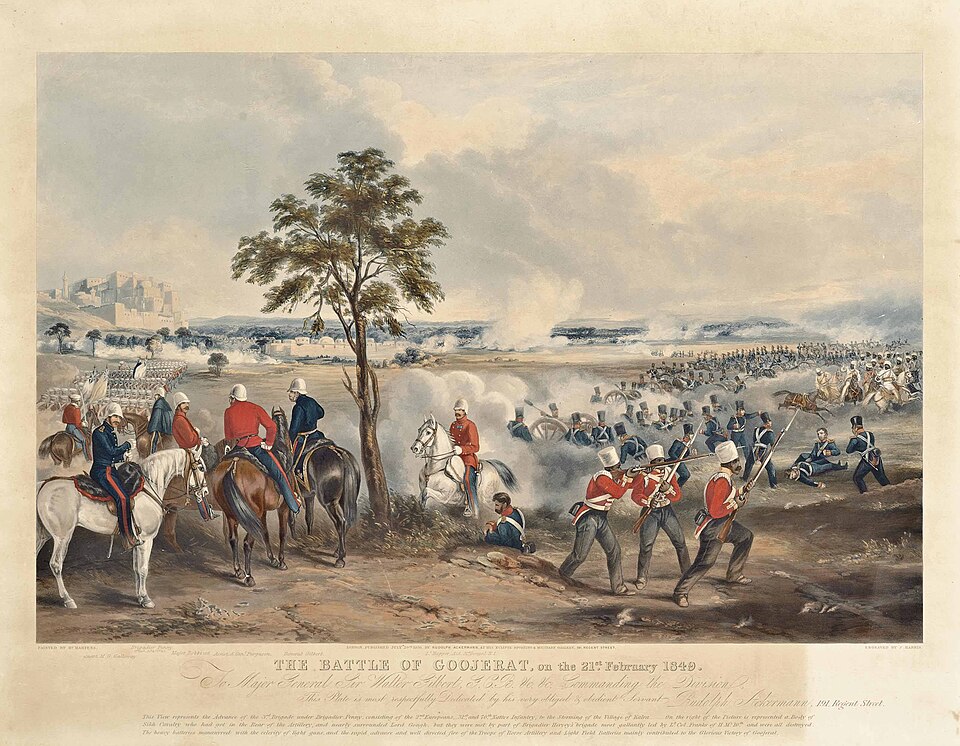
Battle of Gujrat
Overwhelming British artillery broke the Sikh army. On 29 March 1849 Punjab was annexed and the boy Maharaja Duleep Singh deposed.
On 21 February 1849 Gough met Sher Singh and Chattar Singh Attariwala at Gujrat, near the Chenab, with an army that had been reinforced after the fall of Multan.
This time Gough used his overwhelming artillery, nearly a hundred guns, in a long bombardment before the infantry advanced. The Sikh army, outgunned, was broken; its Afghan allies under Dost Mohammad's son fled. It is called the battle of the guns.
Sher Singh surrendered at Rawalpindi on 14 March 1849, his soldiers laying down their arms one by one, some weeping, saying 'today Ranjit Singh has died'. On 29 March 1849 Lord Dalhousie annexed the Punjab.
The two Anglo-Sikh Wars
1845 – 1849- 1
- 2
- 3
- 4
- 5
- 6
- 7
- 8
After Sobraon the Treaty of Lahore (March 1846) took the Jalandhar Doab and the hills, and Kashmir went to Gulab Singh. After Gujrat the Kingdom of Lahore was annexed, on 29 March 1849.
Same era
The British conquest: the Anglo-Sikh Wars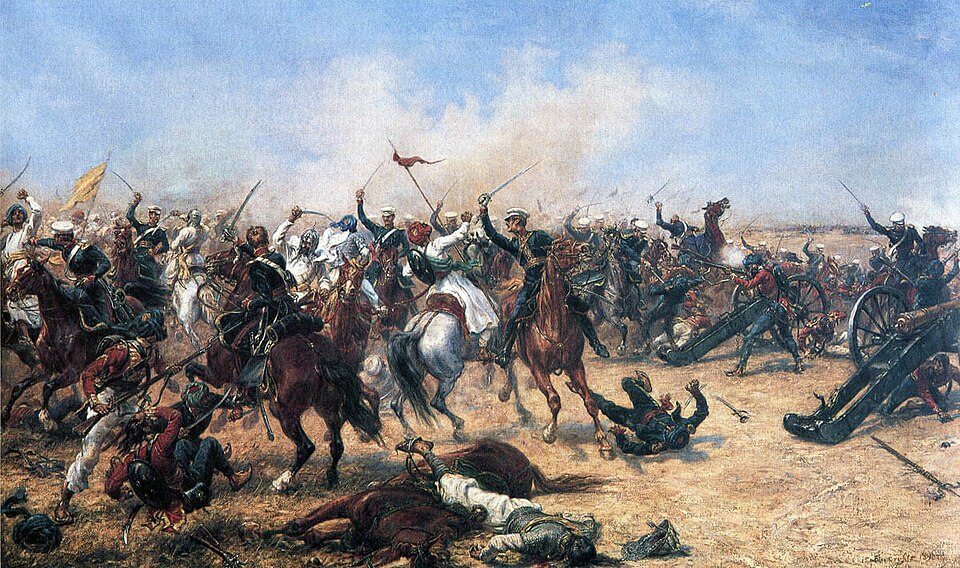
First battle of the First Anglo-Sikh War, fought at dusk among dust and scrub. The Sikh commanders, Lal Singh and Tej Singh, were later widely accused of betraying their own army.
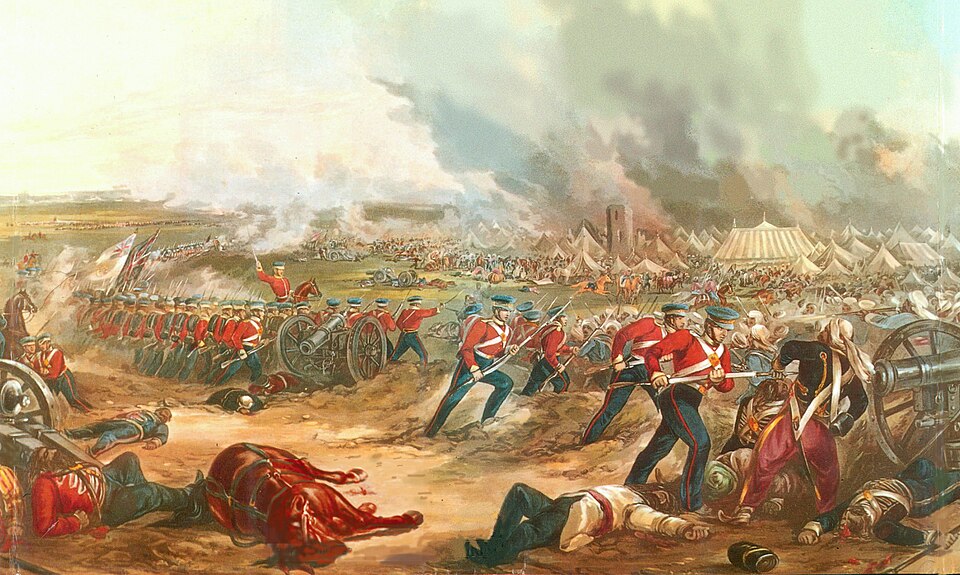
So close that Hardinge prepared to burn his papers. Tej Singh withdrew when the exhausted British were at his mercy.
A British victory on the Sutlej near Ludhiana.
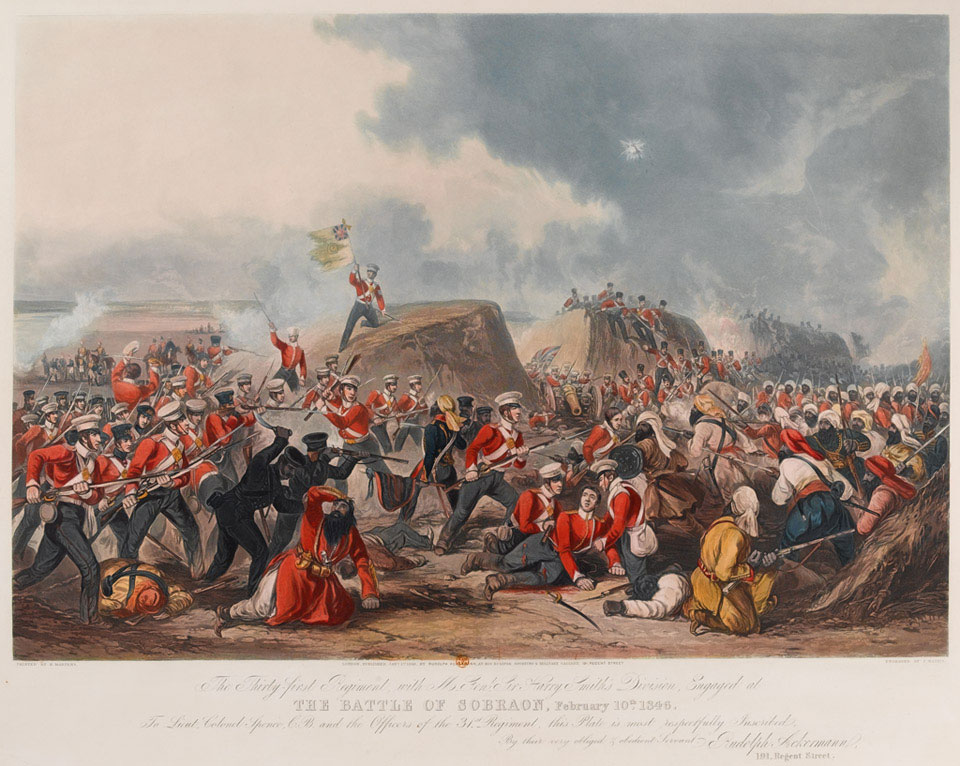
The Sikhs fought with their backs to the Sutlej, and the bridge of boats behind them broke. Sham Singh Attariwala died with his men.
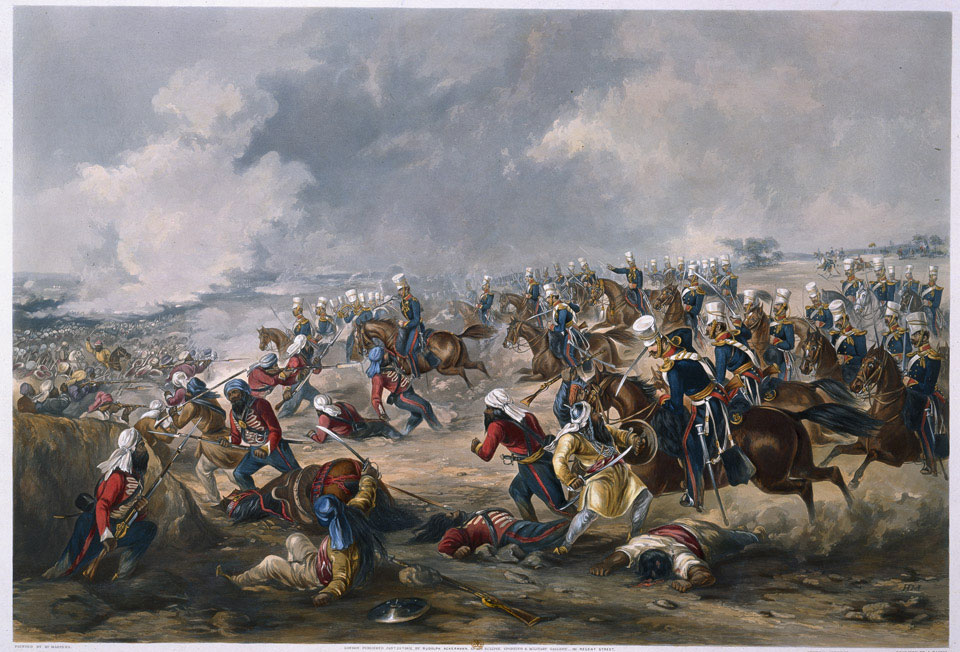
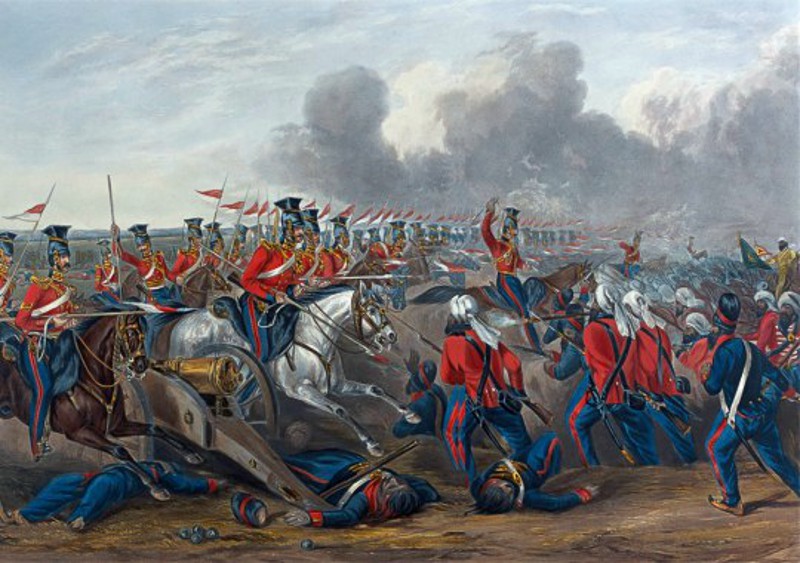
A British cavalry charge on the Chenab ran into the Sikh guns and was repulsed.
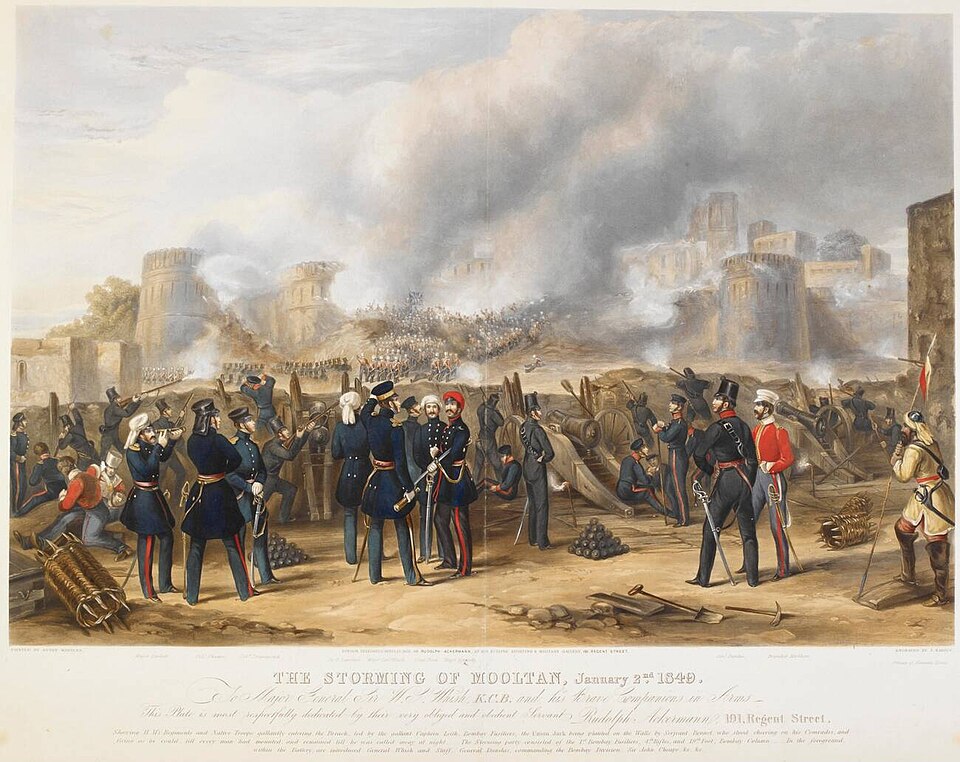
The revolt at Multan that began the Second Anglo-Sikh War. A British shell blew up the fort's main magazine in December, and Mulraj surrendered in January 1849.
One of the bloodiest battles the British fought in India. The losses led to calls in London for Gough's dismissal.