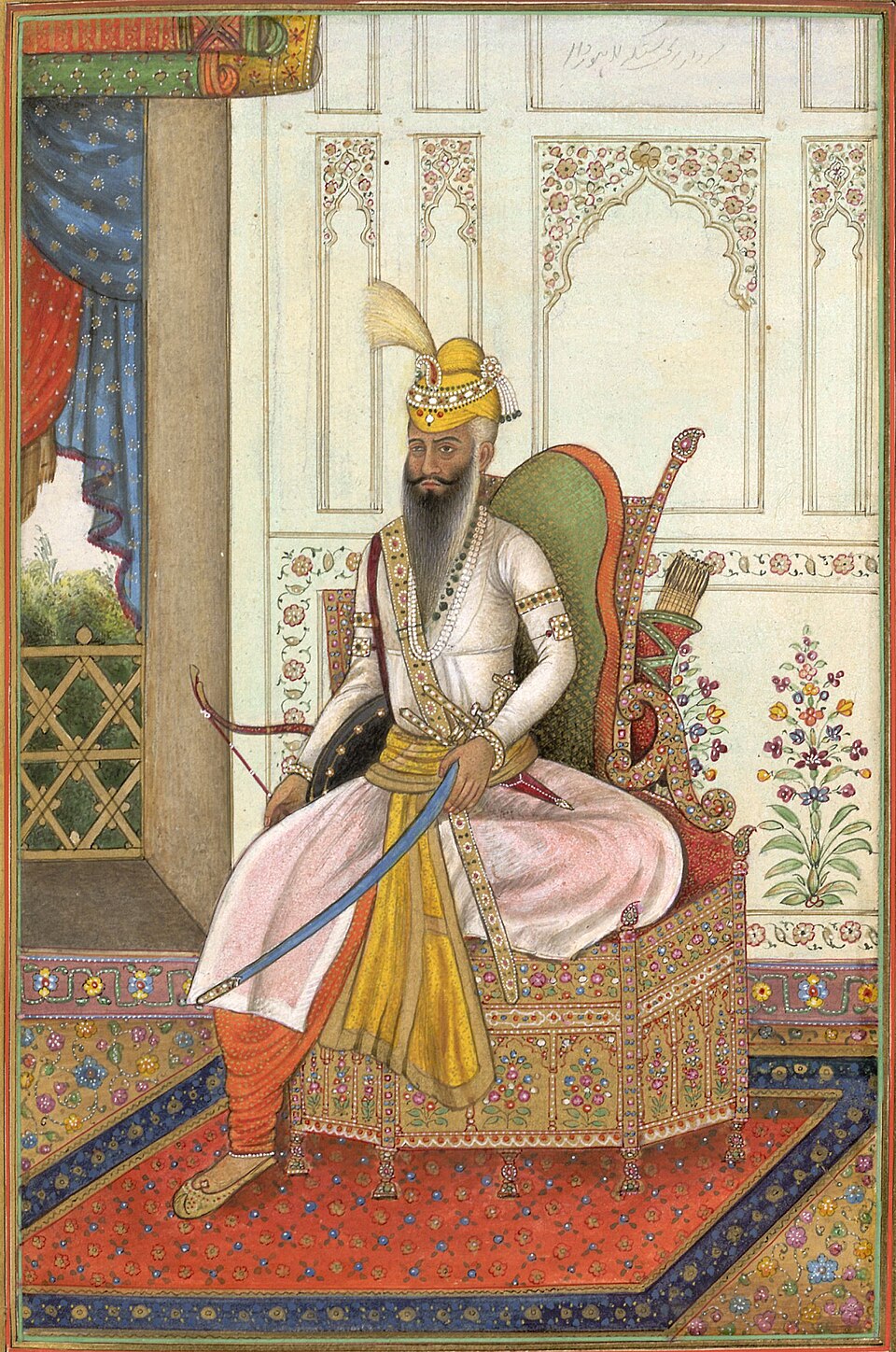
Maharaja Ranjit Singh
Sher-e-Punjab, the Lion of Punjab. United the misls into the Sikh Empire, ruled from Lahore for forty years and covered the Harmandir Sahib in gold.
Ranjit Singh was born in 1780 at Gujranwala, the son of Mahan Singh, chief of the Sukerchakia misl. Smallpox took the sight of his left eye as a child. His father died when he was twelve, and he took control of the misl at seventeen, with his mother-in-law Sada Kaur at his side.
In 1799 he entered Lahore, invited by its citizens, and in 1801, on Vaisakhi, he was proclaimed Maharaja of the Punjab. Over the next four decades he united the warring misls and conquered Amritsar in 1802, Kasur in 1807, Kangra in 1809, Attock in 1813, Multan in 1818, Kashmir in 1819, and Peshawar in 1834, while his Dogra generals took Ladakh. His kingdom, the Sarkar-i-Khalsa, ran from the Khyber Pass to the Sutlej and from Tibet to Sindh. In 1809 he made a treaty with the British at Amritsar fixing the Sutlej as the border, which he kept for the rest of his life.
He ruled in the name of the Khalsa and struck coins in the name of the Gurus, not his own. He covered the upper storeys of the Harmandir Sahib in gilded copper, which gave it the name the Golden Temple, but also gave to mosques and temples. His ministers included Hindus, Muslims and Sikhs: the Muslim Fakir brothers, the Hindu Dogras and Misr Diwan Chand, the Sikh Sandhawalias. He built a modern army trained by European veterans of Napoleon's wars, among them Allard and Ventura, and equipped it with artillery cast in Lahore.
He wore the Koh-i-Noor diamond, which he took from the fugitive Shah Shuja in 1813. He drank hard, rode hard and was famous for his curiosity, questioning every visitor for hours. He was illiterate but had an extraordinary memory, and was said never to have signed a death warrant.
He died in Lahore on 27 June 1839. Four of his queens and seven slave girls burned on his pyre. Within ten years of his death the kingdom was torn apart by court intrigue and handed to the British. His samadhi stands beside the Lahore Fort and the Badshahi Mosque, and Sikhs remember him as Sher-e-Punjab, the Lion of the Punjab.
Contemporaries found him unimpressive to look at, small and pockmarked, and dressed more plainly than any of his courtiers. Colonel James Skinner, an early biographer, described a young man obsessed with horses, musketry, swords and drill; a British officer wrote that he often led storming parties himself and was the first into the breach. In 1785, when Ranjit Singh was five, the traveller George Forster had predicted that a single Sikh leader would one day absorb all the misls. At his death his kingdom was about the size of modern Germany, and his arsenal held more than five hundred guns. Alfred de Dreux's portrait of him on horseback hangs in the Louvre.
Battles
On the timeline
Connected
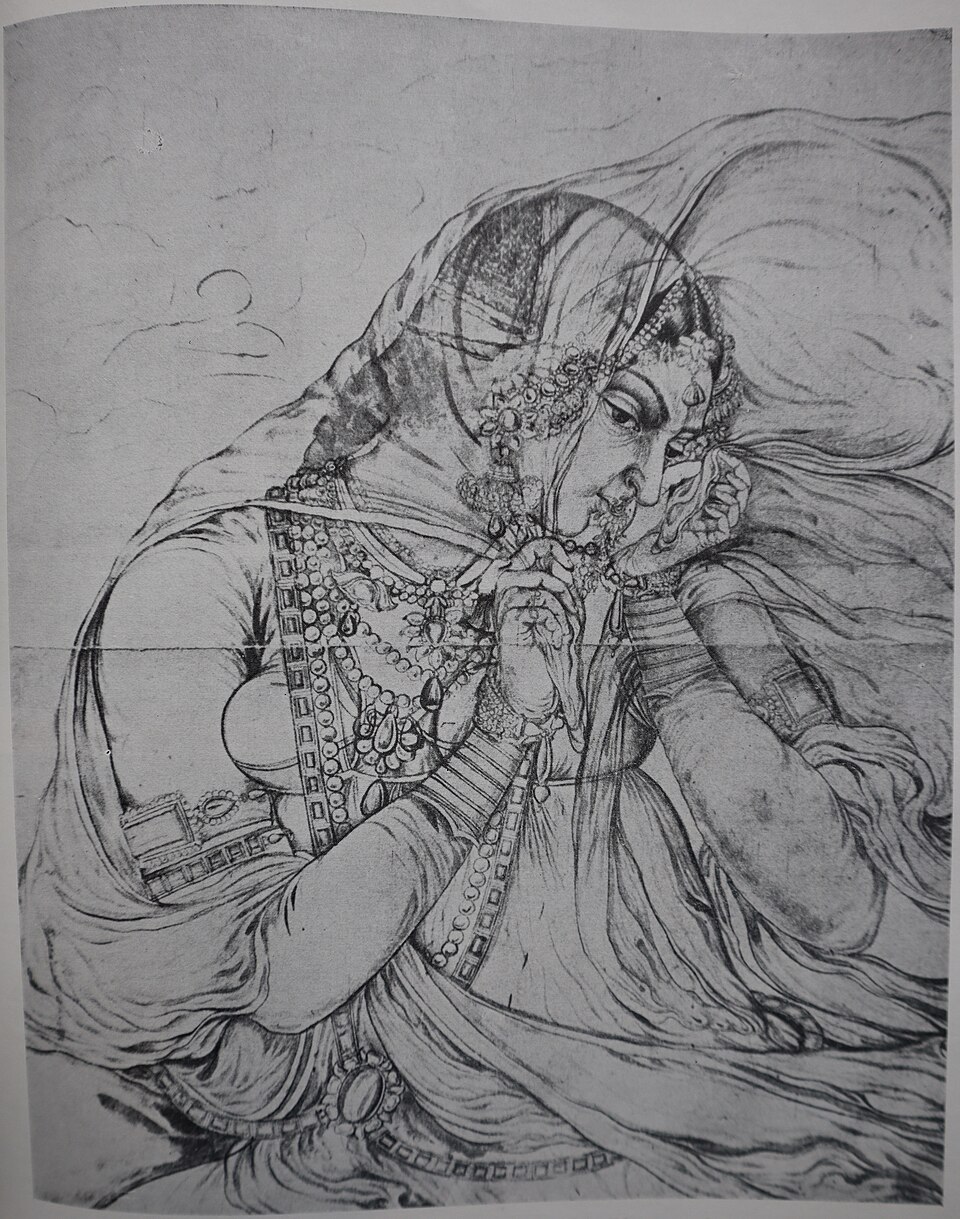
Head of the Kanhaiya misl after her husband's death and the mother-in-law of Ranjit Singh. Her support helped him take Lahore in 1799.
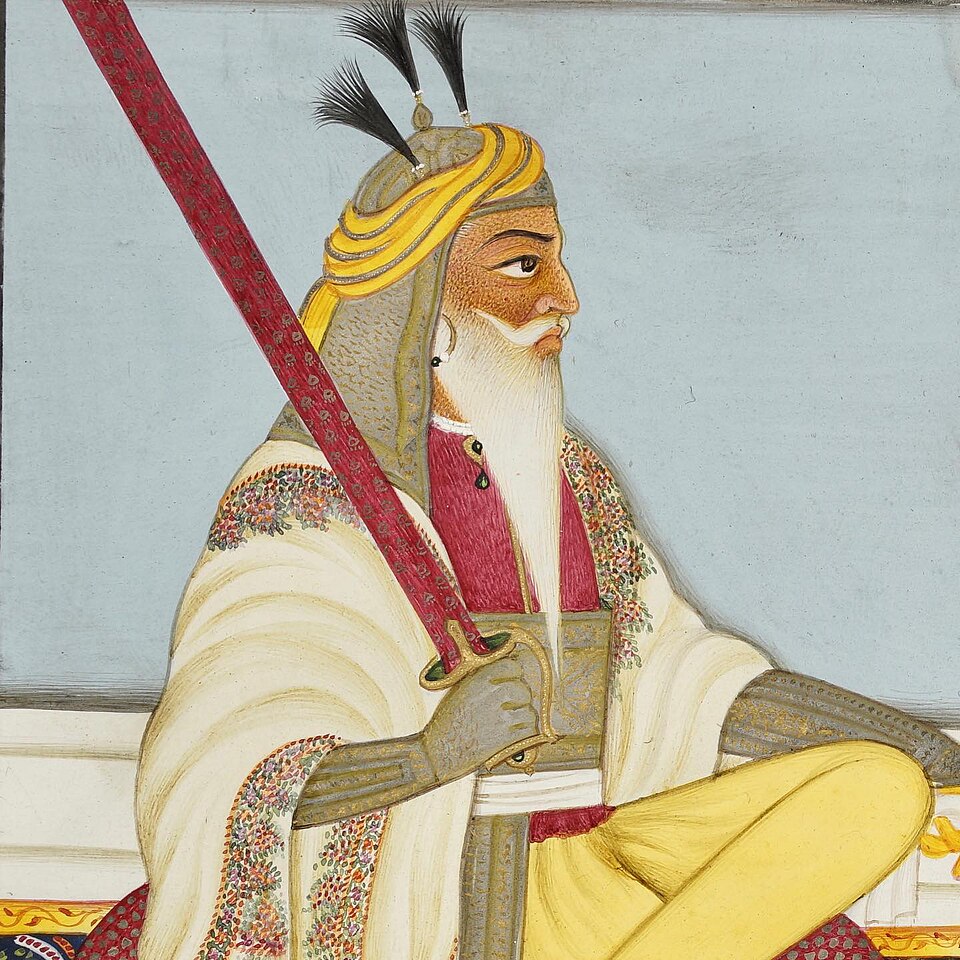
Commander-in-chief of the Sikh army on the north-west frontier. Governed Kashmir and Peshawar and died holding Jamrud against the Afghans.
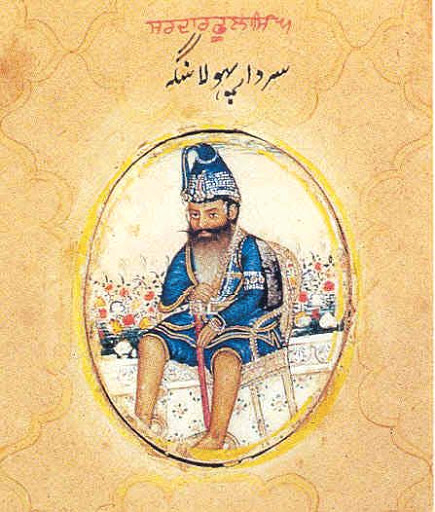
Nihang leader and jathedar of the Akal Takht who once had Ranjit Singh flogged for a moral lapse. Killed leading the charge at Nowshera.
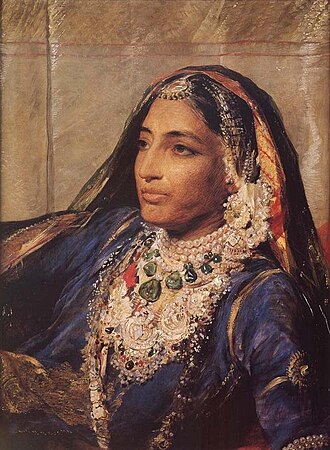
Youngest wife of Ranjit Singh and regent for her son Duleep Singh. The British saw her as the most dangerous person in Punjab, imprisoned her and exiled her; she escaped to Nepal.
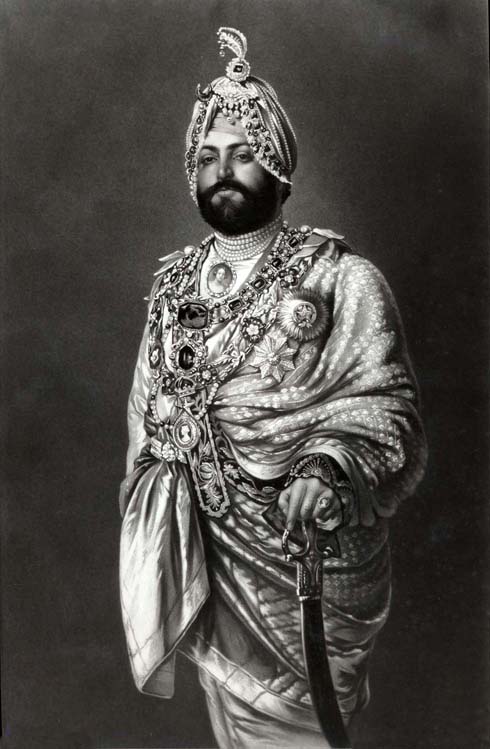
Last Maharaja of the Sikh Empire. Deposed at ten in 1849, separated from his mother, converted to Christianity and taken to England. The Koh-i-Noor passed to Queen Victoria.
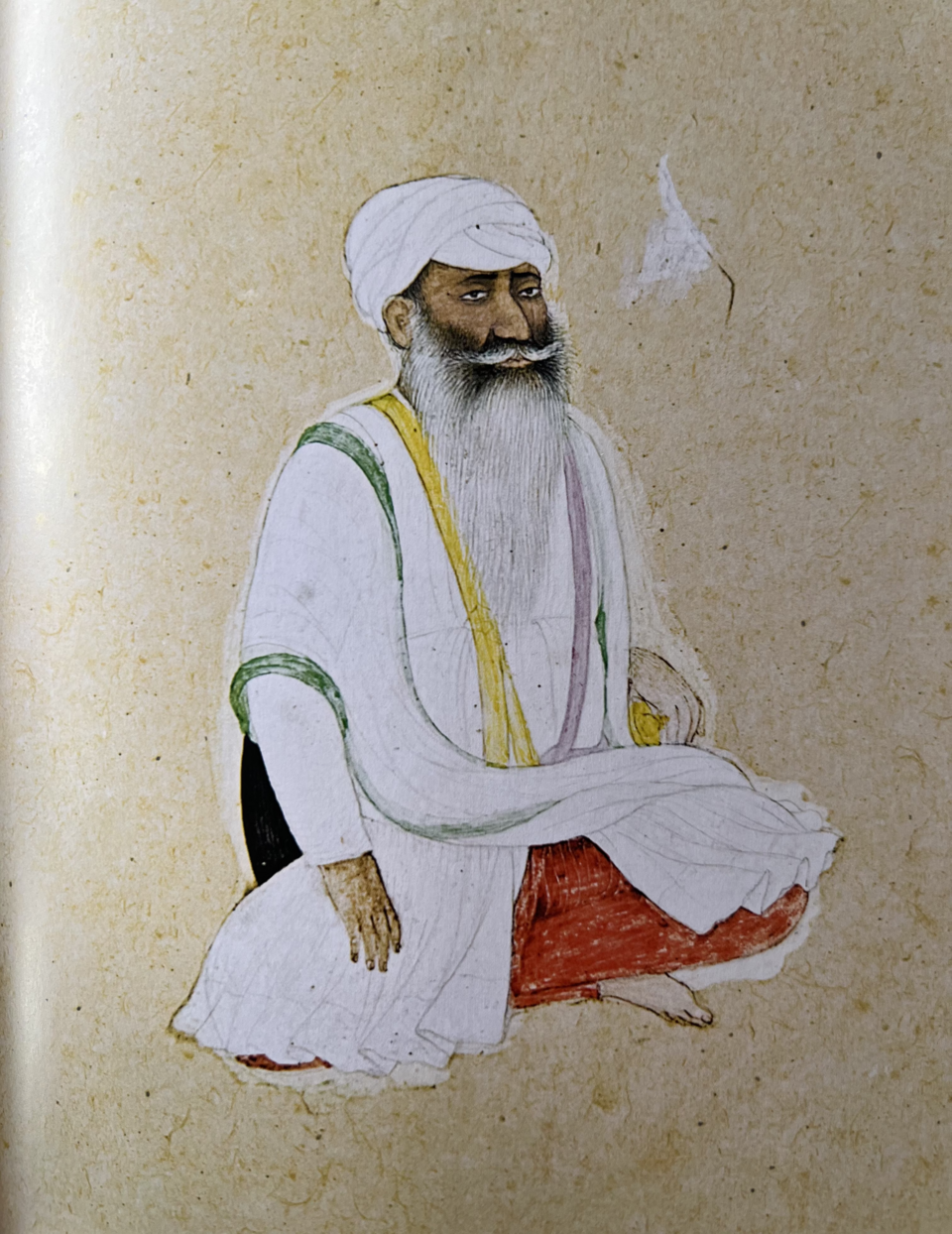
Veteran general who, dressed in white, rode into the British lines at Sobraon and died with his men.
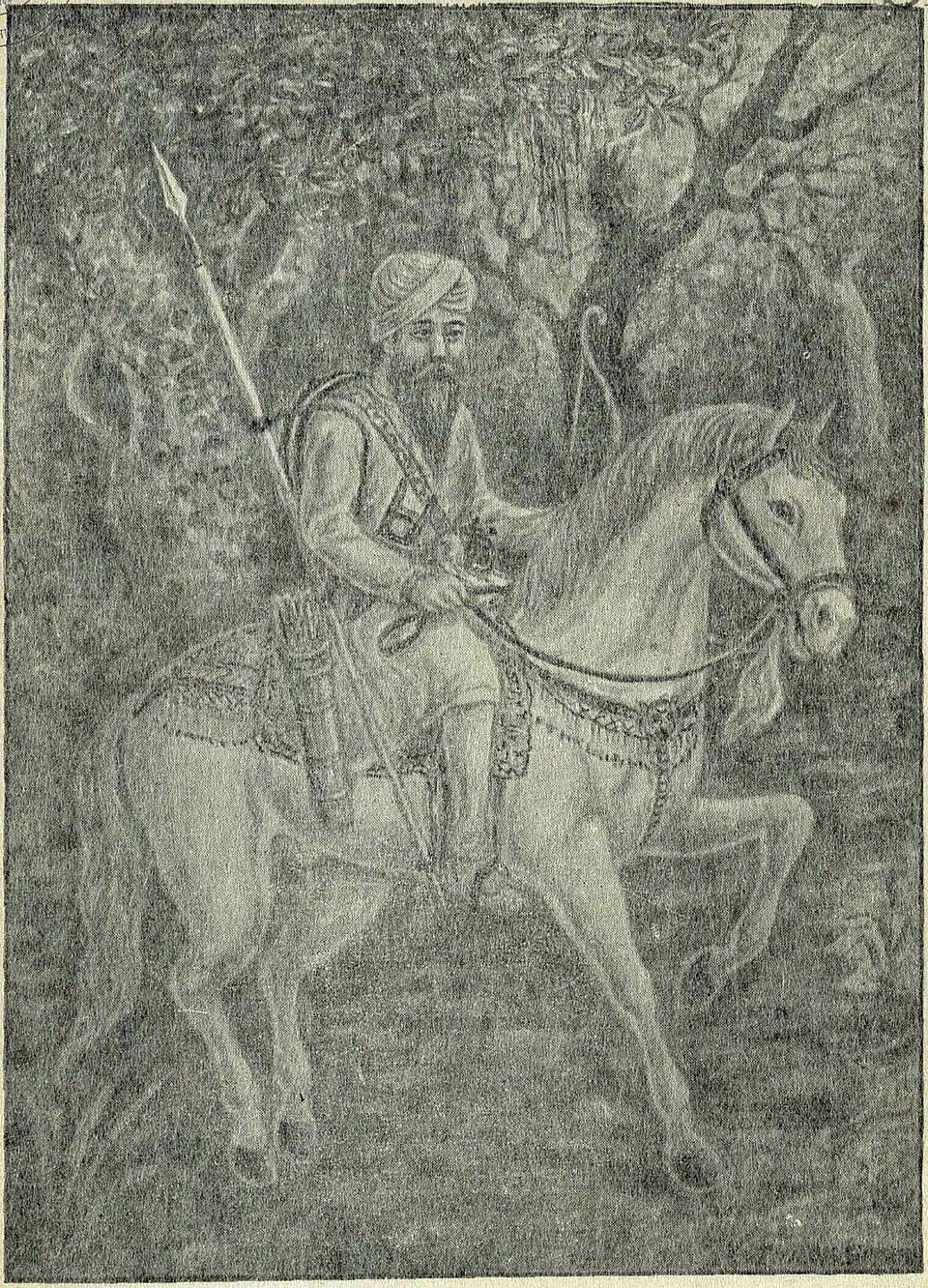
Grandfather of Ranjit Singh and founder of the Sukerchakia misl's power at Gujranwala, where he beat the Afghan governor in 1761.
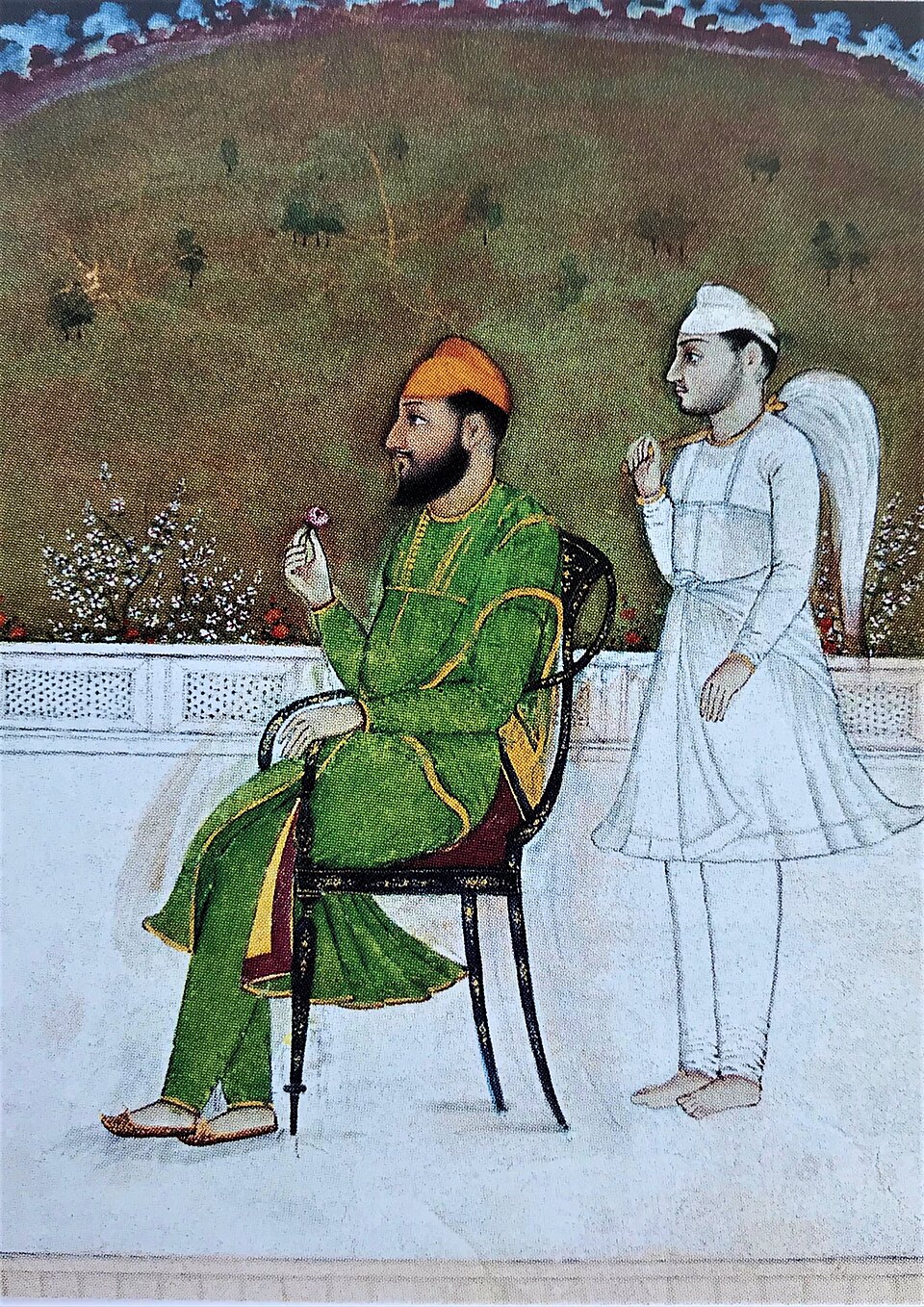
Father of Ranjit Singh. Expanded the Sukerchakia lands from Gujranwala and died during a siege when Ranjit was twelve.
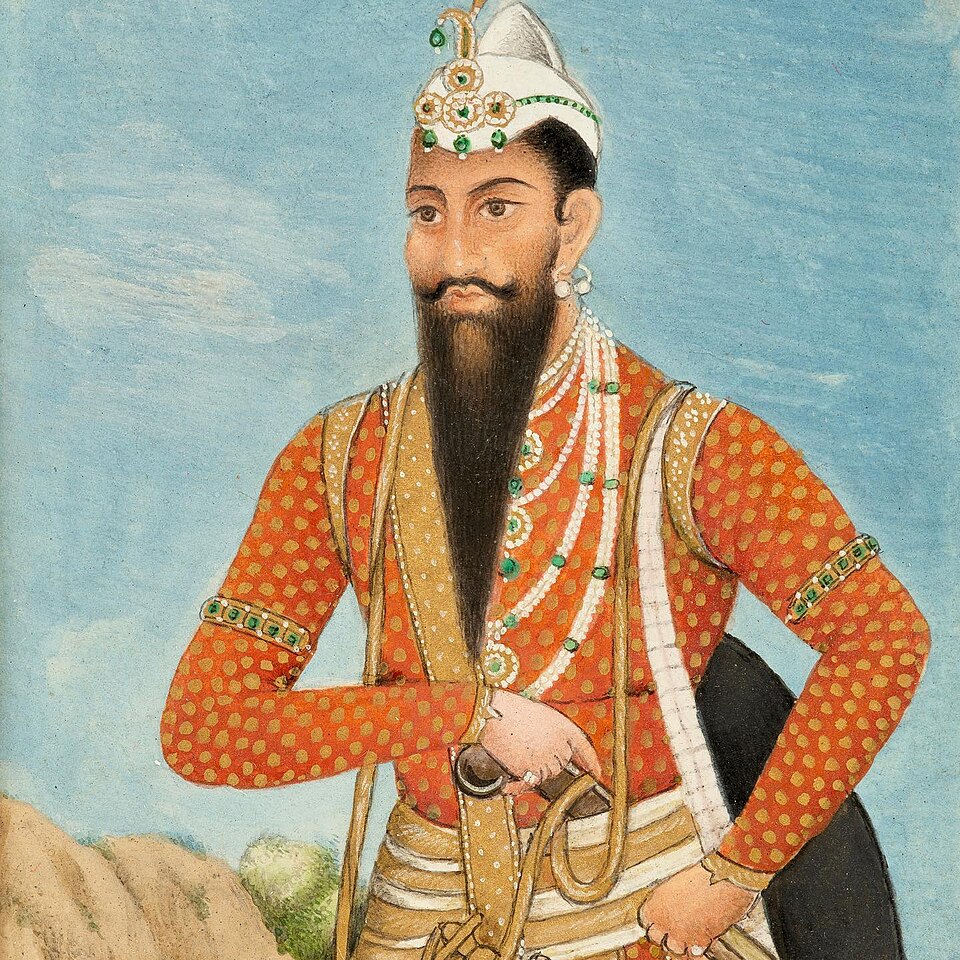
Ranjit Singh's eldest son and successor. Nominal commander at Multan in 1818, he was sidelined within months of his accession and died, possibly poisoned, in November 1840.
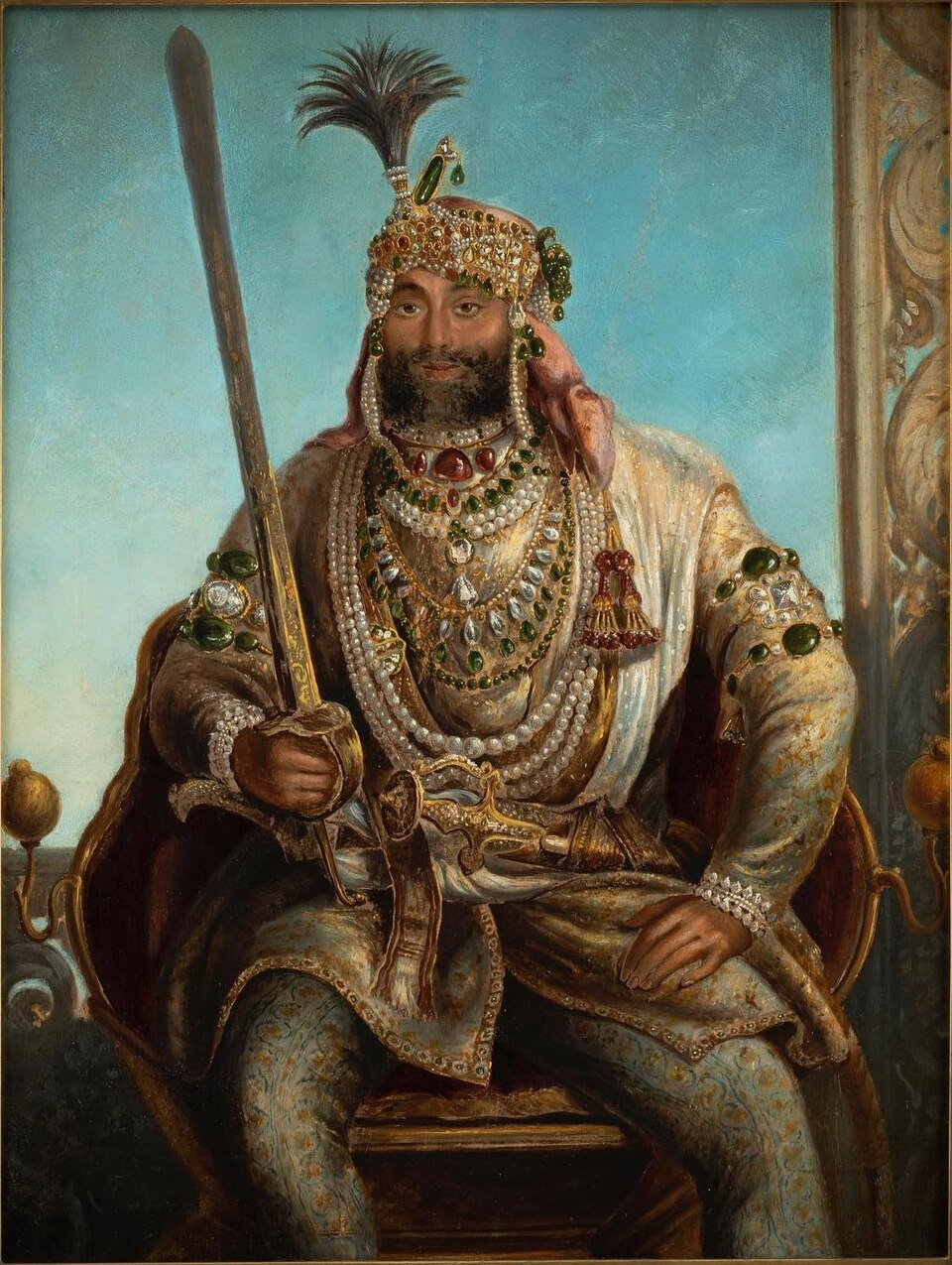
Son of Ranjit Singh who won the throne in 1841 with the army's support. He was shot by the Sandhawalia chiefs in September 1843, the same day his chief minister Dhian Singh was killed.
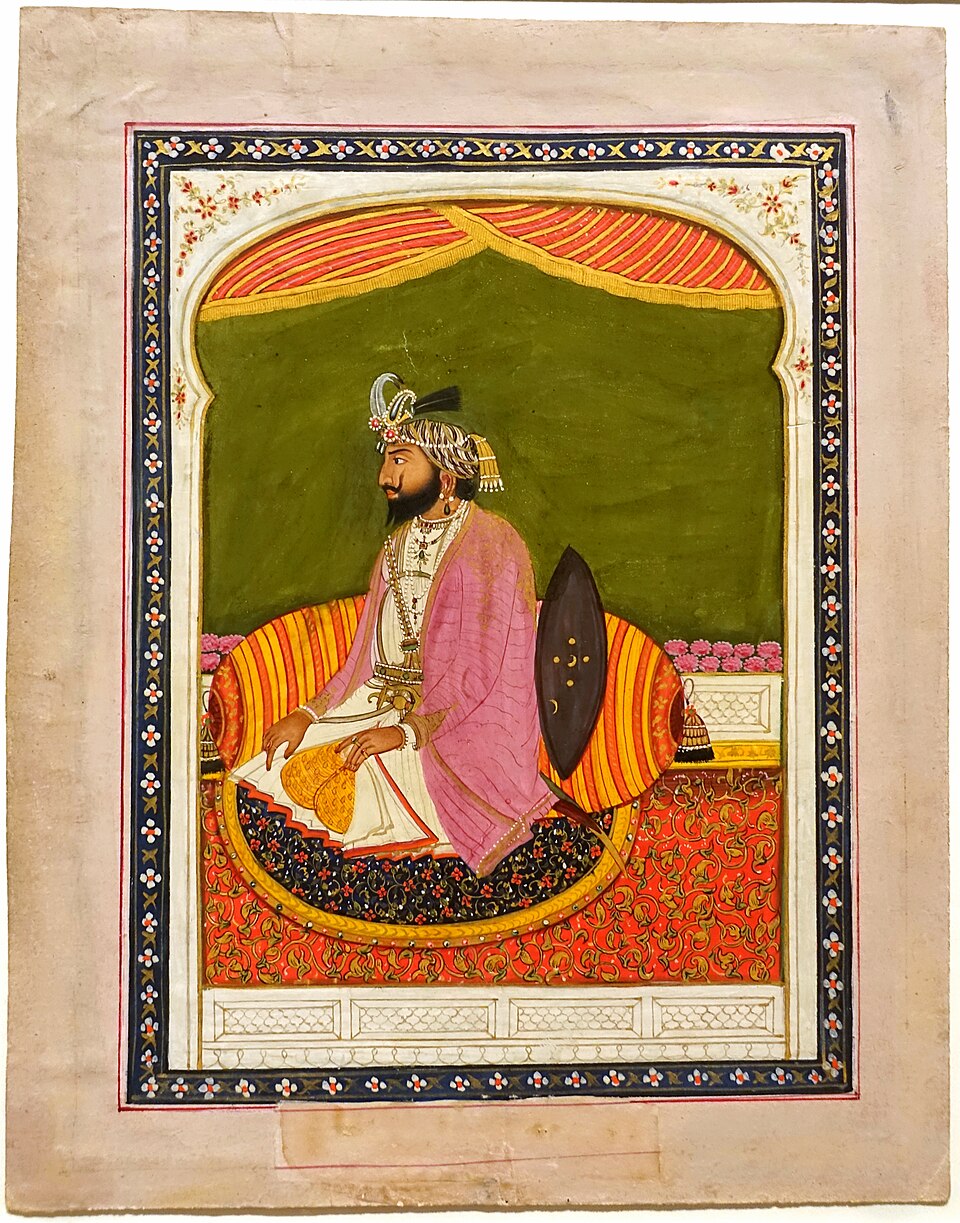
Chief minister of the Sikh Empire for 25 years and the most powerful man at court after Ranjit Singh. Assassinated in 1843.
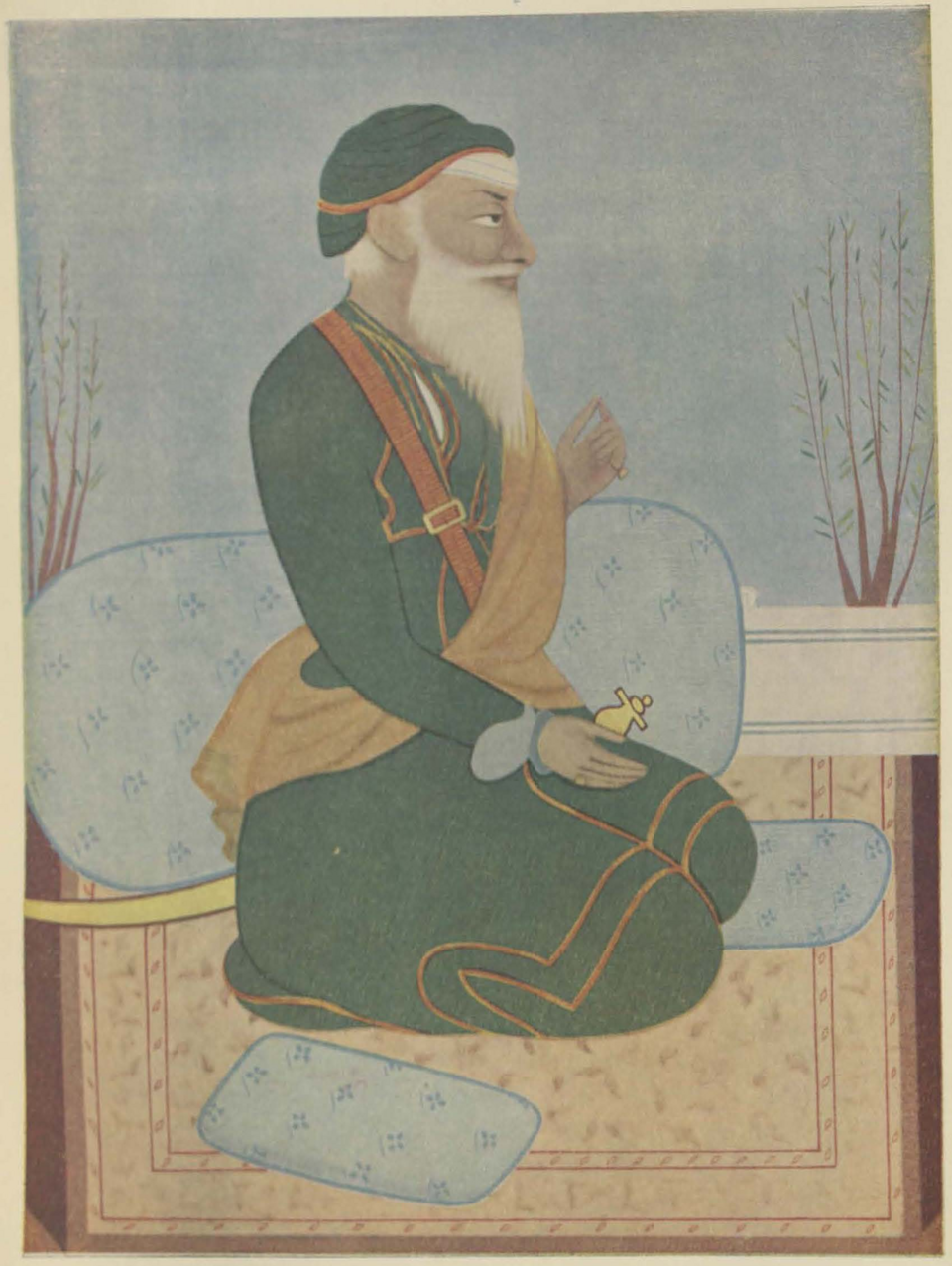
Ranjit Singh's leading general in the early conquests, victor over the Afghans at Attock in 1813.
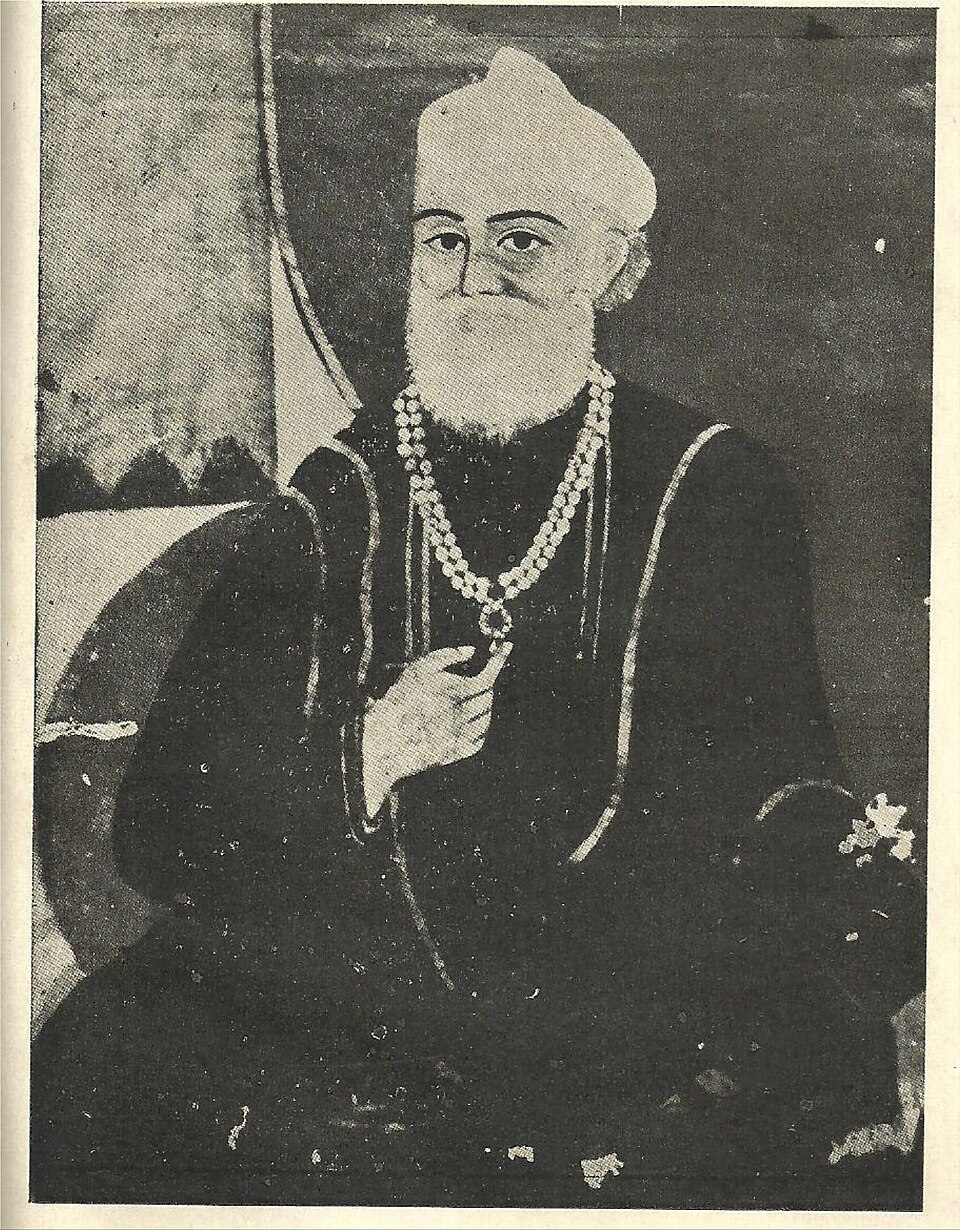
Artillery commander who rose from clerk to general and led the storming of Multan in 1818 and the conquest of Kashmir in 1819.
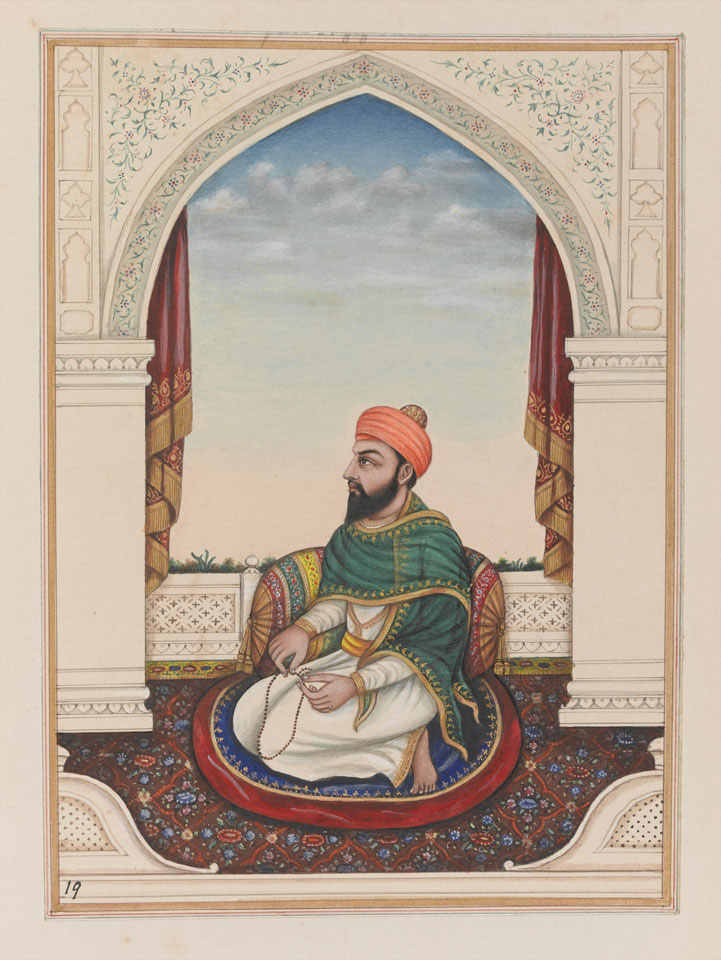
Physician, foreign minister and confidant of Ranjit Singh, a Muslim who handled relations with the British and the Afghans.
Ranjit Singh's court
Every faith at LahoreAt court
- Fakir AzizuddinForeign minister and physicianMuslim
- Raja Dhian Singh DograChief minister (wazir)Hindu
- Diwan Dina NathFinance and revenue; a Kashmiri PanditHindu
- Fakir NuruddinPhysician and keeper of the householdMuslim
Generals
- Hari Singh NalwaTook Kashmir and Peshawar; held the KhyberSikh
- Diwan Mokham ChandCommander in the early wars; won at AttockHindu
- Misr Diwan ChandTook Multan and KashmirHindu
- Sham Singh AttariwalaFell at Sobraon, 1846Sikh
- Mian Ghaus KhanCommander of the artilleryMuslim
- Jean-Baptiste VenturaTrained the infantry on French lines; ItalianEuropean, Christian
- Jean-François AllardRaised the dragoons; FrenchEuropean, Christian
- Claude Auguste CourtArtillery and gun foundry; FrenchEuropean, Christian
Governors
- Diwan Sawan MalGovernor of Multan for 23 yearsHindu
- Paolo AvitabileGovernor of Peshawar; ItalianEuropean, Christian
- Gulab Singh DograRaja of JammuHindu
- Lehna Singh MajithiaMaster of ordnance; governor of the hillsSikh
A selection of his leading ministers, generals and governors. Dozens of Europeans and Americans served him, among them veterans of Napoleon's armies.
In the world's museums
57 objects → Ranjit Singhca. 1838 - ca. 1840 · Punjab Plains© Victoria and Albert Museum, London ↗
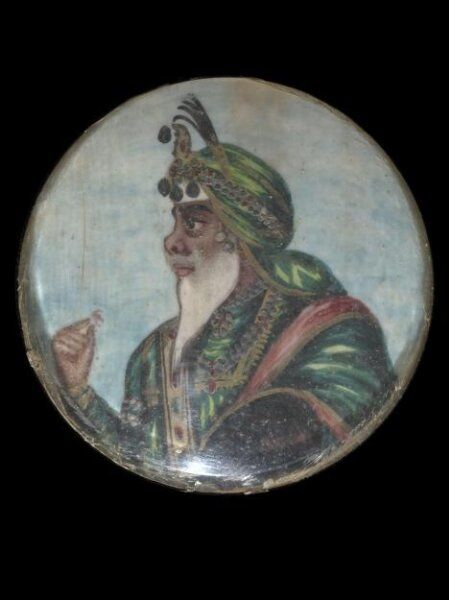 Maharaja Ranjit Singhca. 1850 - ca. 1870 · Lahore© Victoria and Albert Museum, London ↗
 Painting of Maharaja Ranjit Singh of Lahore with Dhian Singh Dogra, Central Sikh MuseumCentral Sikh Museum, Amritsar · photo Wikimedia Commons (Wikimedia Commons) ↗
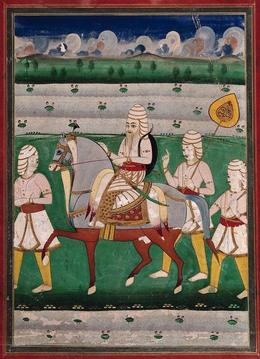 Rana Ranjit Singh on a horse with three attendants[between 1800 and 1899?] · [India],Wellcome Collection ↗
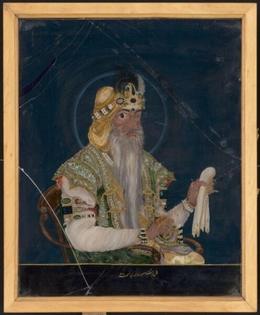 Portrait of Maharajra Ranjit Singh (1780-1839), nimbateca.1849 · Lahore© Victoria and Albert Museum, London ↗
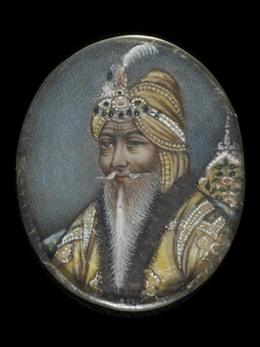 One of two portraits of Maharaja Ranjit Singh (1780-1839)ca. 1900 · Delhi© Victoria and Albert Museum, London ↗
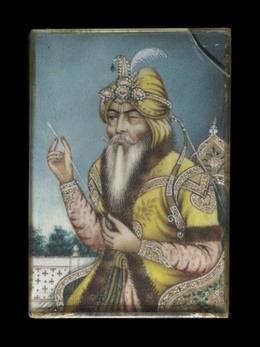 One of two portraits of Maharaja Ranjit Singh (1780-1839).ca. 1900 · Delhi© Victoria and Albert Museum, London ↗
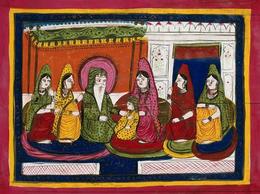 Maharaja Ranjit Singh with wivesWellcome Collection (via Europeana) · CC BY ↗
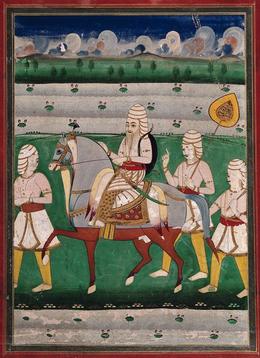 Rana Ranjit Singh on a horse with three attendantsWellcome Collection (via Europeana) · CC BY ↗
 A Man with a Huqqah (smoking pipe) and Dancing Girl or The Amazons of Ranjit Singh' by…Lahore Museum · photo Wikimedia Commons (Wikimedia Commons) ↗
 Young Maharaja Ranjit Singh', Company style, nineteenth century, pigment on paperAsian Art Museum, San Francisco · photo Wikimedia Commons (Wikimedia Commons) ↗
 Equestrian painting of Maharaja Ranjit Singh of Lahore with an attendant, ca.1850–1900Wikimedia Commons ↗
 Maharaja Ranjit Singh's funeralBritish Museum, London · photo workshop of Purkhu of Kangra (Wikimedia Commons) ↗
 Maharaja Ranjit SinghV&A, London · photo Wikimedia Commons (Wikimedia Commons) ↗
 Maharaja Ranjit Singh and members of his court, Punjab Province, ca.1825Asian Art Museum, San Francisco · photo Wikimedia Commons (Wikimedia Commons) ↗
 Maharaja Ranjit Singh holding an arrow whilst sitting on a chair outdoors, circa 1900V&A, London · photo Wikimedia Commons (Wikimedia Commons) ↗
 Maharaja Ranjit Singh on horseback (with black hairs still visible in his beard)Asian Art Museum, San Francisco · photo Wikimedia Commons (Wikimedia Commons) ↗
 Painting of Maharaja Ranjit Singh on horseback with attendant, Bazaar School, AmritsarWikimedia Commons ↗