Coins
From the Indo-Greek kings to the Nanakshahi rupees of Lahore and Amritsar.
Vedas, Alexander and Gandhara
1900 BCE – 1000 · 28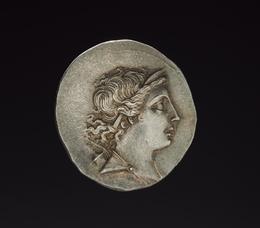 After Alexander of Macedon succeeded in conquering Egypt and Persia in 331 BCWikimedia Commons ↗
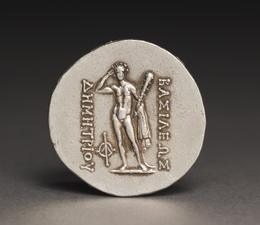 Demetrios I (222–180 BC) ruled the Indo-Greek kingdom of Bactria from 200 to 180 BC and…Wikimedia Commons ↗
 Tetradrachm Coin of Demetrios I200–190 BCE · Afghanistan, Bactria, Indo-GreekCleveland Museum of Art ↗
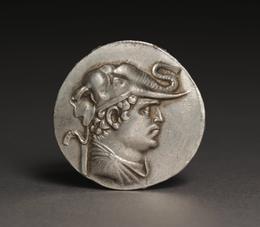 Coin of Demetrios, I (obverse)200–190 BCE · Afghanistan, Greco-Bactria, Demetrios I (c. 200–180 BCE)Cleveland Museum of Art ↗
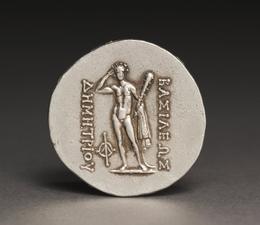 Coin of Demetrios, I (reverse)200–190 BCE · Afghanistan, Greco-Bactria, Demetrios I (c. 200–180 BCE)Cleveland Museum of Art ↗
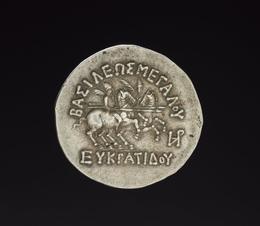 Coin of Eukratides I170–145 BCE · Afghanistan, BactriaCleveland Museum of Art ↗
 A silver Indo-Greek drachm of Menander (c.160-145 BC) of the Kabul/Gandhara regionWikimedia Commons · National Museum Wales , Susie White, 2018-10-22 14:57:42 · CC BY ↗
 Coin of Taxila Pushkalavati City Guild, probably circa 2nd century BCEWikimedia Commons · SpeakingArch · CC BY-SA ↗
 Coin of MenanderBritish Museum, London · photo No machine-readable author provided. World Imaging assumed ( (Wikimedia Commons) ↗
 Copper Coin of Agathocles,190-80 BCE, Ashmolean Museum Copper coins of AgathoclesAshmolean Museum, Oxford · photo SpeakingArch (Wikimedia Commons) · CC BY-SA ↗
 Coin of Strato I, circa 125-110 BCE, National Museum New DelhiNational Museum, New Delhi · photo SpeakingArch (Wikimedia Commons) · CC BY-SA ↗
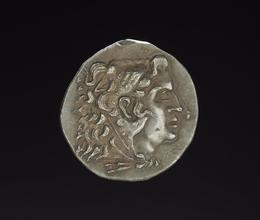 Indo-Greek Coinc. 200–1 BCE · Afghanistan, BactriaCleveland Museum of Art ↗
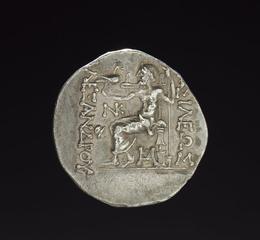 Indo-Greek Coin200–1 BCE · Afghanistan, BactriaCleveland Museum of Art ↗
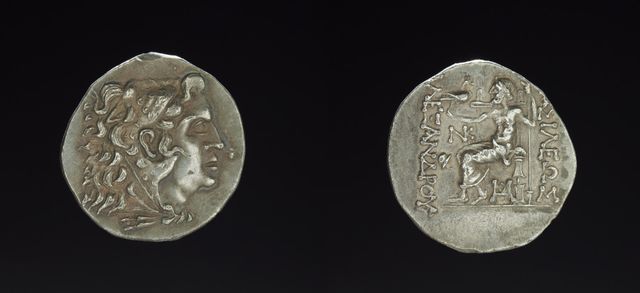 Indo-Greek Coinc. 200–1 BCE · Afghanistan, BactriaCleveland Museum of Art ↗
 Silver denarius of Tiberius (14–37 CE) found in IndiaBritish Museum, London · photo Uploadalt (Wikimedia Commons) · CC BY-SA ↗
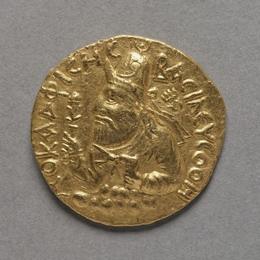 Vima Kadphises (obverse)50–78 CE · India, Mathura, Kushan periodCleveland Museum of Art ↗
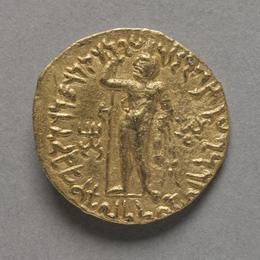 Vima Kadphises (reverse)50–78 CE · India, Mathura, Kushan periodCleveland Museum of Art ↗
 Coin of Kanishka I, with Iranian solar deity Mithra (Miiro) on the reverseNational Museum, New Delhi · photo SpeakingArch (Wikimedia Commons) · CC BY-SA ↗
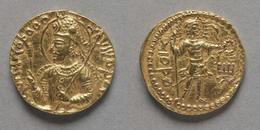 Coinc. 106–149 CE · India, Mathura, Kushan periodCleveland Museum of Art ↗
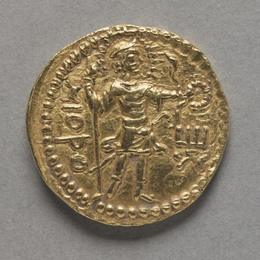 Coin: Havishka (reverse)c. 106–149 CE · India, Mathura, Kushan periodCleveland Museum of Art ↗
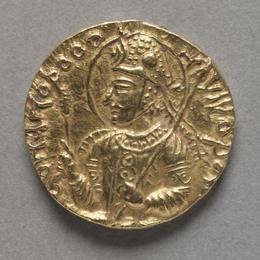 Coin: Havishka (obverse)c. 106–149 CE · India, Mathura, Kushan periodCleveland Museum of Art ↗
 Buddha type coin of Kanishka 127-150 CE first human depiction of BuddhaAshmolean Museum, Oxford · photo SpeakingArch (Wikimedia Commons) · CC BY-SA ↗
 Karttikeya shrine with anteloppe Yaudheya Punjab 2nd century CE.British Museum, London · photo Uploadalt (Wikimedia Commons) · CC BY-SA ↗
 Coin of Huvishka, circa 152-192 CE, showing diademed and crowned half-length bust of…National Museum, New Delhi · photo SpeakingArch (Wikimedia Commons) · CC BY-SA ↗
 Gold coin of the Kushans, 40-350 CE, Ashmolean Museum, OxfordAshmolean Museum, Oxford · photo SpeakingArch (Wikimedia Commons) · CC BY-SA ↗
 India, Kushan, Vasudeva II, 3rd century - Coin of Kushan King Vasudeva II - 2011.212Wikimedia Commons ↗
 India, Kushan, Vasudeva II, 3rd century - Golden Dinar - 2011.212.aWikimedia Commons ↗
 India, Kushan, Vasudeva II, 3rd century - Golden Dinar - 2011.212.bWikimedia Commons ↗
Gurus and Mughals
1469 – 1708 · 2 Silver shahrukhi coin of Babur, struck at Lahore AH 935 ,1528-1529 CE, Ashmolean MuseumAshmolean Museum, Oxford · photo SpeakingArch (Wikimedia Commons) · CC BY-SA ↗
 Silver coin issued by Guru Gobind Singh, Indian MuseumIndian Museum, Kolkata · photo Royroydeb (Wikimedia Commons) · CC BY-SA ↗
The Kingdom of Lahore
1799 – 1849 · 1 Book of rubbings of Kushan coins by Claude Auguste CourtBritish Museum, London · photo Uploadalt (Wikimedia Commons) · CC BY-SA ↗
Colonial Punjab
1849 – 1947 · 1 Sikh Token Coin, from the Golden Temple, 1898, AmritsarWikimedia Commons · SpeakingArch · CC BY-SA ↗
Through the ages
45 Whitehead Coins of the Punjab Museum Plate XI Azes Demeter and HermesWikimedia Commons · Whitehead, R. B. (Richard Bertram) ↗
 A copper alloy coin, probably a copper paisa of the Indian Princely State of BajrangarhWikimedia Commons · West Yorkshire Archaeology Advisory Service, Jonathan Boffey · CC BY-SA ↗
 Bull type coin, the Hindu Shahi Dynasty, Kangra Fort Museum, Himachal PradeshWikimedia Commons · SpeakingArch · CC BY-SA ↗
 Horse rider type coin, Hindu Shahi DynastyWikimedia Commons · SpeakingArch · CC BY-SA ↗
 Variant 2, Bull Type Coin, Hindu Shahi Dynasty, Kangra Fort Museum, Himachal PradeshWikimedia Commons · SpeakingArch · CC BY-SA ↗
 Silver jitals of Mahmud of Ghazna with bilingual Arabic and Sanskrit minted in Lahore…British Museum, London · photo Uploadalt (Wikimedia Commons) · CC BY-SA ↗
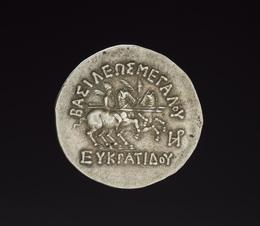 The twins Castor and Pollux were known as the Diosuroi in Greek mythologyWikimedia Commons ↗
 Copper alloy Indo-Greek coin from the Hindu Kush, an issue of Vasudeva I (cWikimedia Commons · Royal Institution of Cornwall, Anna Tyacke, 2011-02-08 22:37 · CC BY-SA ↗
 Gold coin of Diodotus, Indo-Greek, National Museum, New Delhi.Diodotus I SoterNational Museum, New Delhi · photo SpeakingArch (Wikimedia Commons) · CC BY-SA ↗
 A worn copper alloy square Hemiobol, probably of Apollodotus I (rWikimedia Commons · Surrey County Council, David Williams, 2013-09-24 16:49:46 · CC BY-SA ↗
 Coin of Kujula Kadphises, derived from a coin of the Indo-Greek king HermaeusBritish Museum, London · photo No machine-readable author provided. World Imaging assumed ( (Wikimedia Commons) ↗
 Nicias was an Indo-Greek king who ruled in the ParopamisadeNational Museum, New Delhi · photo SpeakingArch (Wikimedia Commons) · CC BY-SA ↗
 Copper alloy Indo-Greek coin from the Hindu Kush, an issue of Kujula KadphisesWikimedia Commons · Royal Institution of Cornwall, Anna Tyacke, 2011-02-08 22:44 · CC BY-SA ↗
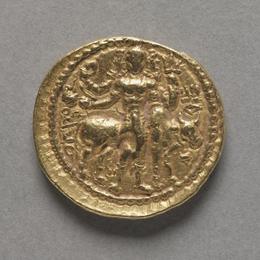 Coin of Kushan King Vasudeva I (reverse)c. 142/145+ · India, Mathura, Kushan periodCleveland Museum of Art ↗
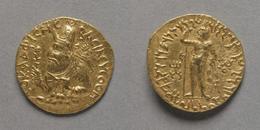 Coin of Kushan King Vima Kadphises100–200s CE · India, Mathura, Kushan periodCleveland Museum of Art ↗
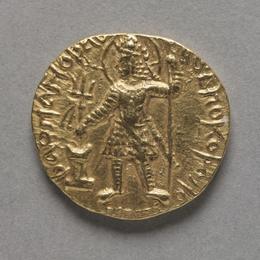 Coin of Kushan King Vasudeva I (obverse)c. 142/145+ · India, Mathura, Kushan periodCleveland Museum of Art ↗
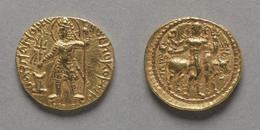 Coin of Kushan King Vasudeva Ic. 142/145+ · India, Mathura, Kushan periodCleveland Museum of Art ↗
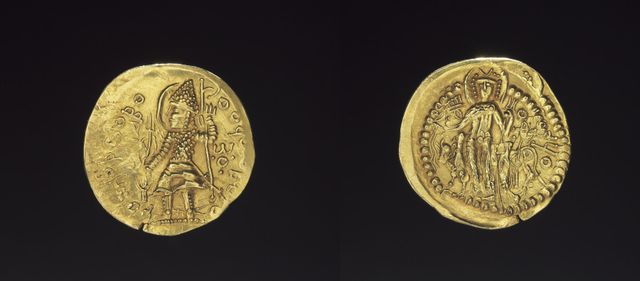 Coin of Kushan King Vasudeva II200s CE · India, Kushan, Vasudeva II (c. 275–300 CE)Cleveland Museum of Art ↗
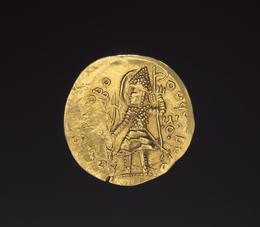 Golden Dinar200s CE · India, Kushan, Vasudeva II (c. 275–300 CE)Cleveland Museum of Art ↗
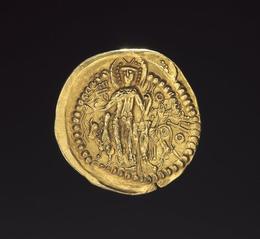 Golden Dinar200s CE · India, Kushan, Vasudeva II (c. 275–300 CE)Cleveland Museum of Art ↗
 Archer type gold coin of Chandra Gupta II 375-415 CE Ashmolean Museum, OxfordAshmolean Museum, Oxford · photo SpeakingArch (Wikimedia Commons) · CC BY-SA ↗
 Coin of Kushan Dynasty, National Museum Delhi.National Museum, New Delhi · photo SpeakingArch (Wikimedia Commons) · CC BY-SA ↗
 Coin of Kushan king Huvishka 126 163 with Kushan goddess Rishti depicted as Roma copied…British Museum, London · photo PHGCOM (Wikimedia Commons) · CC BY-SA ↗
 Coin of Kushan ruler ChhuIndian Museum, Kolkata · photo Vincent Arthur Smith, CIE, (1848–1920) (Wikimedia Commons) ↗
 This gold coin represents the reign of the Kushana ruler, HavishkaWikimedia Commons ↗
 This gold coin represents the reign of the Kushana ruler, Vasudeva IWikimedia Commons ↗
 Gold coin of the Kushans, cAshmolean Museum, Oxford · photo SpeakingArch (Wikimedia Commons) · CC BY-SA ↗
 Hoard of Kushan, Yaudheya and Gupta Coins from Period IV Stratigraphy at Ropar MoundWikimedia Commons · SpeakingArch · CC BY-SA ↗
 This gold coin represents the reigns of the Kushana ruler, Vima KadphisesWikimedia Commons ↗
 The reverse depicts the figure of Hercules with the skin of the Nemean lion draped over…Wikimedia Commons ↗
 Copper Alloy coin, probably Indo-Scythian/KushanBritish Museum, London · photo York Museums Trust, Rebecca Morris, 2009-10-15 16:00:34 (Wikimedia Commons) · CC BY-SA ↗
 1, Kʻai-yüan Tʻung-pao (開元通寳), 621–907, Tʻang-dynasty bronze coinWikimedia Commons · Uriel1022 · CC BY-SA ↗
 Numismatic and Philatelic Museum, Government Museum, ChennaiWikimedia Commons · Sailko · CC BY ↗
 Late Kushan coinageBritish Museum, London · photo No machine-readable author provided. World Imaging assumed ( (Wikimedia Commons) ↗
 Hormizd I, Afghanistan issue copying Kushan designs.British Museum, London · photo PHGCOM (Wikimedia Commons) · CC BY-SA ↗
 Coins from the kushana dynasty displayed at the Chhatrapati Shivaji Maharaj Vastu…CSMVS, Mumbai · photo Harismita Nagarajan (Wikimedia Commons) · CC BY ↗
Search the museums' full collections
V&A ↗ · British Museum ↗ · The Met ↗ · Cleveland ↗ · Wellcome Collection ↗ · Wikimedia Commons ↗ · Ashmolean ↗ · Royal Collection ↗ · Pitt Rivers ↗
Shown here are the objects whose pictures museums have released openly. Far more are in their collections, and in museums with no open search, such as the Lahore Museum. Searching for "Punjab coin".
Pictures from the collections of Art Institute of Chicago, Ashmolean Museum, Oxford, Asian Art Museum, San Francisco, Berlin-Dahlem Botanical Garden and Botanical Museum (via Europeana), Bhuri Singh Museum, Chamba, 65 more, found automatically: public domain or openly licensed, except the V&A's, shown for non-commercial use with the museum's credit. Titles and dates are the museums' own; each card names its museum and any licence. Updated 2026-10-26.