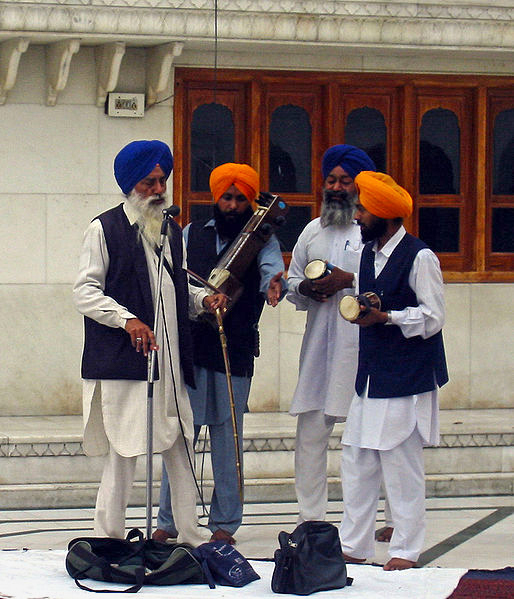
Dhadi vaar
The heroic ballad of the Sikhs, sung to the small dhad drum and sarangi in front of the Akal Takht.
Guru Hargobind, who took up two swords and built the Akal Takht, also gave the Sikhs a new kind of music. He asked the dhadis, bards who sang the vaars or heroic ballads of Rajput and Muslim warriors, to sing in front of the Akal Takht of the courage of the Sikhs. The first dhadis named in tradition are Abdulla and Nath Mal, and the vaars of the Guru Granth Sahib carry instructions to sing them to the tunes of famous ballads.
A dhadi jatha is usually three or four singers: two play the dhad, a small hourglass drum held in one hand and struck with the other, one plays the sarangi, and one narrates in prose between the verses. They sing of the Gurus' battles, of the Sahibzade, of Banda Singh and Baba Deep Singh, of Hari Singh Nalwa and the Anglo-Sikh wars, in a high, ringing style designed to carry across open ground.
Sohan Singh Seetal, the great dhadi and historian of the twentieth century, wrote and sang hundreds of vaars, and dhadi jathas are still a highlight of every gurpurab, every Hola Mohalla and every gathering at the Akal Takht. It is the music of the Khalsa remembering itself.
More music forms
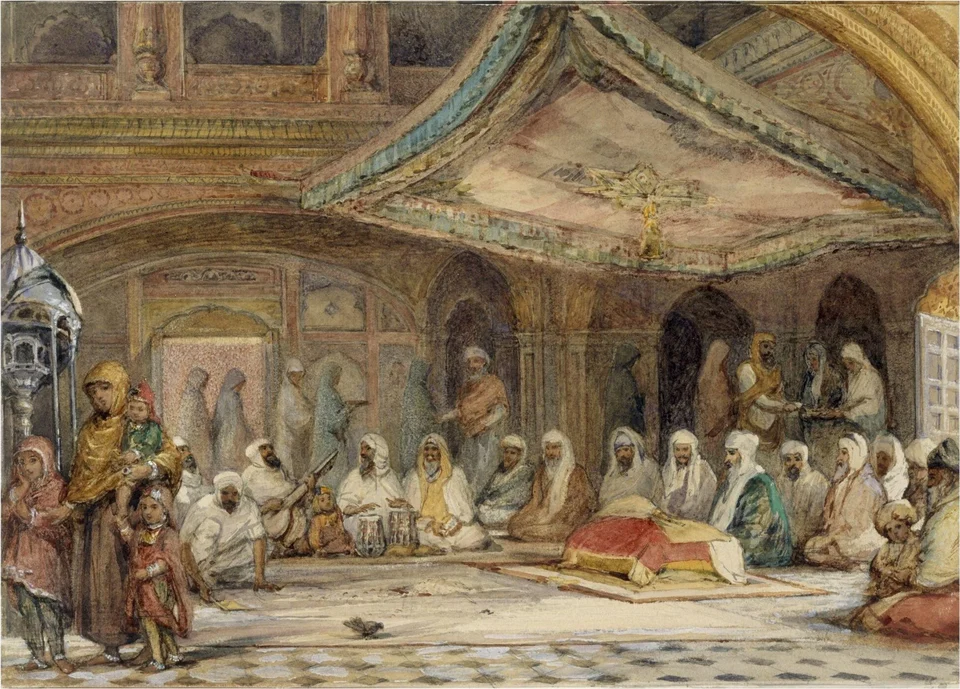
The Guru Granth Sahib is arranged by raga, not by author: the scripture was meant to be sung.
▶ Watch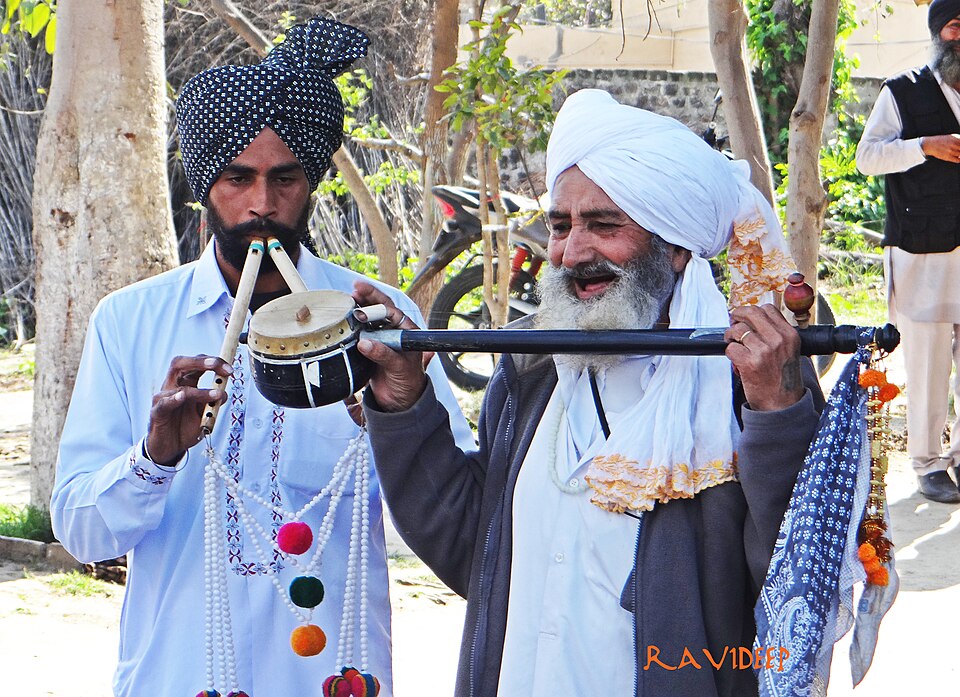
Unaccompanied verse sung at speed by two or three voices, the Malwa cousin of the dhadi ballad.
▶ Watch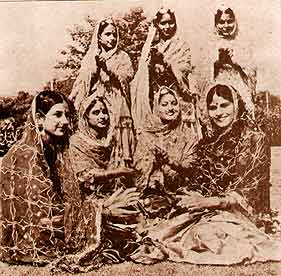
The short, witty couplets that fly back and forth during giddha and bhangra.
▶ Watch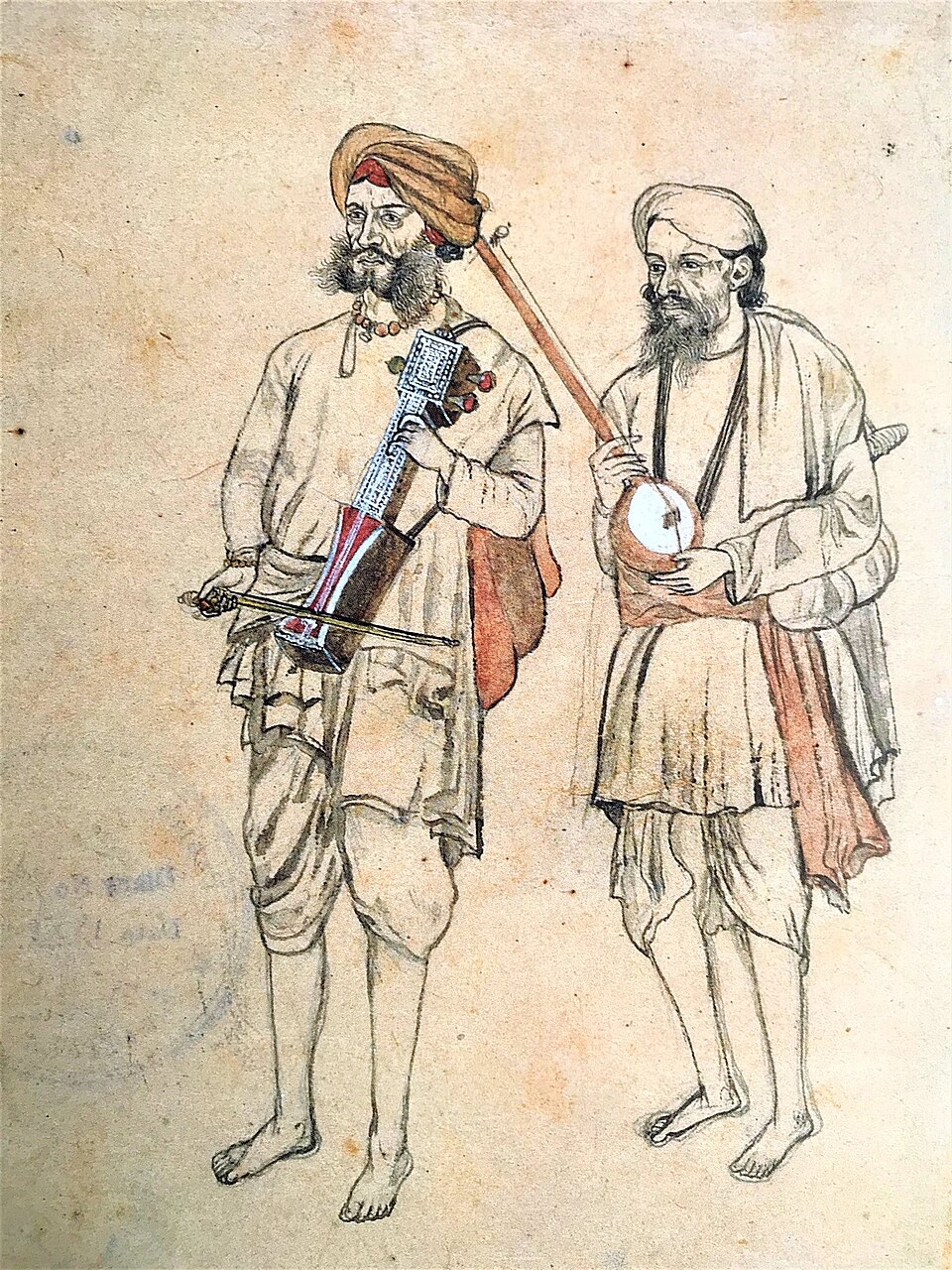
Three-line verses of love and longing, sung in duet between lovers or friends.
▶ Watch
The firefly-spirit who wanders the land in song, reporting what she sees.
▶ Watch
The Sufi song of the Punjab, created by Shah Hussain and perfected by Bulleh Shah.
▶ Watch
The school of classical singing born at the court of the Maharajas of Patiala, famous for its daring, fast and ornate style.
▶ Watch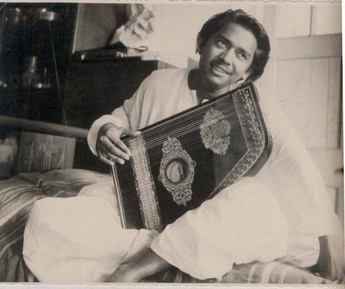
The singing family of Sham Chaurasi near Hoshiarpur, whose greatest masters, Salamat Ali and Nazakat Ali Khan, moved to Pakistan in 1947.
▶ Watch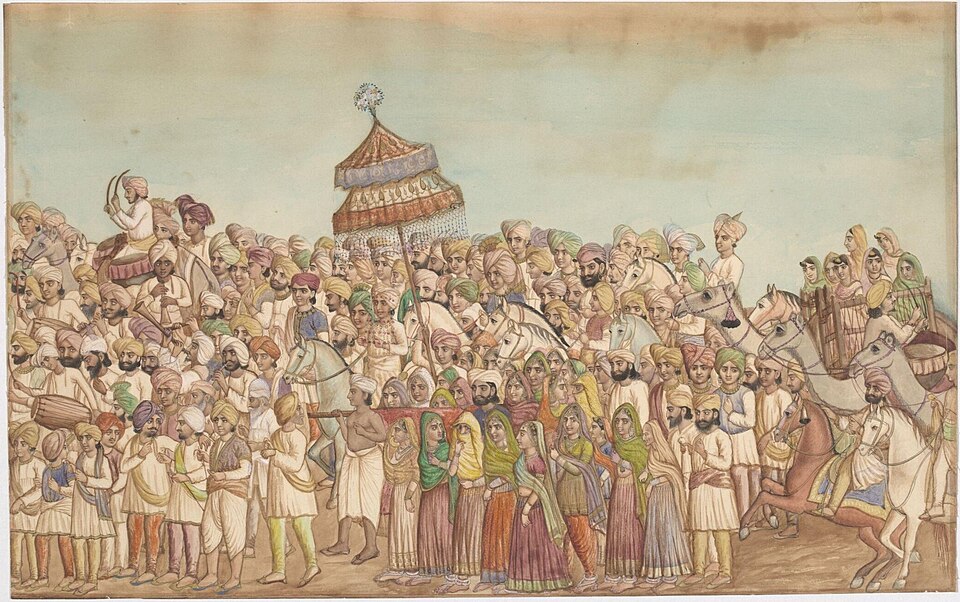
The songs women sing through a Punjabi wedding: ghoriyan for the groom, suhag for the bride leaving home, and sithniyan to tease the other side.
▶ Watch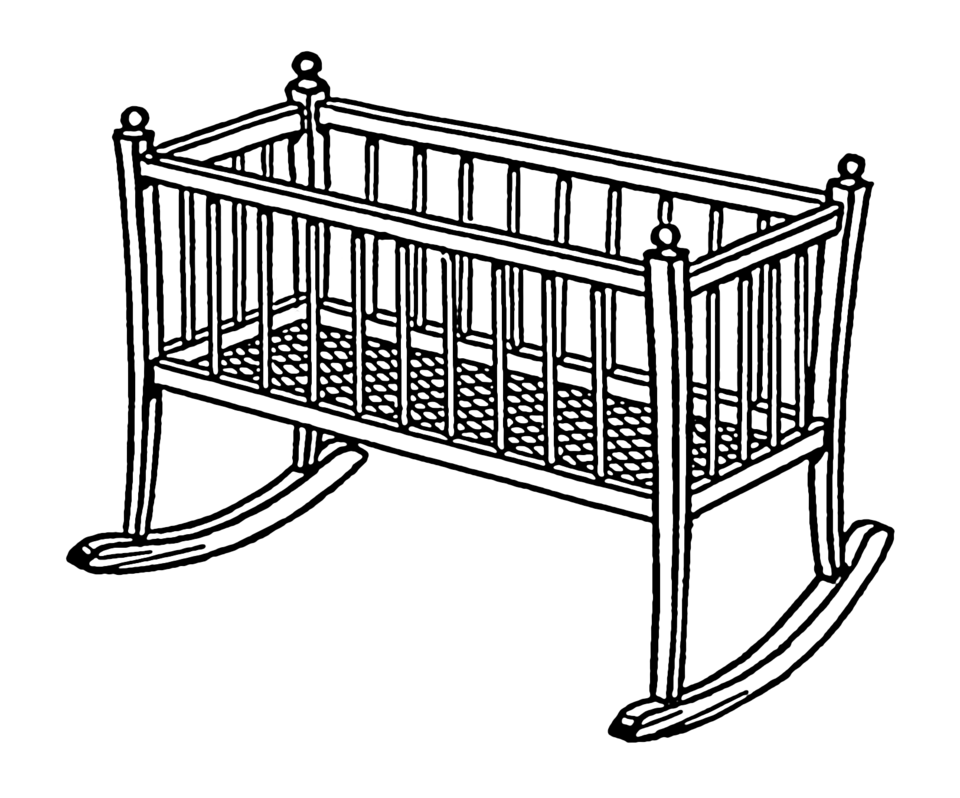
The loriyan sung to babies and the rhymes of the courtyard, the first poetry every Punjabi child hears.
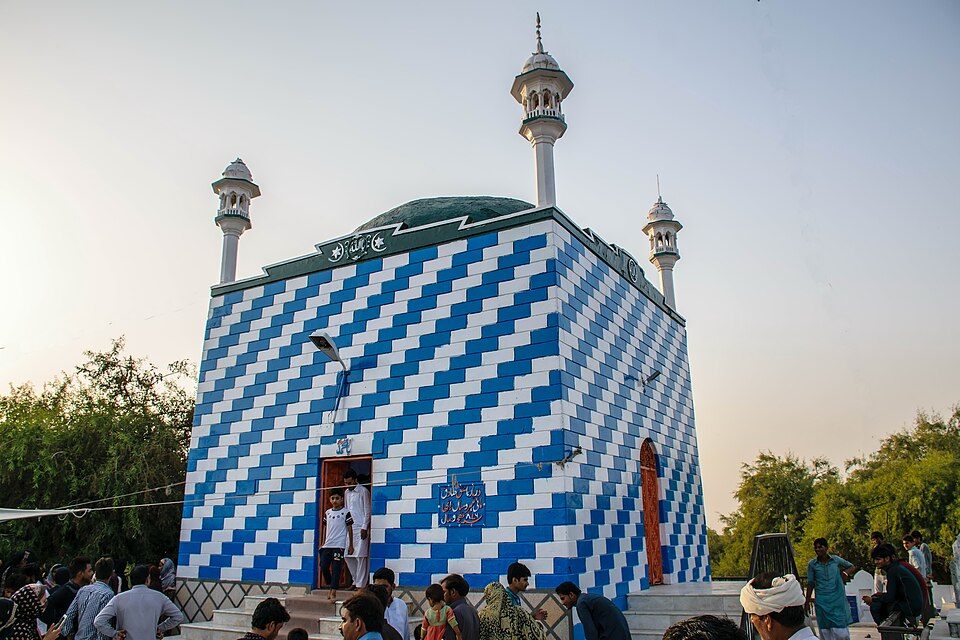
The laments women sing for the dead, and the ritual mourning in which they beat their breasts in a circle.
 Guru Gobind Singh and Attendants from an Asa Di Var Gutka Manuscript, caBritish Library, London · photo Wikimedia Commons (Wikimedia Commons) ↗