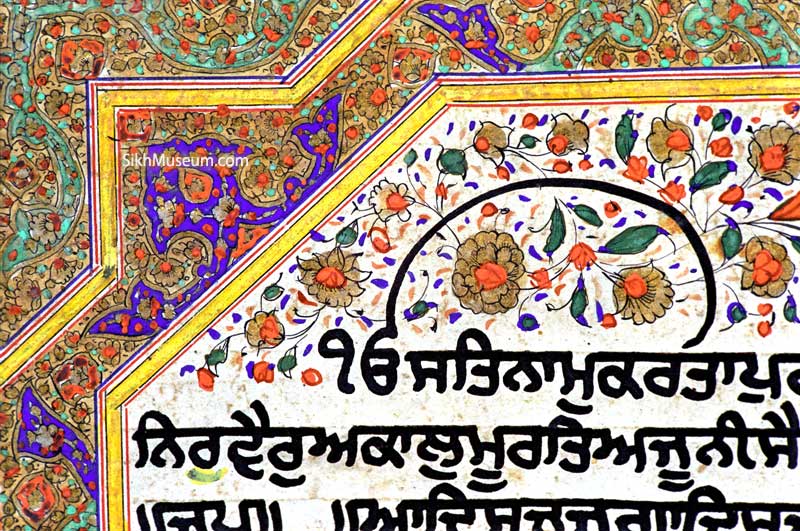
Guru Granth Sahib
The scripture of the Sikhs and their eternal, living Guru: 1,430 pages of hymns by six Gurus and some thirty other saints, set in 31 ragas.
The Guru Granth Sahib is the scripture of the Sikhs and, since 1708, their Guru. It is treated not as a book about God but as the living word, the bani, of the Gurus: it is seated under a canopy on a raised throne, waved over with a whisk, carried on the head, put to rest at night and woken at dawn. Every Sikh ceremony, from naming a child to marriage to death, takes place in its presence.
It began as the Adi Granth, compiled by Guru Arjan with Bhai Gurdas as scribe and installed in the Harmandir Sahib in 1604. Guru Gobind Singh added the hymns of his father Guru Tegh Bahadur and, at Damdama Sahib in 1706, dictated the final text to Bhai Mani Singh. At Nanded in 1708, before his death, he bowed before it and named it the eternal Guru.
In its standard printed form it has 1,430 pages, angs, and some 5,900 hymns. Six Gurus wrote them: Nanak, Angad, Amar Das, Ram Das, Arjan and Tegh Bahadur. Alongside them are fifteen bhagats, Hindu and Muslim saints from across India, among them Kabir the weaver, Ravidas the leatherworker, Namdev the tailor, Sain the barber and Sheikh Farid the Sufi of Pakpattan, and eleven bards of the Gurus' court and four others. Low caste and high, Hindu and Muslim, in Punjabi, Braj, Persian-tinged Lahndi and Sant Bhasha, they are given equal standing.
It is arranged not by author but by music: after the opening Japji and evening and night prayers, the hymns are grouped into thirty-one ragas, and within each raga by metre and by Guru. It is written in Gurmukhi. Its subject is one: the oneness of God, the remembrance of the Name, the illusion of ego, the equality of all people, and life lived in truth.
The Kartarpur Pothi, believed to be the original of 1604, is kept by the Sodhi family at Kartarpur near Jalandhar. In 2004 Sikhs around the world marked four hundred years since the first installation at Harmandir Sahib, where the Guru Granth Sahib is still read aloud from before dawn until late at night, every day of the year.
On the timeline
Connected
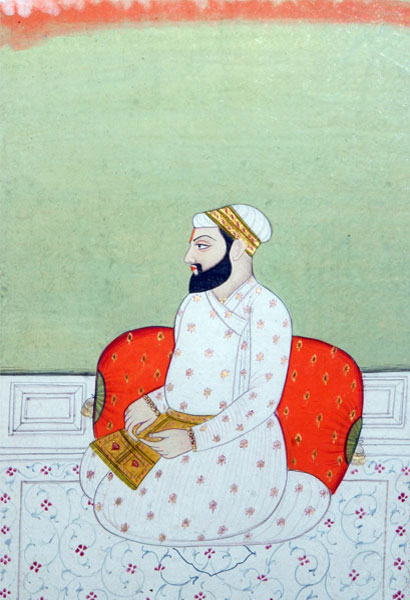
Fifth Guru. Built the Harmandir Sahib, compiled the Adi Granth in 1604 and became the first Sikh martyr, tortured to death in Lahore in 1606.
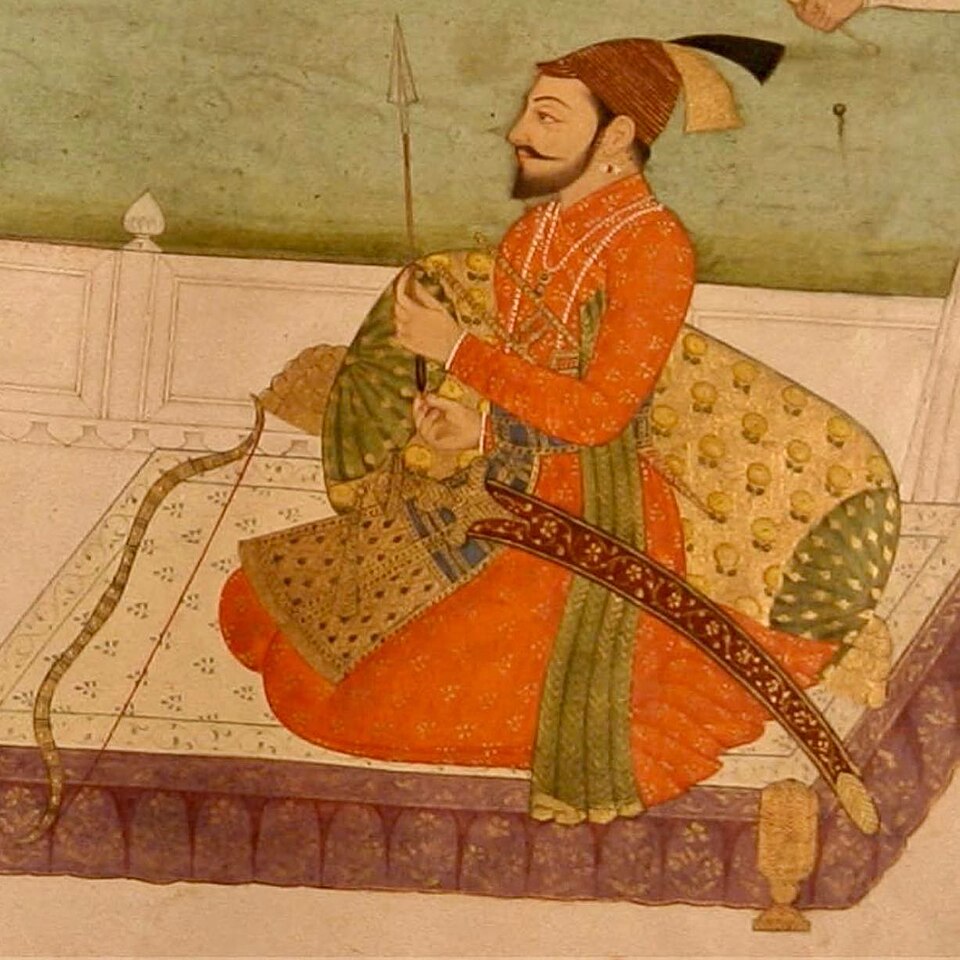
Tenth Guru, warrior and poet. Created the Khalsa in 1699, fought a long war with the Mughals and hill rajas, lost his four sons and mother, and named the Guru Granth Sahib as the final Guru.
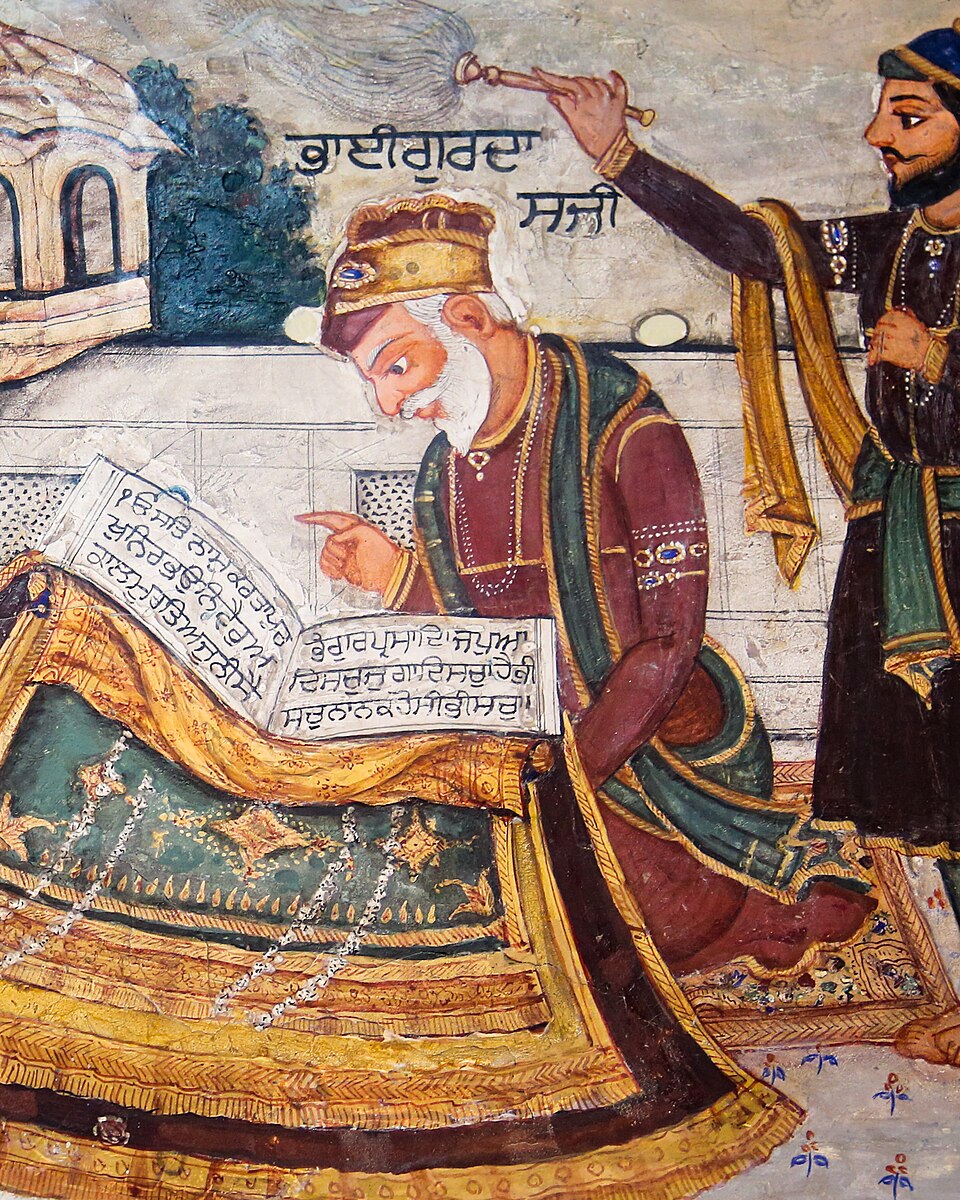
Scribe of the Adi Granth and author of the Vaaran, which Guru Arjan called the key to understanding the Guru Granth Sahib.
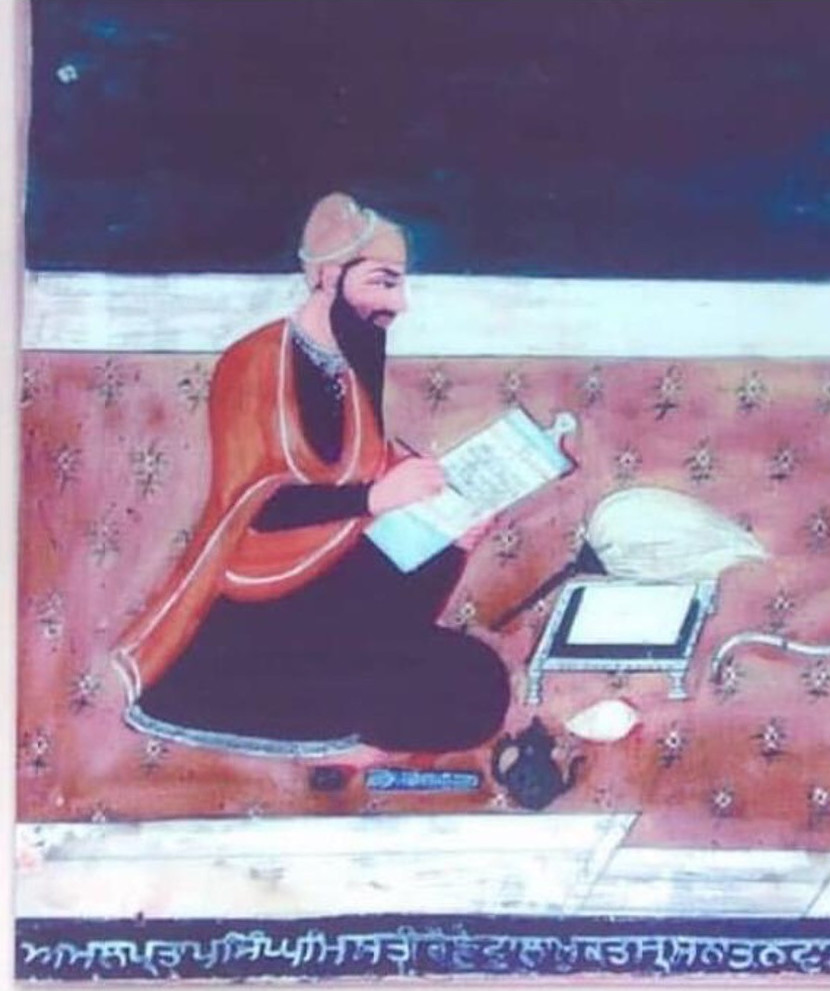
Scribe of the final Guru Granth Sahib at Damdama and later head granthi of the Harmandir Sahib, cut apart joint by joint in Lahore.
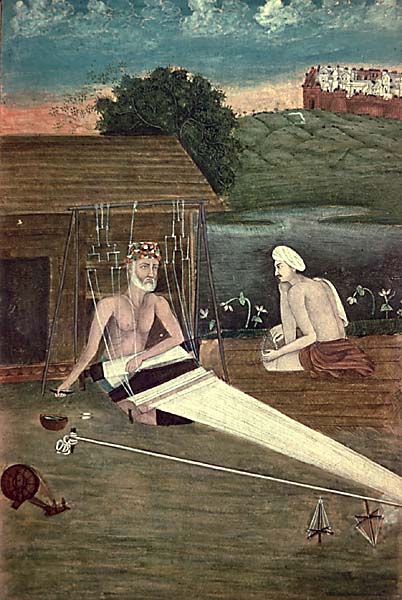
Weaver-poet of Varanasi and the largest contributor among the bhagats. Mocked hypocrisy in both Hindu and Muslim religion.
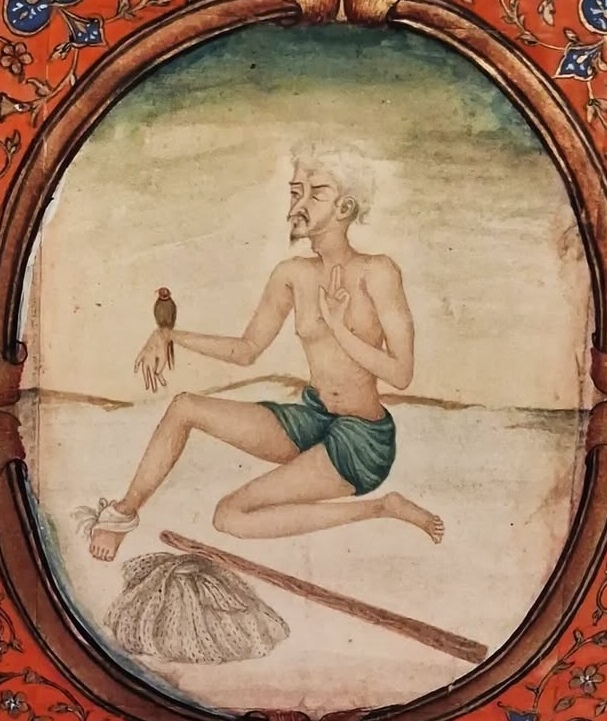
Chishti Sufi of Pakpattan and the first great poet of the Punjabi language. His hymns and saloks are part of the Guru Granth Sahib.
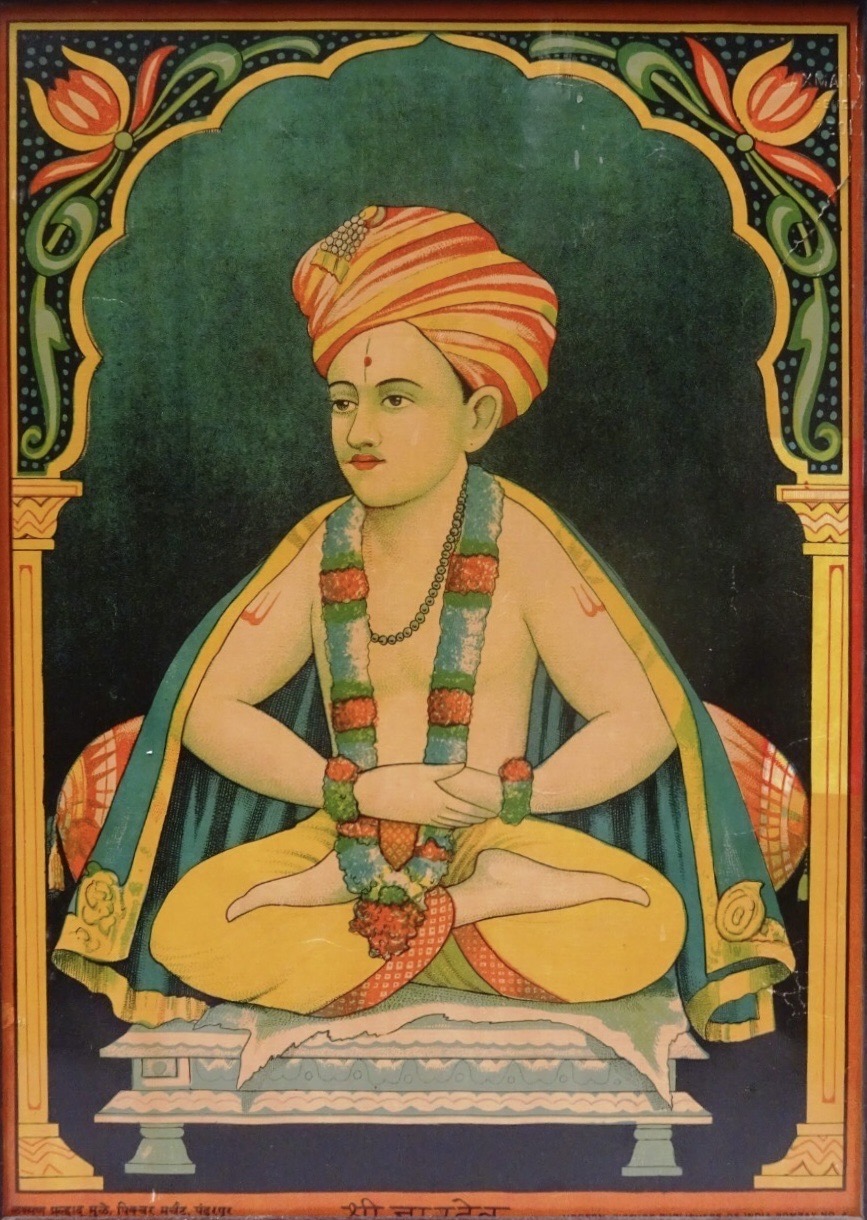
Calico printer and tailor from Maharashtra, one of the earliest bhagats. Spent his last years in Ghuman in Punjab.
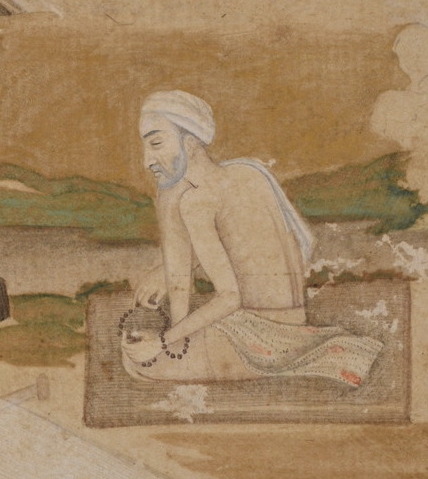
Leather worker of Varanasi who wrote of Begampura, a city without sorrow or caste. Revered across Punjab today.
How the Guru Granth Sahib is arranged
1,430 angsScroll sideways to see the whole figure →
Each row is 143 angs of the standard 1,430-ang Guru Granth Sahib; hover any section for its angs. Within each raag the hymns are arranged by form and by Guru, in order, with the bhagats' hymns at the end. Small raags are named in the list of starting angs below the figure.
Where each raag begins
Who wrote it, when and where
Five centuries in the Guru Granth SahibIn the world's museums
7 objects This is one of the folios of Sri Guru Granth SahibNational Museum, New Delhi · photo Wikimedia Commons (Wikimedia Commons) ↗
 Sikh priest (Granthi) reading the Grunth (Guru Granth Sahib), Umritsur (Amritsar)"British Library, London · photo William Simpson (Wikimedia Commons) ↗
 Illuminated Guru Granth Sahib folio of a Nishan (flag)Wikimedia Commons ↗
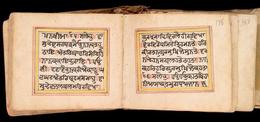 A selection of text from the Adi GranthWellcome Collection · CC BY ↗
 Boek met titel 'Shri Guru Granth Sahib'Creator: SikhsWikimedia Commons · Sikhs (volk) ↗
 Guru Granth Sahib being illustrated in the 18th CenturyNational Museum, New Delhi · photo Nomu420 (Wikimedia Commons) · CC BY-SA ↗
 Folio of the Adi Granth with nishan (signature) of Guru Tegh Bahadur, ca.1676Government Museum, Chandigarh · photo Guru Tegh Bahadur (Wikimedia Commons) ↗