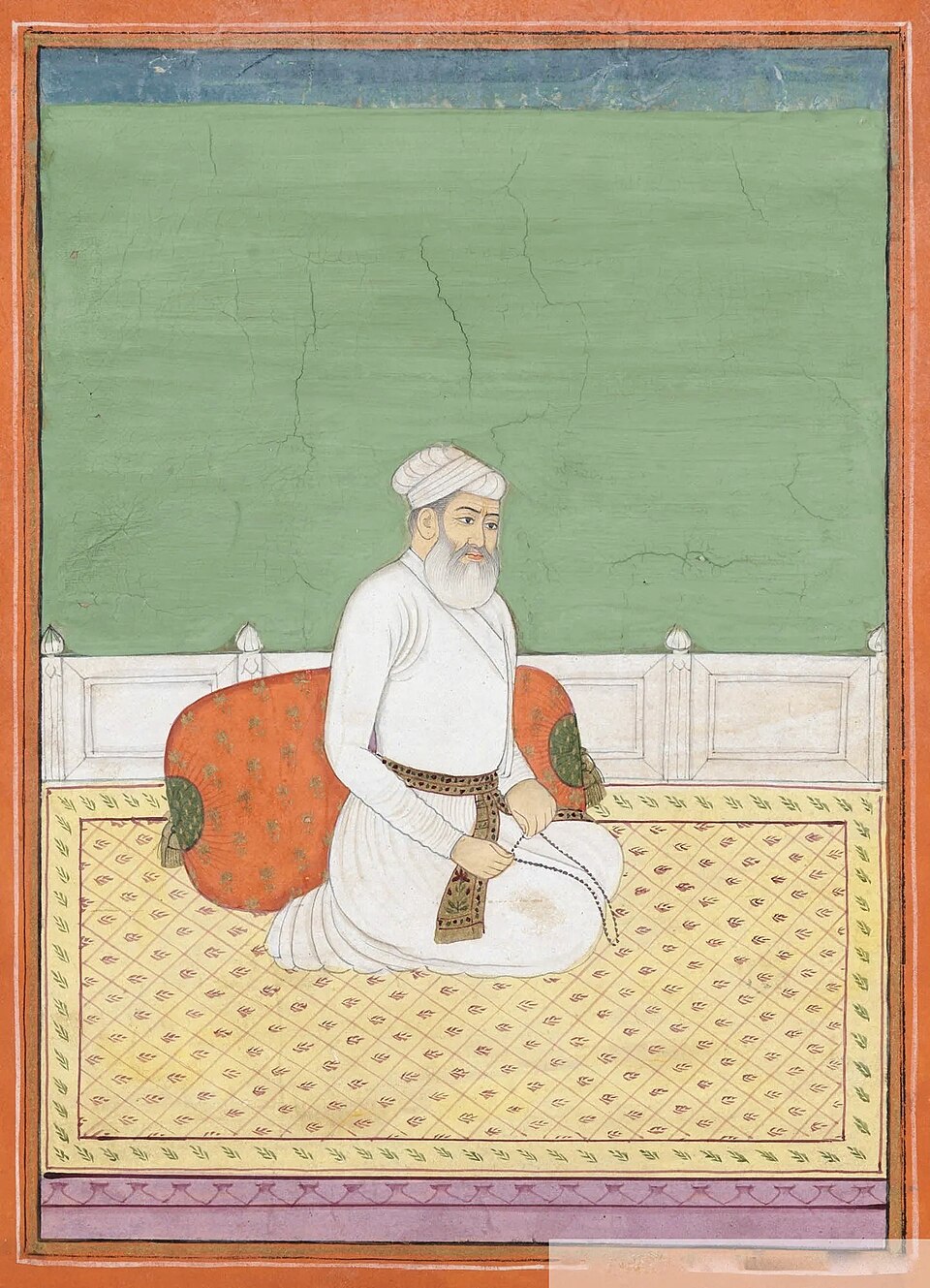
Guru Amar Das
Third Guru, who became Guru at 73. Made the langar a rule for all visitors, opposed sati and purdah, and organised the community into 22 manjis (districts).
Amar Das was born in 1479 at Basarke near Amritsar, a Bhalla Khatri, and for most of his life was a devout Vaishnav who made some twenty pilgrimages to the Ganges. When he was about sixty he heard Bibi Amro, Guru Angad's daughter, who had married into his family, singing Guru Nanak's hymns as she churned butter. He asked to be taken to Khadur and became a Sikh.
For twelve years he served Guru Angad with a devotion that became legendary. Every day before dawn he fetched water from the Beas for the Guru's bath. One stormy night he tripped over a weaver's peg and fell into the loom pit; the weaver's wife jeered at 'homeless Amru'. When the story reached Guru Angad, he said Amar Das was the home of the homeless, and in 1552 he made him the third Guru. He was seventy-three.
He moved to Goindwal on the Beas, on the main road between Lahore and Delhi, and built it into the first Sikh centre. He dug the baoli, a step-well with eighty-four steps going down to the water, open to all castes at a time when wells were strictly divided. He made the langar compulsory: whoever wished to see the Guru must first sit and eat in the line with everyone else. Tradition says the emperor Akbar and the Raja of Haripur did so.
He organised the growing community, dividing it into twenty-two manjis, districts each with a preacher, and he appointed women among them. He spoke against sati, the burning of widows, and against purdah, the veiling of women, and gave the Sikhs their own festivals at Vaisakhi and Diwali and their own ceremonies for birth and death. His long hymn Anand, 'Bliss', is still sung at the end of every Sikh service.
He gathered the hymns of the first three Gurus and of some bhagats into the volumes called the Goindwal Pothis, a step towards the Adi Granth. He passed over his own sons and chose his son-in-law Jetha, husband of his daughter Bibi Bhani, who became Guru Ram Das. He died in 1574, at the age of ninety-five.
Tradition credits him with fixing three gatherings of the Sikh year, at Vaisakhi, Diwali and Maghi, when Sikhs came to Goindwal from every manji. He is said to have trained 146 preachers, of whom 52 were women, and he supported the remarriage of widows and spoke against the killing of infant girls.
On the timeline
Connected
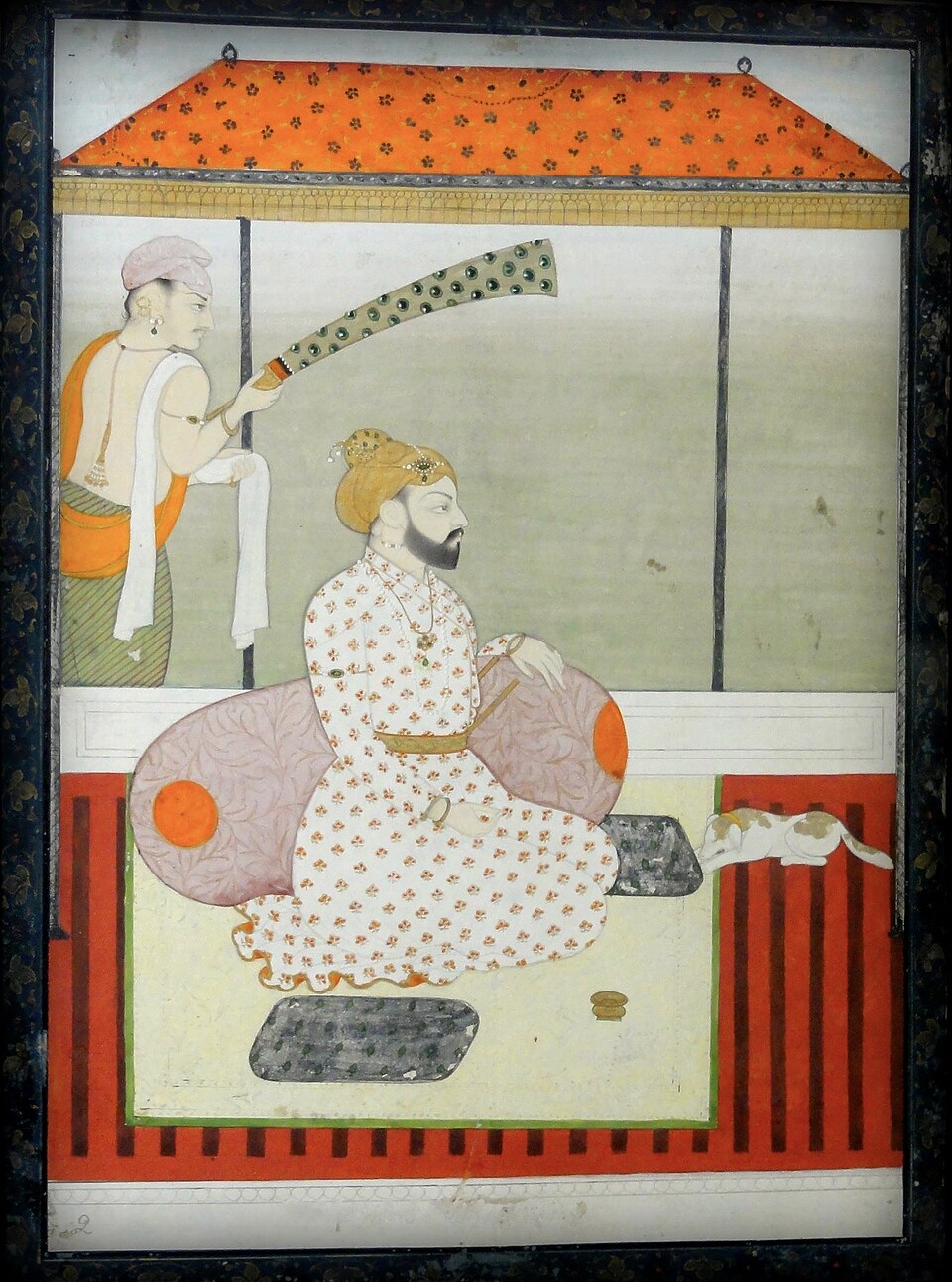
Second Guru. Standardised the Gurmukhi script, opened schools and kept the langar running with his wife Mata Khivi.
Fourth Guru and founder of Amritsar. Wrote the Lavan, the four marriage hymns of the Anand Karaj.
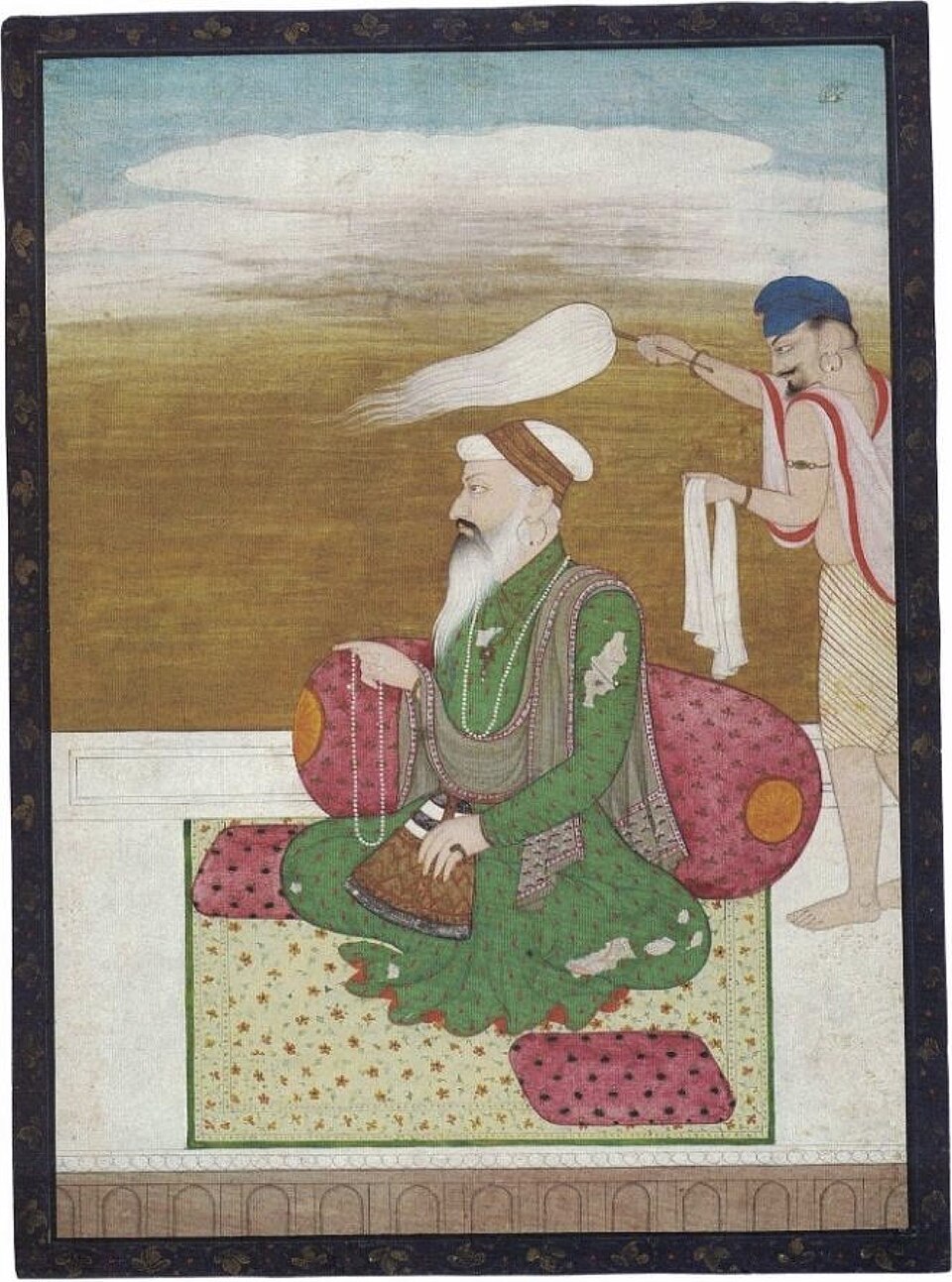
Daughter of Guru Amar Das, wife of Guru Ram Das and mother of Guru Arjan, remembered for her devoted service.
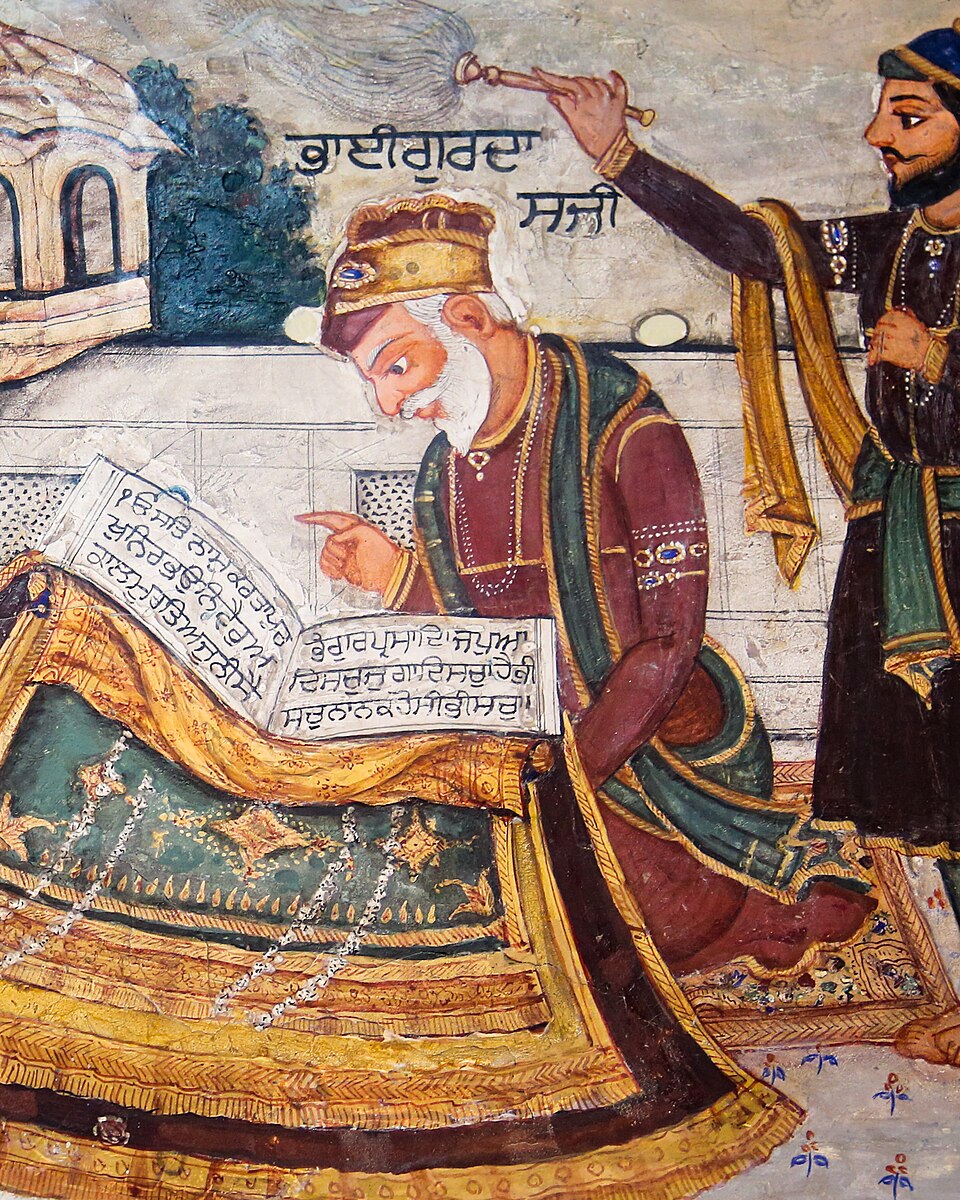
Scribe of the Adi Granth and author of the Vaaran, which Guru Arjan called the key to understanding the Guru Granth Sahib.
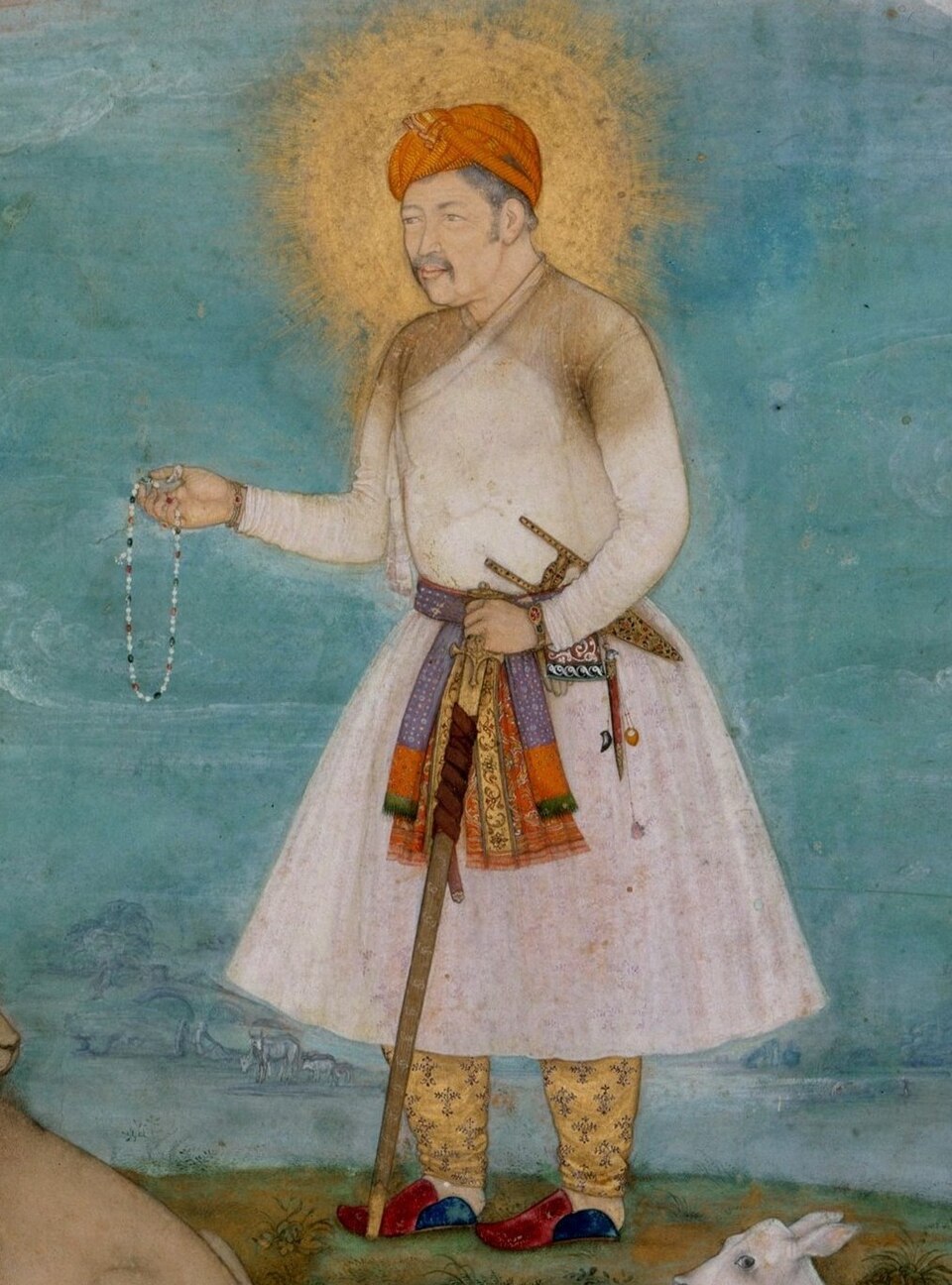
Mughal emperor, crowned at Kalanaur in Punjab, who ate in Guru Amar Das's langar at Goindwal and ruled from Lahore from 1586 to 1598.
The Gurus' family tree
How the Guruship passedScroll sideways to see the whole tree →
Guru Gobind Singh's four sons, the Sahibzade, were all killed in 1704; in 1708 he passed the Guruship to the scripture and to the Khalsa. Guru Nanak passed over his own sons for his disciple Lehna, renamed Angad; Angad did the same. From Guru Ram Das on, the Guruship stayed in the Sodhi family, but not always with the eldest: Prithi Chand, Dhir Mal and Ram Rai each set up rival claims.
 Painting of an astrologer and holy men, possibly depicting Guru Amar DasMusée Guimet, Paris · photo Attributed to 'Ali Quli Jabbadar (fl. late 17th-early 18th C (Wikimedia Commons) ↗
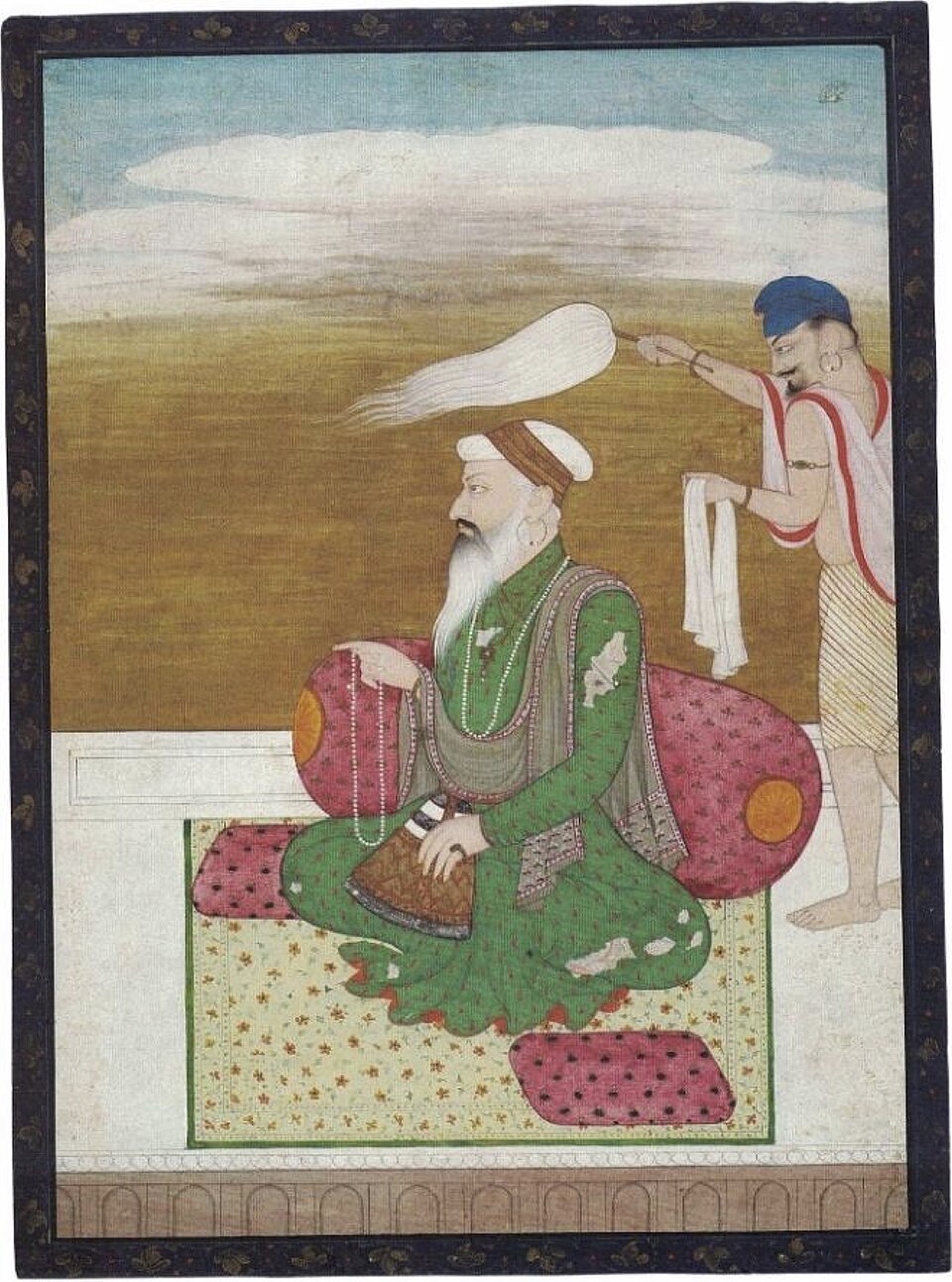
 Painting of Guru Amar Das, Pahari, ca.1830–50Museum Rietberg, Zurich · photo Wikimedia Commons (Wikimedia Commons) ↗