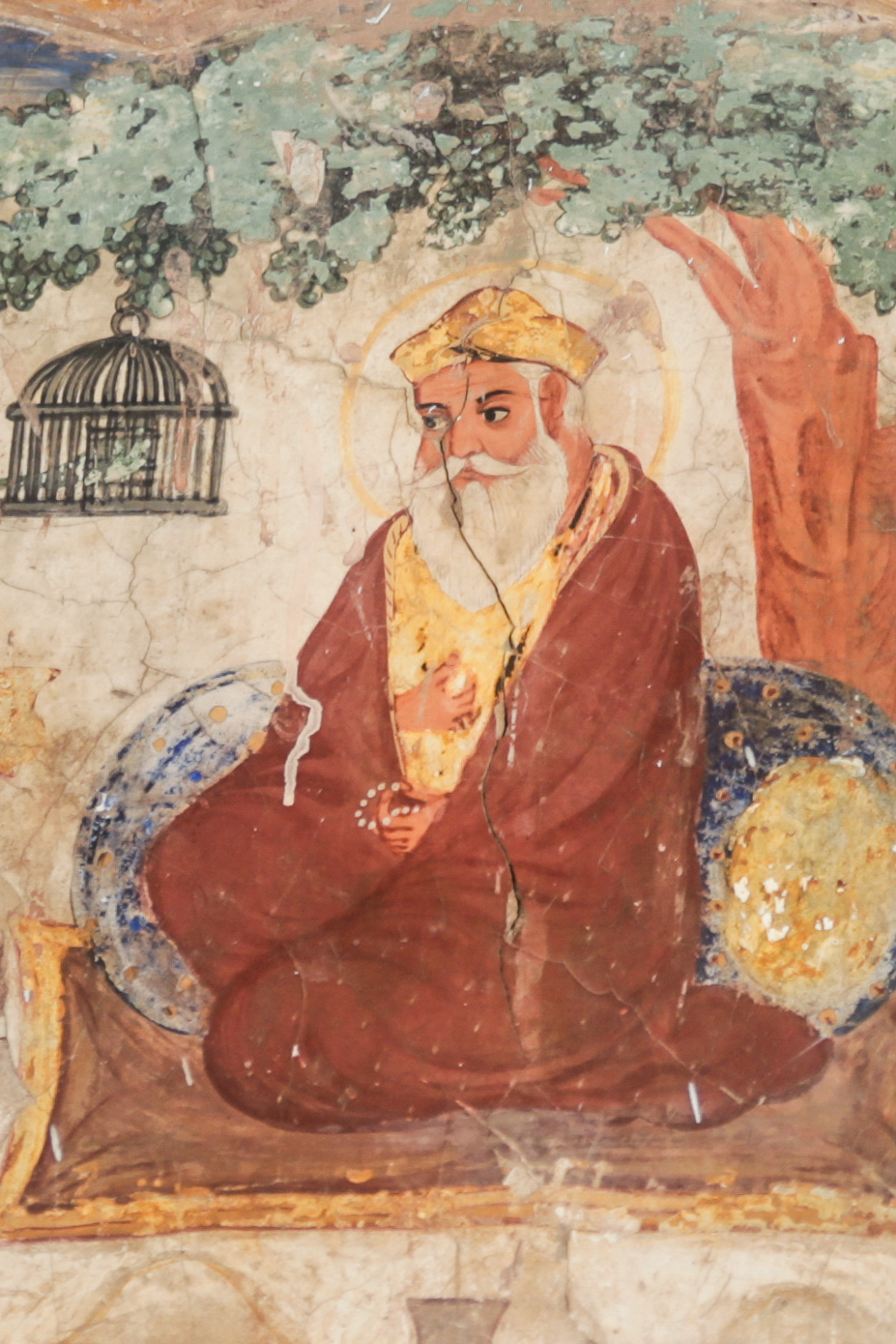
Guru Nanak Dev
Founder of Sikhi. A poet and teacher who rejected caste and empty ritual and taught devotion to one formless God through the Name, honest work and sharing.
Nanak was born in 1469 in Talwandi Rai Bhoi, a village in the bar country west of Lahore that is now called Nankana Sahib. His father, Mehta Kalu, was the village accountant, a Khatri of the Bedi clan; his mother was Mata Tripta, and his elder sister Nanaki was the first person to believe in him. The janamsakhis, the old life-stories, remember a boy who asked his teachers questions they could not answer, who refused the sacred thread at his investiture because a thread of cotton would rot and he wanted one of compassion and contentment, and who, sent to trade with twenty rupees, spent them on feeding hungry holy men and called it the true bargain.
As a young man he went to Sultanpur Lodhi, where his sister's husband found him work as storekeeper to the governor Daulat Khan Lodhi. He married Sulakhni of Batala and had two sons, Sri Chand and Lakhmi Das. Every dawn he bathed in the little river Vein. One morning, around 1499, he went into the water and did not come out; for three days he was given up for drowned. When he reappeared he was silent, and when at last he spoke his first words were: there is no Hindu and there is no Muslim. He had been taken, he later sang, into the court of God and given the cup of the Name to drink. The opening of the Japji, the Mul Mantar, sums up what he brought back: one God, whose name is truth, the creator, without fear and without enmity, timeless, unborn, self-existent, known by the Guru's grace.
Then he walked. For over twenty years, in four great journeys called udasis, he travelled with Bhai Mardana, a Muslim minstrel, and sometimes with Bala: east to Hardwar, Banaras and Assam, south to Sri Lanka, north into the Himalaya and Tibet, west to Mecca and Baghdad. Everywhere the stories are the same: he met people at their holy places and turned their rituals inside out. At Hardwar he threw water towards the west, to his fields in Punjab, since the pilgrims were throwing it east to their ancestors. At Mecca, told not to sleep with his feet towards the house of God, he asked to be shown a direction where God was not. At Saidpur he refused the rich official Malik Bhago's feast and ate the coarse bread of Lalo the carpenter, saying that one was squeezed from the blood of the poor and the other from honest sweat.
He saw history too. When Babur's army sacked Saidpur in 1521 he was there, and was taken prisoner. His four hymns on the invasion, the Babarvani, are among the earliest eyewitness accounts of the Mughal conquest and among the boldest protests ever addressed to God: the women whose hair was shaved, the young men cut down, the kings who had forgotten their duty, and the cry, 'Did you feel no pain, Lord, when so many were crying?'
Around 1522 he settled at Kartarpur on the bank of the Ravi and became a farmer again. Here the community took shape: the day began and ended with singing; people of every caste ate together in the langar; everyone worked. Three principles summed up the life he taught: naam japna, remembering God; kirat karni, earning by honest labour; and vand chhakna, sharing what you have. He wrote 974 hymns, all set to ragas, which are the foundation of the Guru Granth Sahib.
Before his death in 1539 he tested his followers and chose not either of his sons but his devoted disciple Lehna, whom he renamed Angad, 'my own limb', and before whom he bowed. The light, the Sikhs say, passed from one body to another. Legend says that when he died his Hindu and Muslim followers quarrelled over whether to cremate or bury him, and when they lifted the sheet they found only flowers. Both took their half. At Kartarpur, on the Pakistani side of the border, a gurdwara and a grave stand side by side to this day.
One janamsakhi story, told in a manuscript at the British Library, has him hand a rich moneylender of Lahore a needle and ask him to return it in the next world. When the man protested that nothing could be carried beyond death, the Guru asked what then was the use of all his hoarded wealth. The moneylender gave much of it away. The earliest illustrated lives of the Guru, the B-40 Janamsakhi of 1733 and the Vilaitvali Janamsakhi, are among the British Library's Sikh treasures.
On the timeline
Connected
Second Guru. Standardised the Gurmukhi script, opened schools and kept the langar running with his wife Mata Khivi.
Muslim rabab player and Guru Nanak's lifelong companion on his journeys. Three of his saloks are in the Guru Granth Sahib.
Guru Nanak's elder son, an ascetic who founded the Udasi order. He was passed over for the Guruship but stayed on good terms with later Gurus.
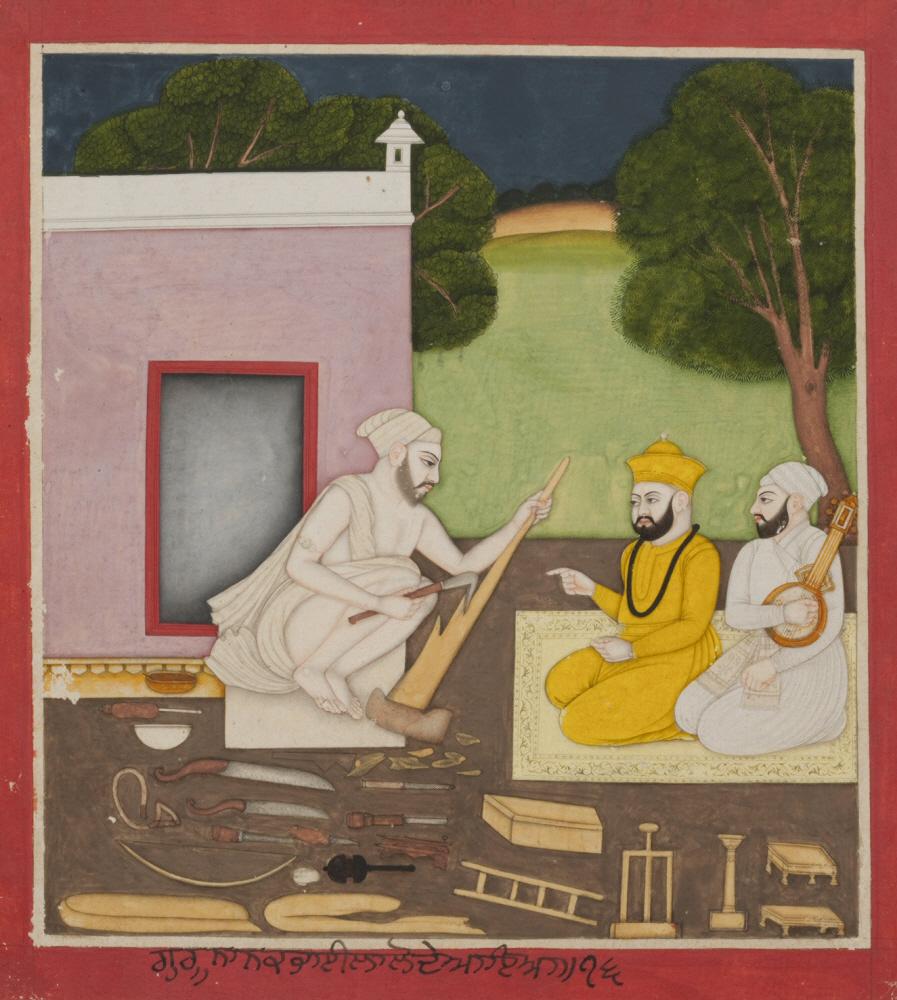
Carpenter of Saidpur whose coarse bread, earned by honest work, Guru Nanak chose over the feast of the official Malik Bhago.
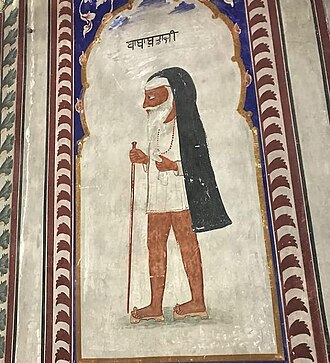
Disciple of Guru Nanak who lived to anoint five more Gurus and was the first granthi of the Harmandir Sahib.
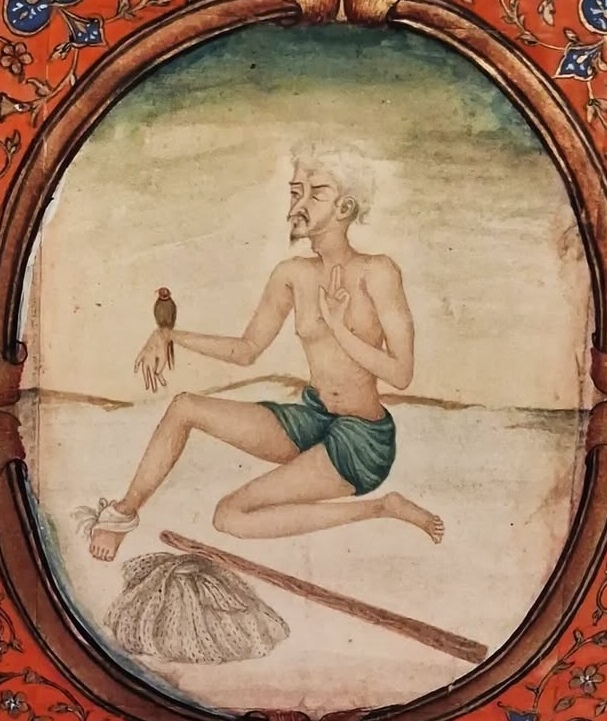
Chishti Sufi of Pakpattan and the first great poet of the Punjabi language. His hymns and saloks are part of the Guru Granth Sahib.
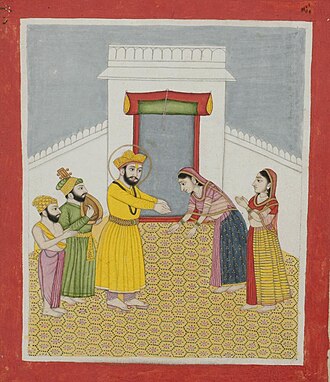
Guru Nanak's elder sister, remembered as the first to recognise him as a spiritual teacher.
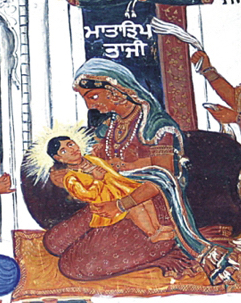
Guru Nanak's mother, who in the janamsakhis defends her son's unworldly ways against his father's frustration.
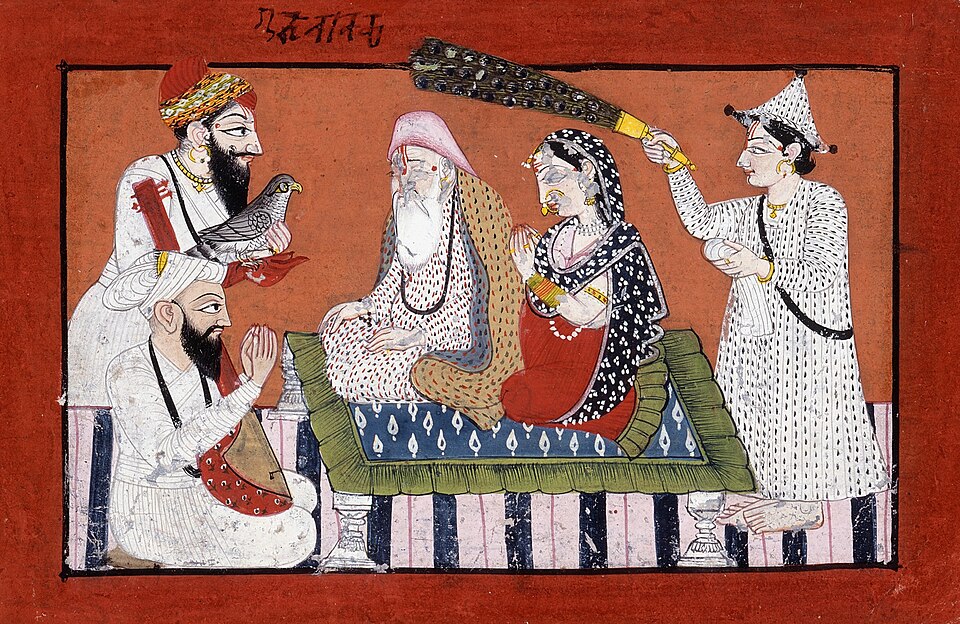
Wife of Guru Nanak, married at Batala, and mother of Sri Chand and Lakhmi Das.
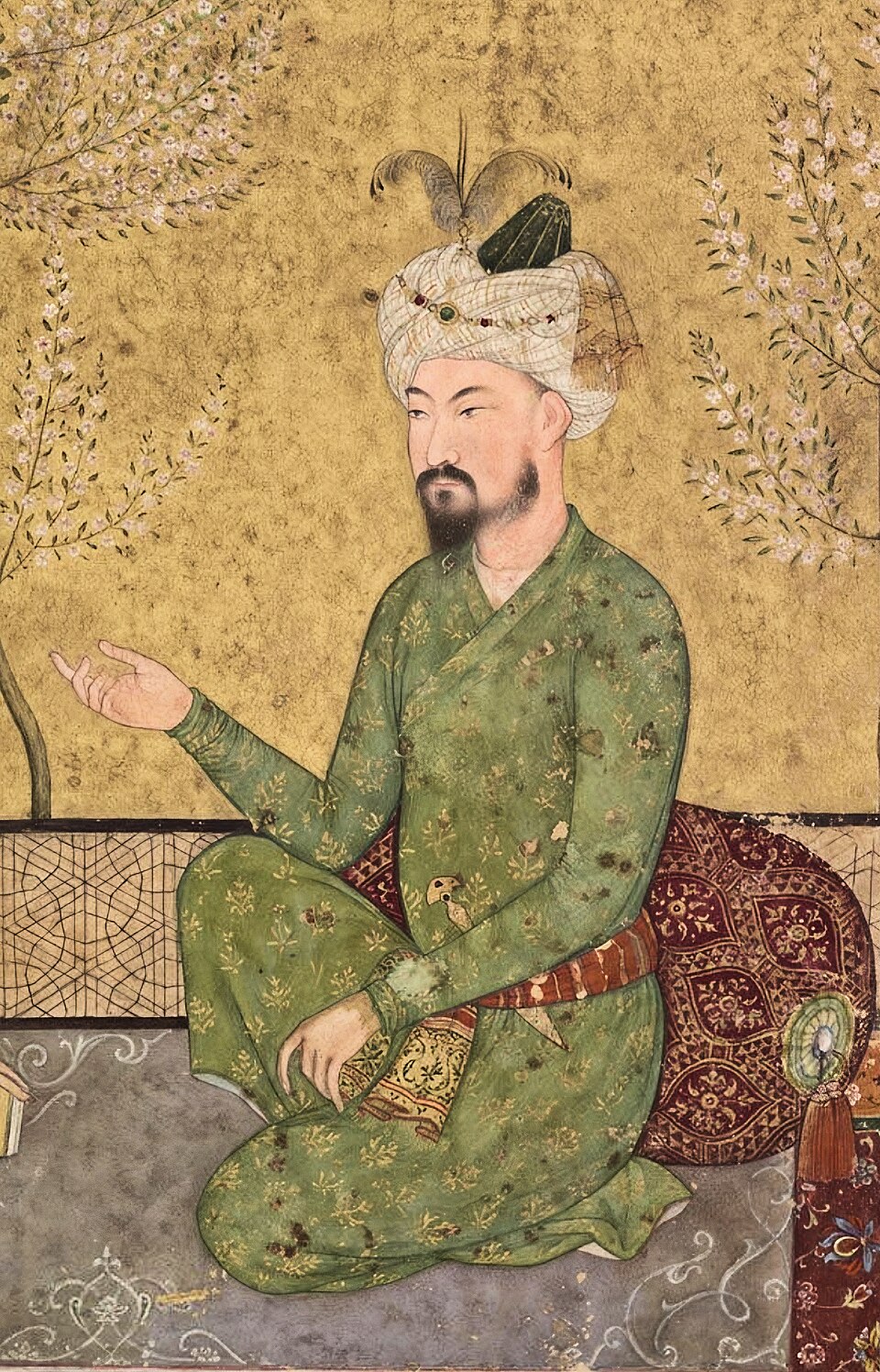
Timurid prince from Fergana who invaded Punjab several times before founding the Mughal empire at Panipat in 1526. Guru Nanak witnessed his sack of Saidpur.
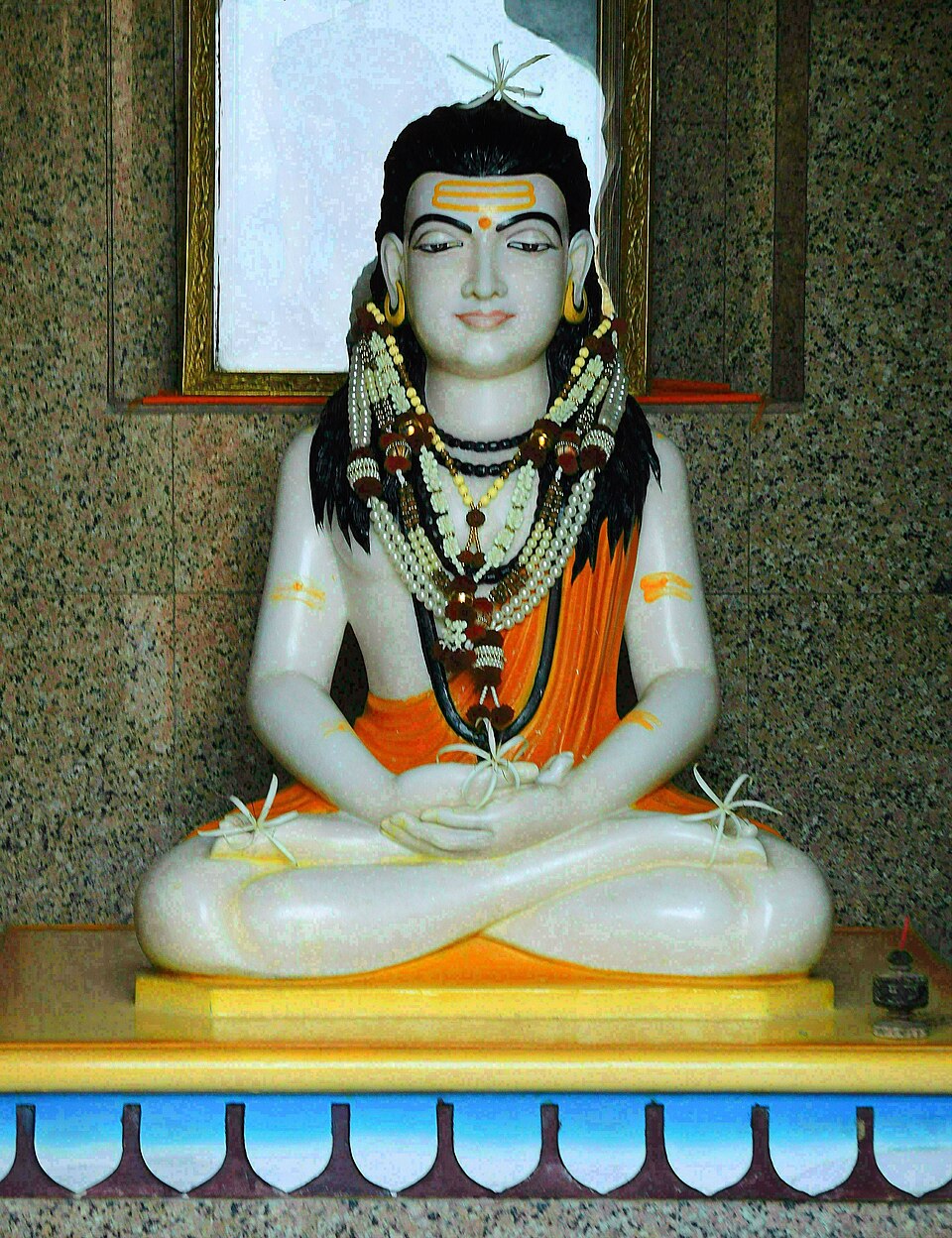
Founder of the Nath order of yogis, whose followers Guru Nanak debated at Achal and elsewhere. The Nath tradition was strong across medieval Punjab.
The Gurus' family tree
How the Guruship passedScroll sideways to see the whole tree →
Guru Gobind Singh's four sons, the Sahibzade, were all killed in 1704; in 1708 he passed the Guruship to the scripture and to the Khalsa. Guru Nanak passed over his own sons for his disciple Lehna, renamed Angad; Angad did the same. From Guru Ram Das on, the Guruship stayed in the Sodhi family, but not always with the eldest: Prithi Chand, Dhir Mal and Ram Rai each set up rival claims.
The Kartarpur Corridor
Four kilometres across the borderScroll sideways to see the whole figure →
The corridor opened on 9 November 2019, for Guru Nanak's 550th birth anniversary, letting Indian pilgrims visit without a visa. India suspended it on 7 May 2025, after the Pahalgam attack, and it remained shut in 2026. Schematic, not to scale.
The four udasis
c. 1500 – 1521 · press play to follow a journeyFor more than twenty years Guru Nanak walked. With Bhai Mardana and his rabab, and on some journeys Bhai Bala, he made four great journeys, the udasis, east to Assam, south to Sri Lanka, north into the Himalaya and Tibet, and west to Mecca and Baghdad, perhaps 28,000 kilometres on foot. Everywhere he went to the places where people gathered to worship, and turned their rituals inside out. The routes below follow the janamsakhis and the gurdwaras that remember each stop; scholars dispute many details, and the order of places varies between sources.
In the world's museums
70 objects →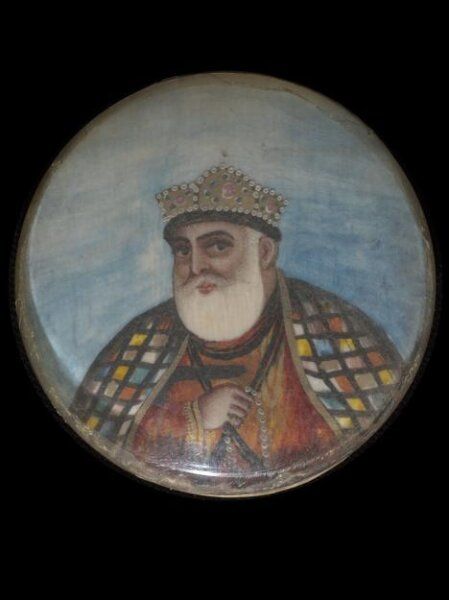 Guru Nanakca. 1850 - ca. 1870 · Lahore© Victoria and Albert Museum, London ↗
 Imaginary Meeting of Guru Nanak, Mardana Sahab, and Other Sikh Gurus'LACMA, Los Angeles · photo Commissioned painting by Lala Nanak Ram upon meeting Priyata (Wikimedia Commons) ↗
 Guru Nanak Preaching", Sikh, circa early 19th centuryWikimedia Commons ↗
 Painting of five Sikh gurus (most likely identifiable as Guru Nanak, Guru HargobindSalar Jung Museum, Hyderabad · photo Jawaher Ali Khan (Wikimedia Commons) ↗
 Guru Nanak with the Other Nine Gurus, Bhai Puran SinghGovernment Museum, Chandigarh · photo Wikimedia Commons (Wikimedia Commons) ↗
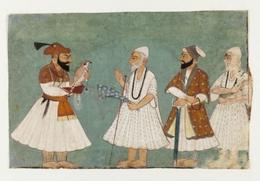 Guru Gobind Singh and Guru Nanakca. 1700 - ca. 1720 · Mandi© Victoria and Albert Museum, London ↗
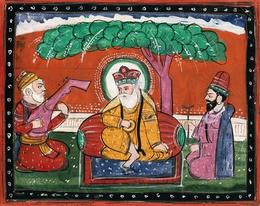 Guru Nanak listening to some music attended by his holy man.Wellcome Collection (via Europeana) · CC BY ↗
 Guru Nanak with Mardana on the left and Bala on rightWikimedia Commons ↗
 A painting on ivory, a miniature portrait of Guru Nanak Singh, the first Sikh GuruWikimedia Commons ↗
 A painting of Guru Nanak from Baghdad, Iraq attributed to a painter by the name of…Wikimedia Commons · Kamal-ud-din Behzad (1450-1535) of Tabriz (claimed) ↗
 Bhai Bala Recites the Life Story of Guru Nanak to Guru Angad and OnlookersAsian Art Museum, San Francisco · photo Wikimedia Commons (Wikimedia Commons) ↗
 Guru Nanak at Panja SahibGovernment Museum, Chandigarh · photo Wikimedia Commons (Wikimedia Commons) ↗
 Guru Nanak at SchoolAsian Art Museum, San Francisco · photo Wikimedia Commons (Wikimedia Commons) ↗
 Guru Nanak at the Modikhana of Sultanpur LodhiAsian Art Museum, San Francisco · photo Wikimedia Commons (Wikimedia Commons) ↗
 Guru Nanak in Kamarupa (Kamrup region), the land ruled by womenAsian Art Museum, San Francisco · photo Wikimedia Commons (Wikimedia Commons) ↗
 Guru Nanak stops the boulder from falling with his hand at Hasan AbdalGovernment Museum, Chandigarh · photo Wikimedia Commons (Wikimedia Commons) ↗
 Guru Nanak with followers and other holy menWikimedia Commons ↗
 Wedding of Guru Nanak and SulakhniAsian Art Museum, San Francisco · photo Wikimedia Commons (Wikimedia Commons) ↗