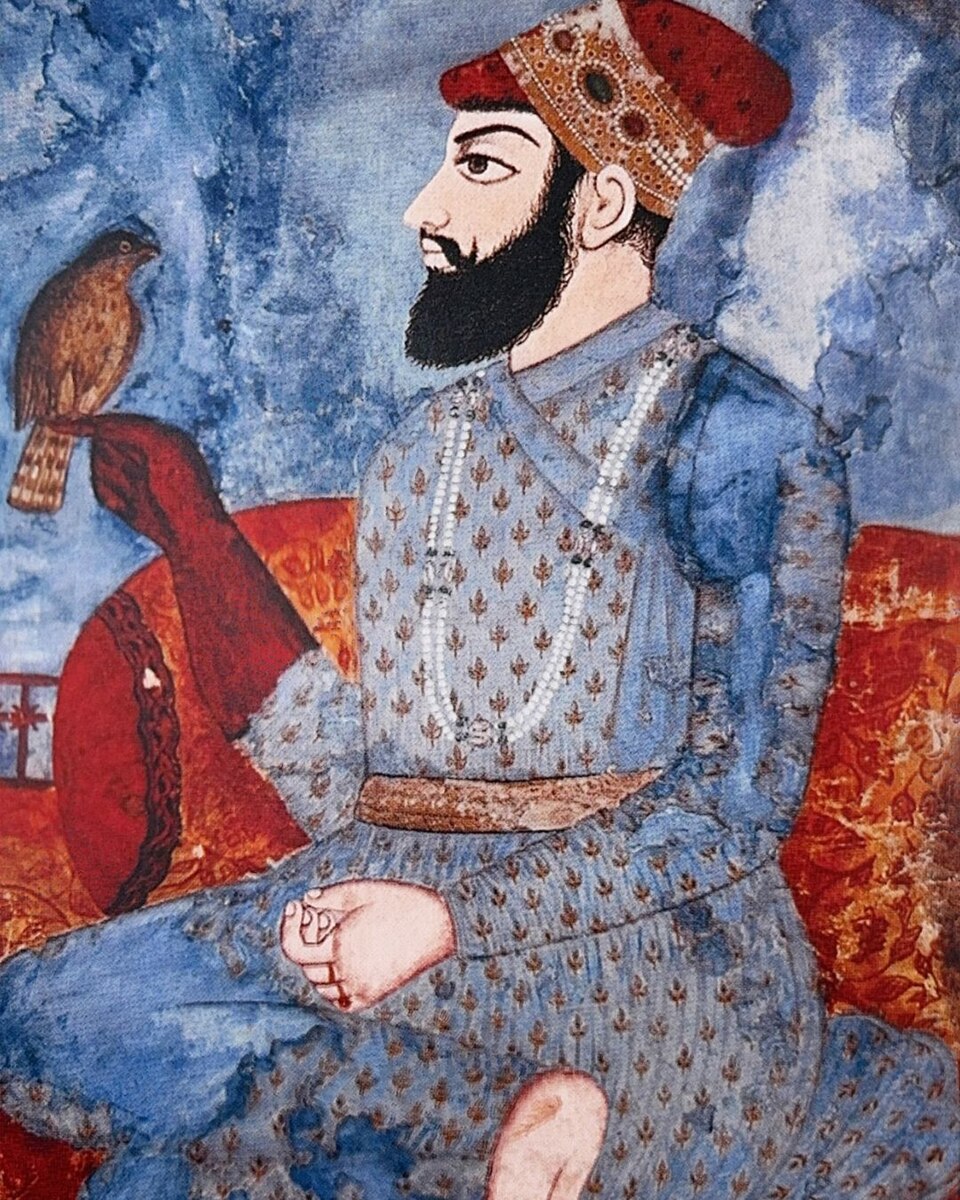
Tyag Mal was born in Amritsar in 1621, the youngest son of Guru Hargobind. At fourteen he fought beside his father at Kartarpur in 1635 with such courage that his father renamed him Tegh Bahadur, 'brave of the sword'. Yet for most of his life he lived in meditation, for many years almost in seclusion at Bakala near the Beas.
When the dying Guru Har Krishan said 'the Guru is at Bakala' in 1664, twenty-two members of the Sodhi family set themselves up there as Guru. Makhan Shah Lubana, a sea-trader who had vowed five hundred gold coins to the Guru when his ship was saved in a storm, went from one to another offering two coins each. Only Tegh Bahadur asked where the rest were. Makhan Shah climbed on the roof and shouted 'Guru ladho re', I have found the Guru.
The Guru travelled widely in the east, to Assam, Bengal and Bihar, where his son Gobind was born at Patna in 1666, and in 1665 he founded the town of Chakk Nanaki, later Anandpur, in the Shivalik foothills. He wrote 116 hymns of great beauty on detachment, death and fearlessness; his saloks at the end of the Guru Granth Sahib say that the one who frightens no one and is afraid of no one is truly wise.
In 1675 a group of Kashmiri Pandits led by Kirpa Ram came to Anandpur. The Mughal governor of Kashmir was forcing conversions, and they asked for help. The Guru told them to say that if Tegh Bahadur could be converted, they would all follow. He was arrested on his way to Delhi and imprisoned with his companions Bhai Mati Das, Bhai Sati Das and Bhai Dayala. He was told to embrace Islam or to perform a miracle. He refused both. Before his eyes Mati Das was sawn in half, Dayala boiled in a cauldron and Sati Das wrapped in cotton and burned.
On 11 November 1675 Guru Tegh Bahadur was beheaded in Chandni Chowk, Delhi, where Gurdwara Sis Ganj now stands. A storm blew up; in the confusion Bhai Jaita carried his head to Anandpur, and Lakhi Shah Vanjara carried his body away in a cart and burned his own house to cremate it, on the spot where Gurdwara Rakab Ganj stands. Guru Gobind Singh wrote that his father gave his head but not his faith, to protect the frontal mark and sacred thread of others. He is called Hind di Chadar, the shield of India: a Guru who died for the freedom of a religion not his own.
Battles
On the timeline
Connected
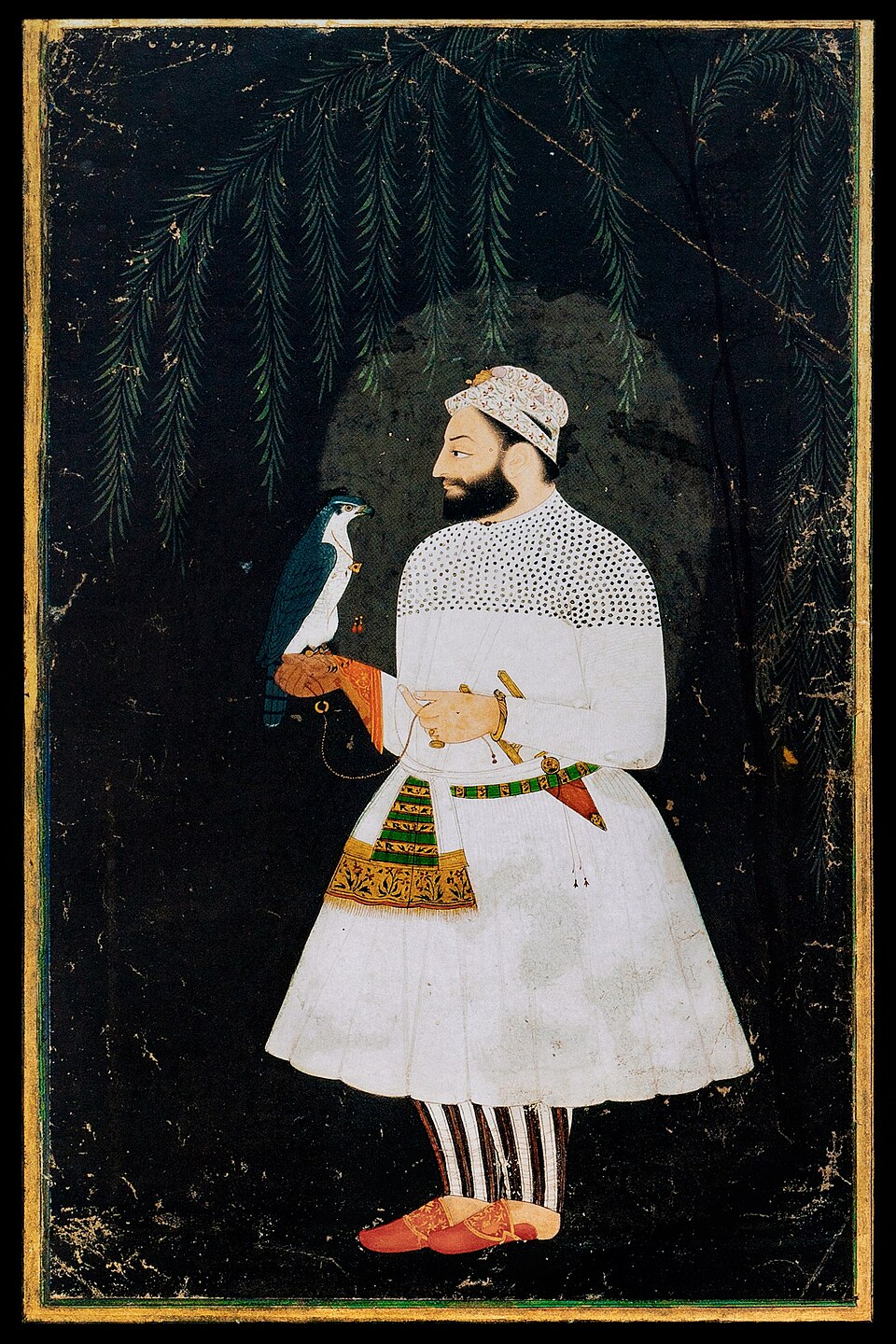
Sixth Guru. Wore two swords, miri and piri, for worldly and spiritual authority, built the Akal Takht and fought the first Sikh battles against Mughal forces.
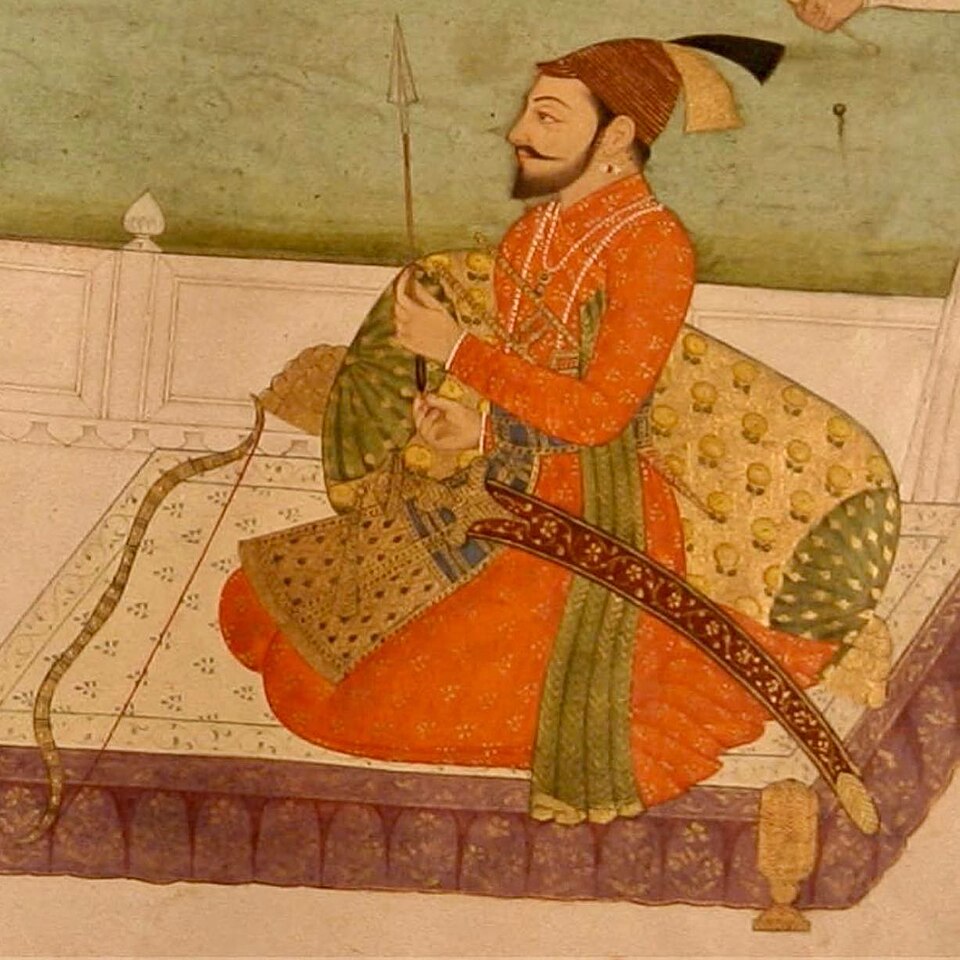
Tenth Guru, warrior and poet. Created the Khalsa in 1699, fought a long war with the Mughals and hill rajas, lost his four sons and mother, and named the Guru Granth Sahib as the final Guru.
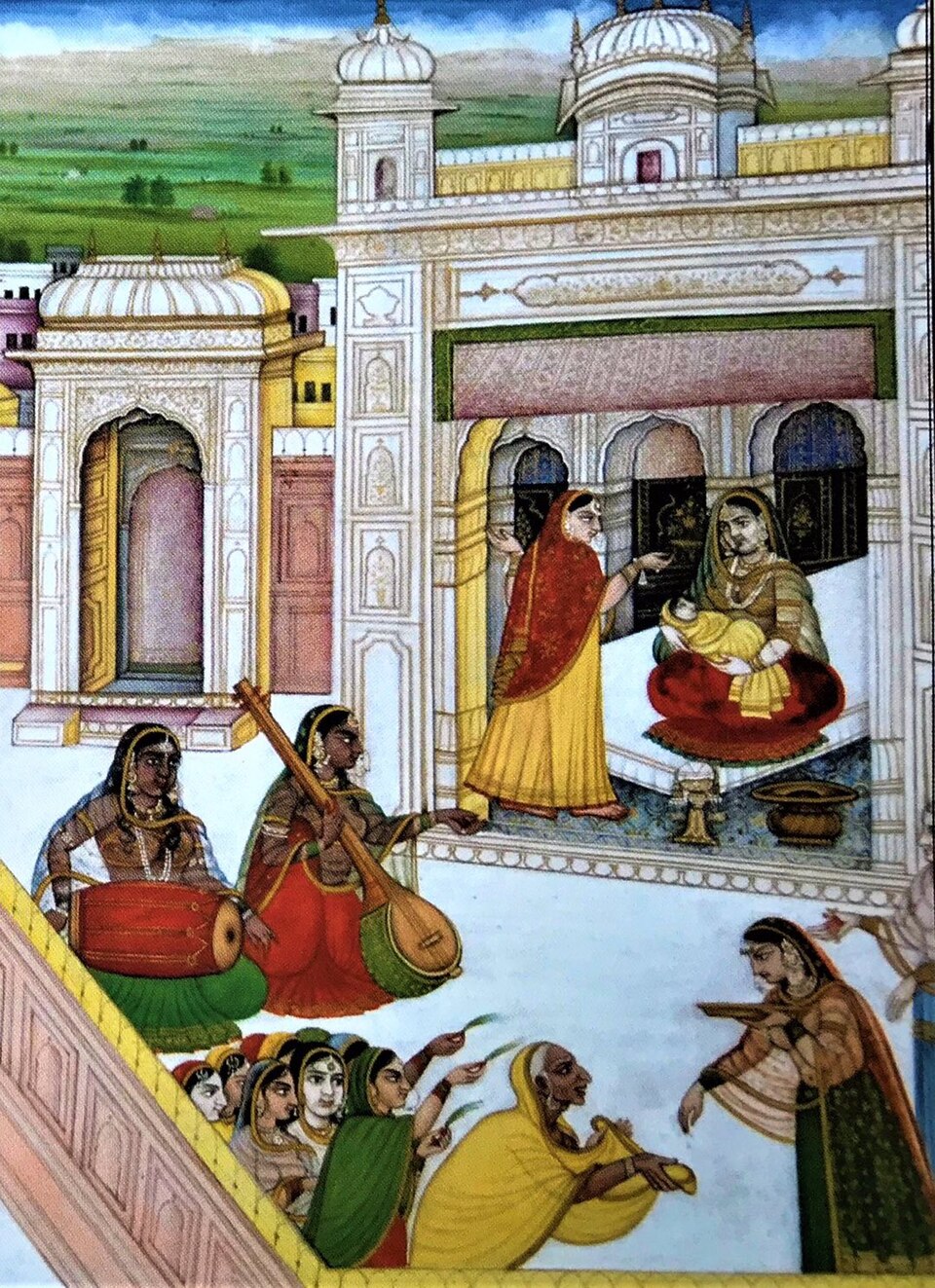
Wife of Guru Tegh Bahadur and mother of Guru Gobind Singh. Held with her younger grandsons in the cold tower of Sirhind, she died there on hearing of their execution.
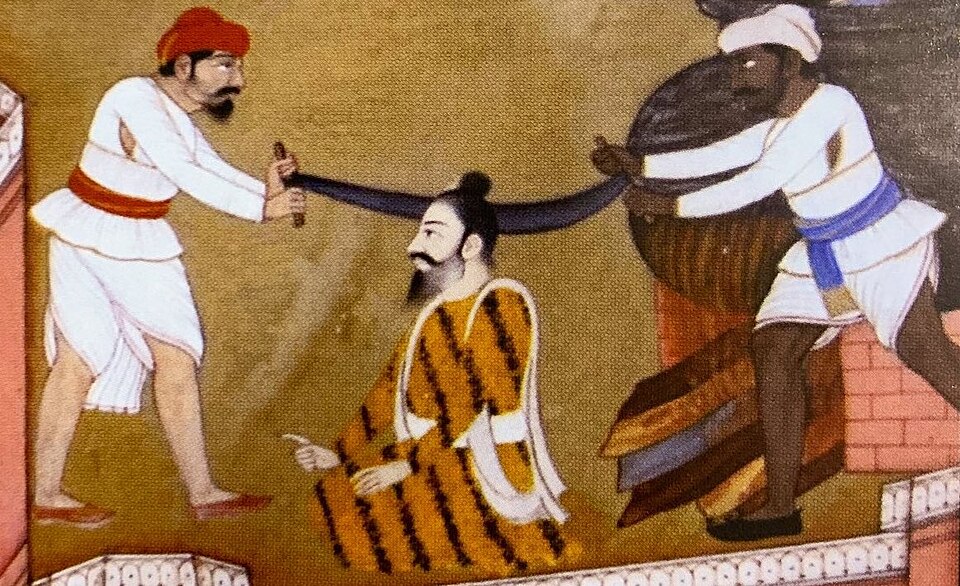
Three companions of Guru Tegh Bahadur executed before him in Delhi: Mati Das sawn in half, Sati Das wrapped in cotton and burned, Dayala boiled alive.
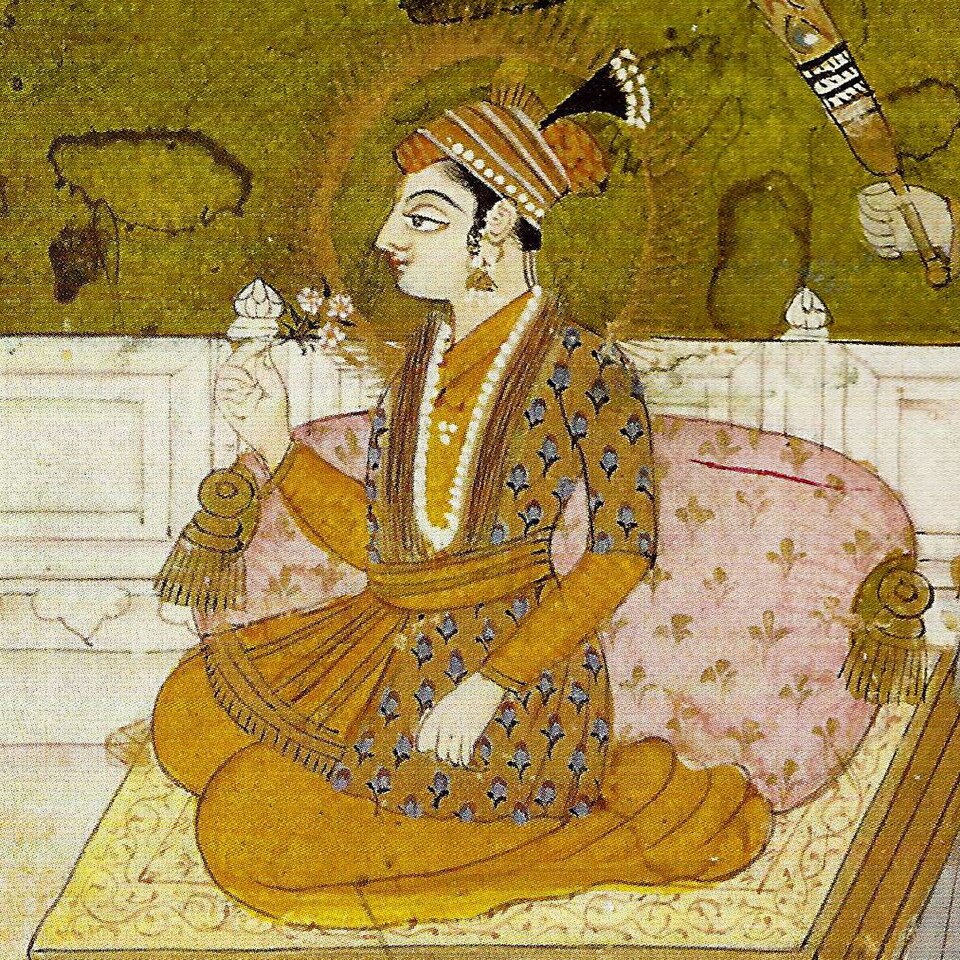
Eighth Guru, Guru at five. Nursed victims of a smallpox and cholera epidemic in Delhi and died of smallpox aged seven.
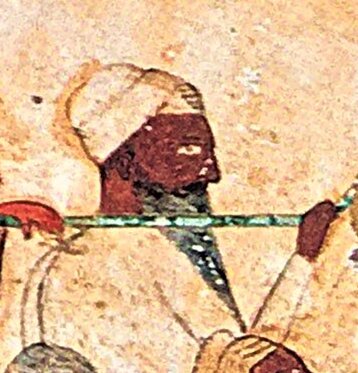
A Ranghreta Sikh who carried Guru Tegh Bahadur's severed head from Delhi to Anandpur. The young Guru Gobind Singh embraced him as 'the Guru's own son'.
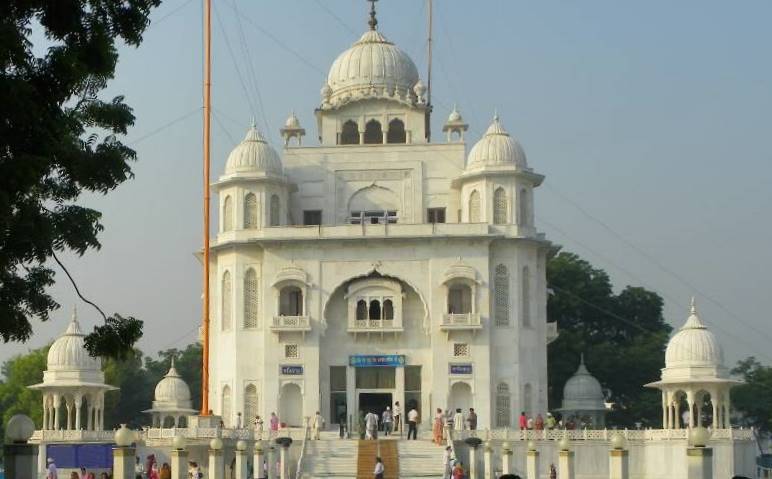
Wealthy trader who smuggled Guru Tegh Bahadur's body away in his cart and burned his own house to cremate it. Gurdwara Rakab Ganj stands there.
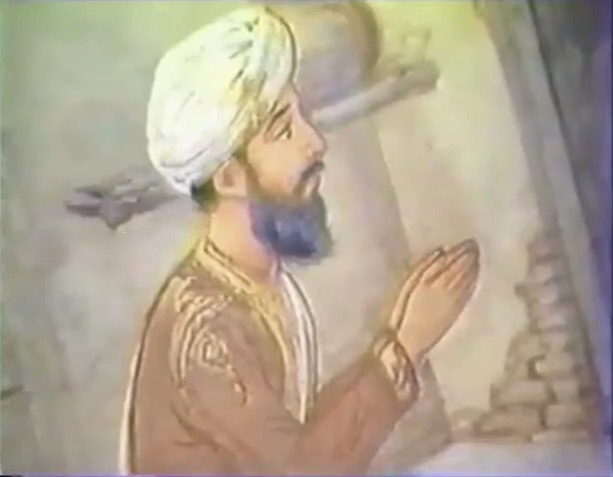
Sea trader who identified Guru Tegh Bahadur at Bakala in 1664 among 22 claimants, shouting 'Guru ladho re' from the rooftop.
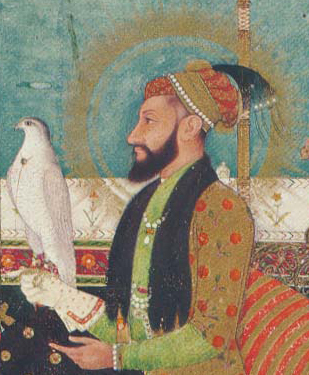
Mughal emperor under whom Guru Tegh Bahadur was executed. Guru Gobind Singh's Persian letter, the Zafarnama, was addressed to him. He built Lahore's Badshahi Mosque.
The Gurus' family tree
How the Guruship passedScroll sideways to see the whole tree →
Guru Gobind Singh's four sons, the Sahibzade, were all killed in 1704; in 1708 he passed the Guruship to the scripture and to the Khalsa. Guru Nanak passed over his own sons for his disciple Lehna, renamed Angad; Angad did the same. From Guru Ram Das on, the Guruship stayed in the Sodhi family, but not always with the eldest: Prithi Chand, Dhir Mal and Ram Rai each set up rival claims.
 Folio of the Adi Granth with nishan (signature) of Guru Tegh Bahadur, ca.1676Government Museum, Chandigarh · photo Guru Tegh Bahadur (Wikimedia Commons) ↗