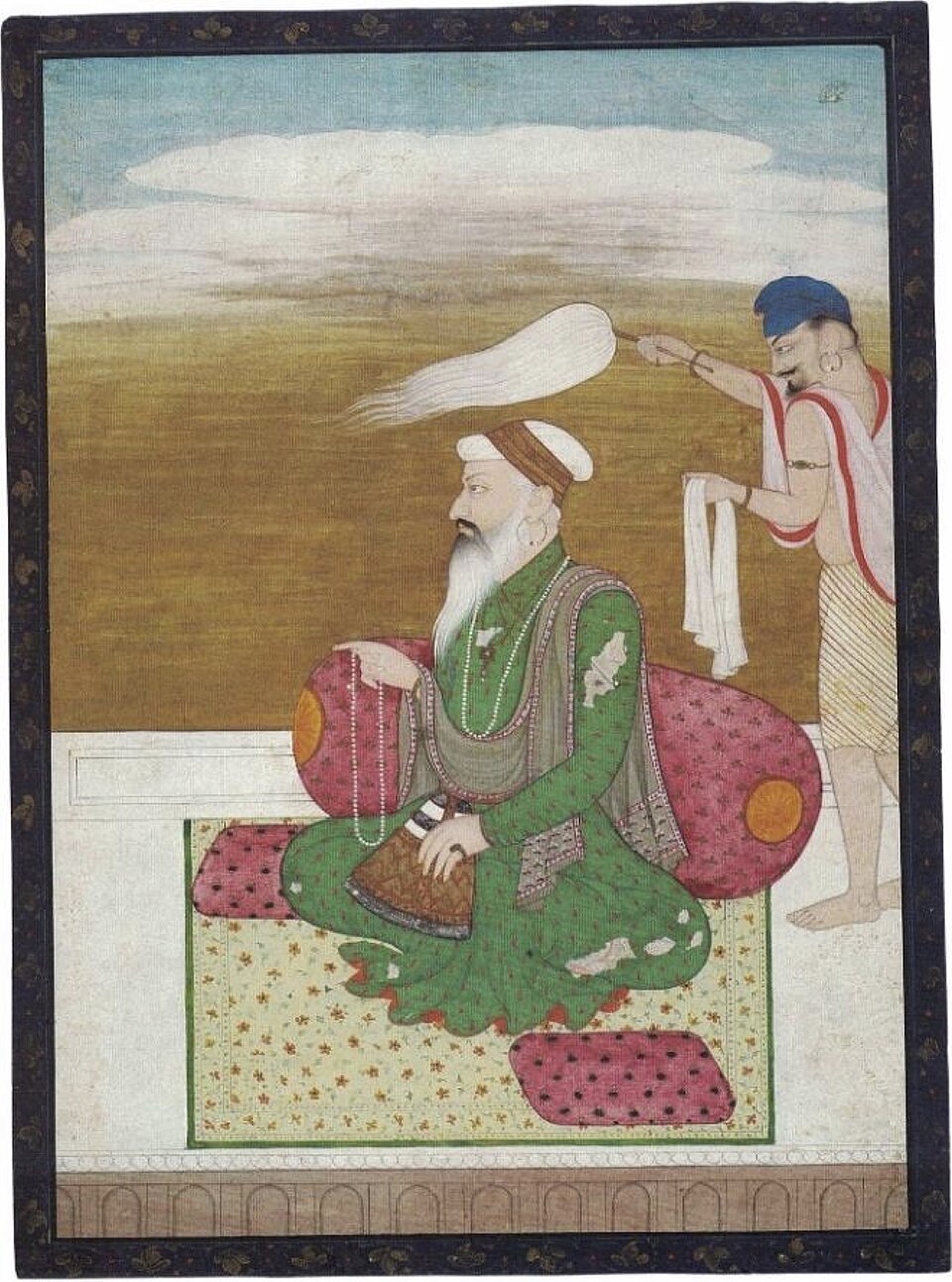
Guru Ram Das
Fourth Guru and founder of Amritsar. Wrote the Lavan, the four marriage hymns of the Anand Karaj.
Jetha was born in 1534 in a poor Sodhi Khatri family in Chuna Mandi, Lahore, and orphaned at seven. He was brought up by his grandmother in Basarke, sold boiled chickpeas for a living, and as a boy found his way to Goindwal, where he served in the langar and helped build the baoli. Guru Amar Das noticed him and married him to his daughter Bibi Bhani.
His humility was his test. When the Guru asked his two sons-in-law to build platforms and then tore them down again and again, only Jetha rebuilt each time without complaint. In 1574 he became Guru Ram Das, the fourth Guru.
Even before his succession Guru Amar Das had sent him to found a new settlement on land near the villages of Tung, Sultanwind and Gumtala. There, around 1577, Guru Ram Das began digging a pool around a spring among the trees, and invited merchants and craftsmen of fifty-two trades to settle around it. The town was called Ramdaspur or Guru ka Chakk; the pool was called Amritsar, the pool of nectar, and in time the city took its name.
He was a great poet of devotion and longing. He wrote the four Lavan, the hymns of the Sikh marriage ceremony, during which the bride and groom walk four times around the Guru Granth Sahib; they describe the soul's union with God in four stages. His hymns in the Guru Granth Sahib number 638, and he set many of them in new ragas. He also continued the masand system of collecting offerings from the sangat.
He died at Goindwal in 1581, having named his youngest son Arjan as his successor, passing over his eldest, Prithi Chand, who would never forgive his brother. From then on the Guruship stayed in the Sodhi family.
On the timeline
Connected
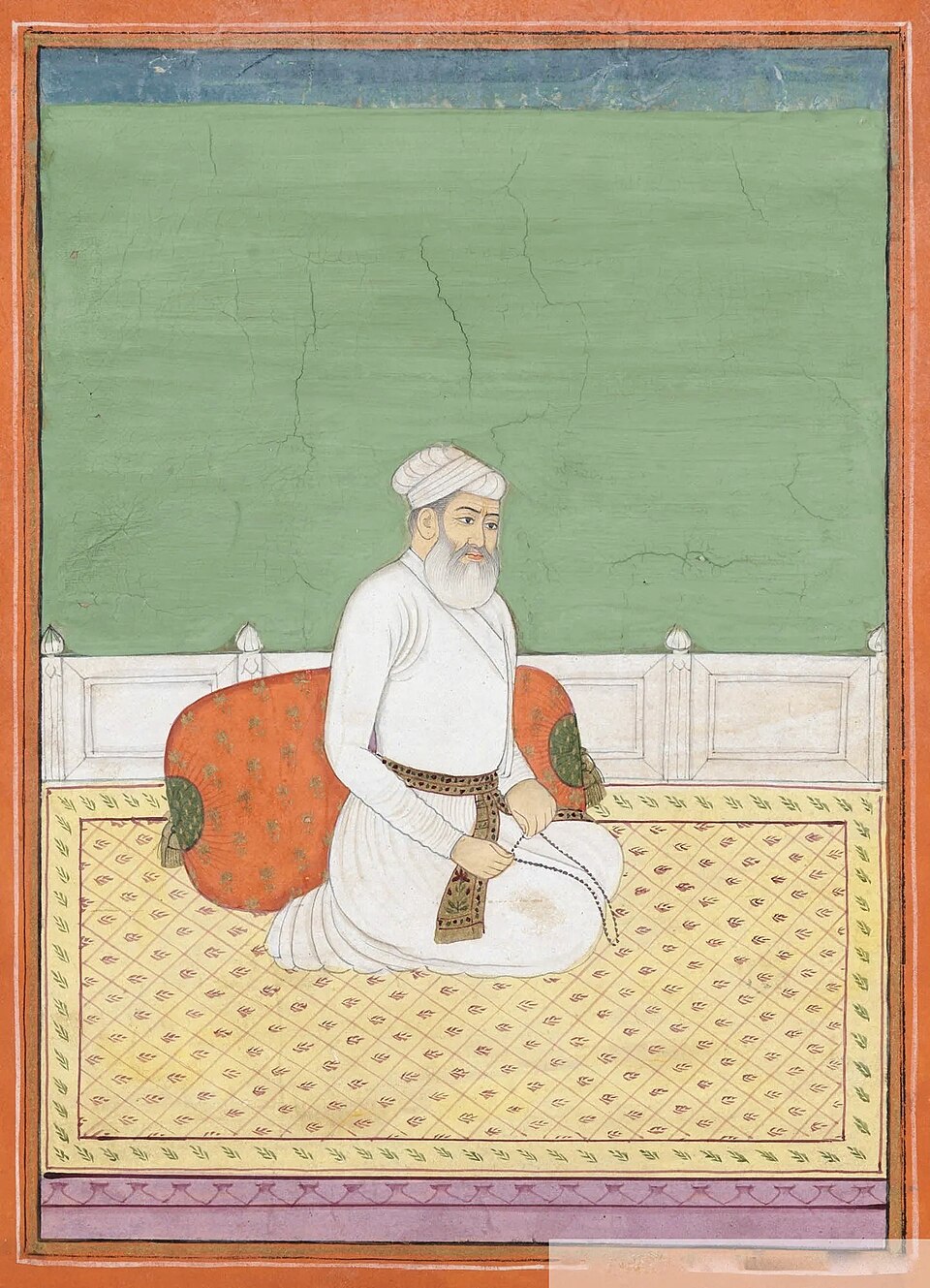
Third Guru, who became Guru at 73. Made the langar a rule for all visitors, opposed sati and purdah, and organised the community into 22 manjis (districts).
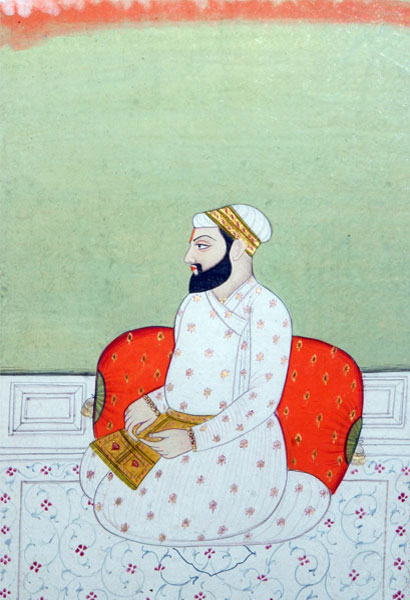
Fifth Guru. Built the Harmandir Sahib, compiled the Adi Granth in 1604 and became the first Sikh martyr, tortured to death in Lahore in 1606.
Daughter of Guru Amar Das, wife of Guru Ram Das and mother of Guru Arjan, remembered for her devoted service.
The Gurus' family tree
How the Guruship passedScroll sideways to see the whole tree →
Guru Gobind Singh's four sons, the Sahibzade, were all killed in 1704; in 1708 he passed the Guruship to the scripture and to the Khalsa. Guru Nanak passed over his own sons for his disciple Lehna, renamed Angad; Angad did the same. From Guru Ram Das on, the Guruship stayed in the Sodhi family, but not always with the eldest: Prithi Chand, Dhir Mal and Ram Rai each set up rival claims.
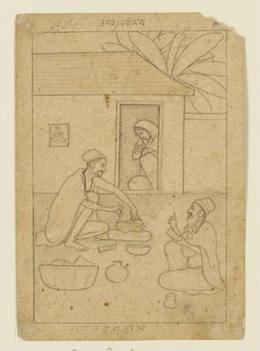
 Guru Ram DasGovernment Museum, Chandigarh · photo Family workshop (or atelier) of Nainsukh of Guler (Wikimedia Commons) ↗
 Ram Das the cobbler