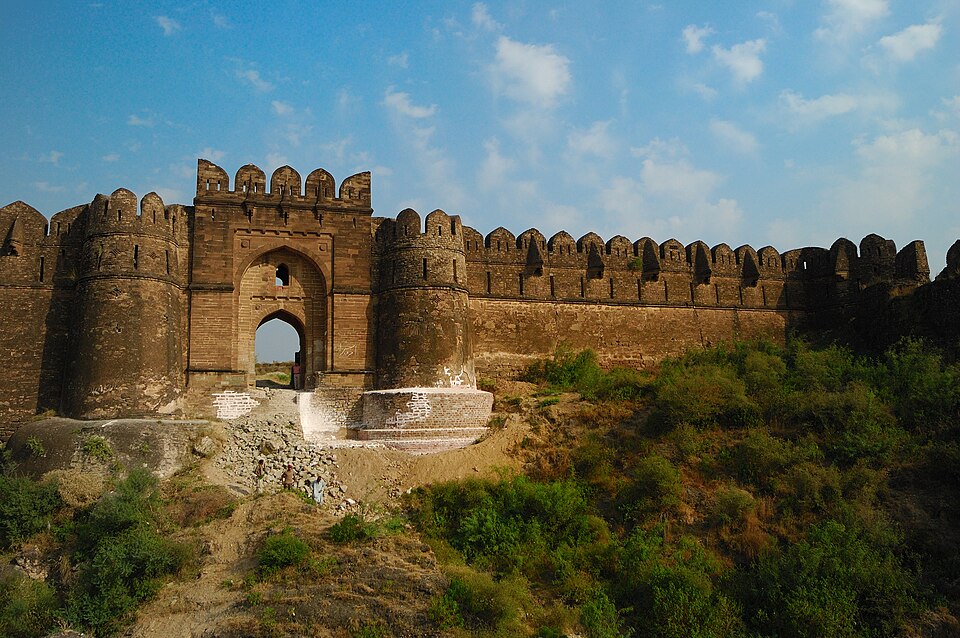
Rohtas Fort
Massive fort built by Sher Shah Suri in the 1540s to hold the Gakhars of the Salt Range in check. Sikh forces took it in the 1760s and 1820s.
Rohtas Fort, near Jhelum, was built by Sher Shah Suri from 1541 to control the Gakhar tribes of the Pothohar, who supported the exiled Mughal emperor Humayun, and to guard the road to the north-west.
It is enormous: a circuit of walls some four kilometres long with sixty-eight bastions and twelve gates, one of the finest examples of early Muslim military architecture in South Asia. It never saw a major battle. Ranjit Singh's troops later held it, and inside it a haveli built for Akbar's general Raja Man Singh still stands.
It is a UNESCO World Heritage Site. Mata Sahib Kaur, wife of Guru Gobind Singh, was born in the town of Rohtas.
People
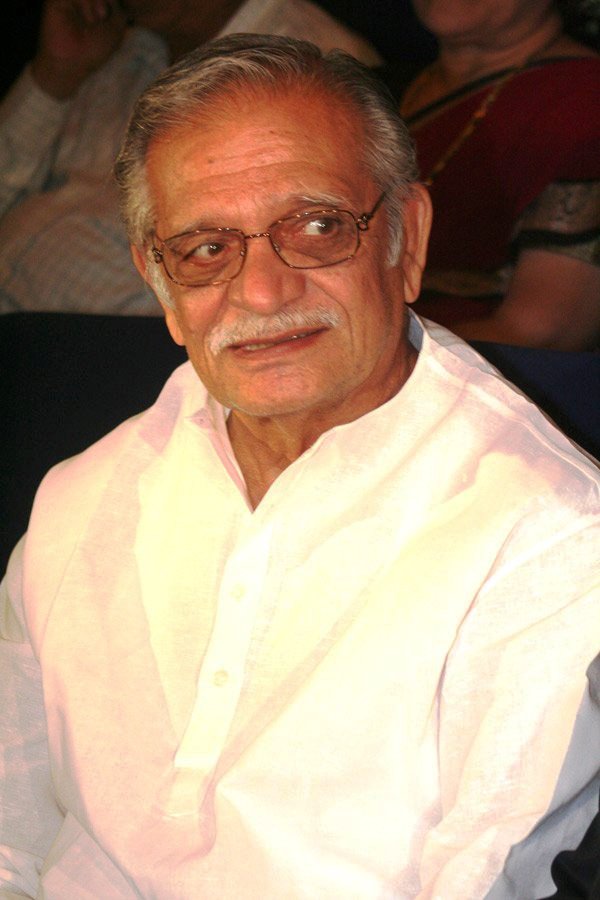
Poet, lyricist and film-maker born at Dina near Jhelum, whose Partition memories run through his work.
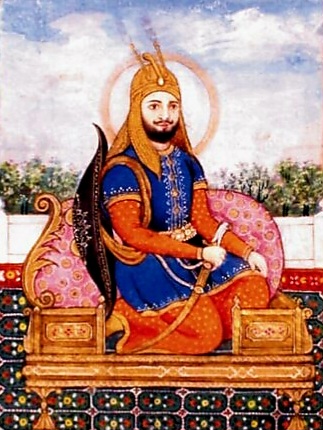
Afghan ruler who drove out Humayun, built Rohtas Fort and rebuilt the great road from Bengal to Punjab that became the Grand Trunk Road.
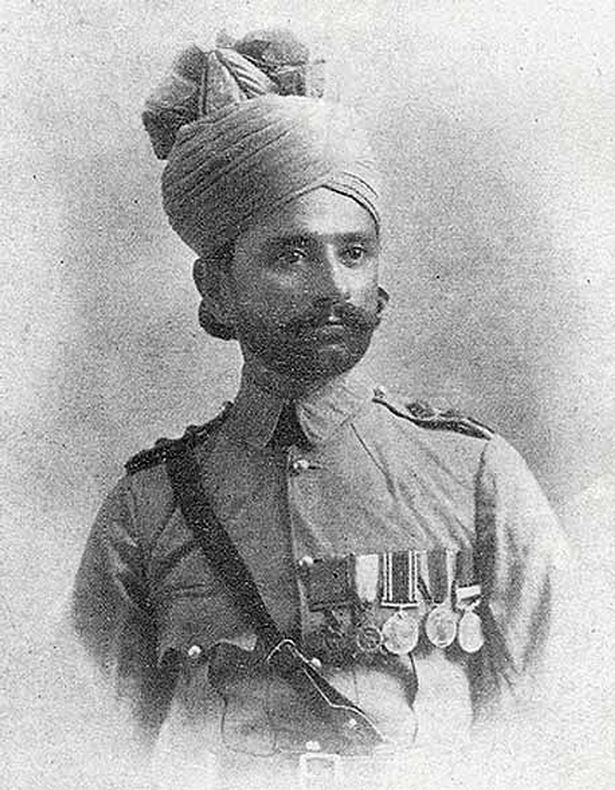
Machine-gunner from Chakwal who held his post at Ypres in 1914 and became the first Indian soldier to win the Victoria Cross.
Artifacts
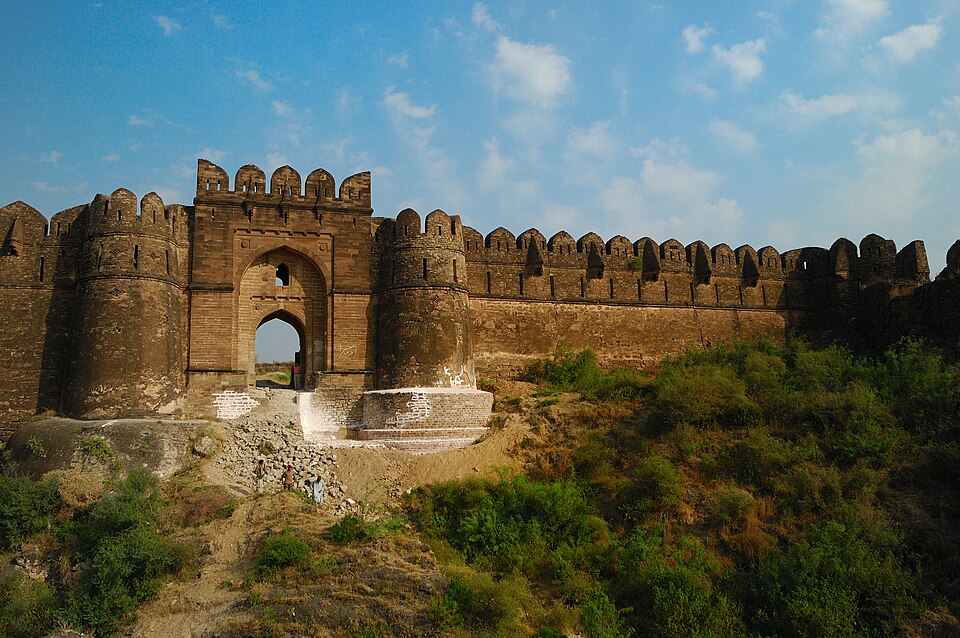
Sher Shah Suri's enormous fortress on the road through the Salt Range, built to hold down the Gakhars and keep Humayun from coming back.
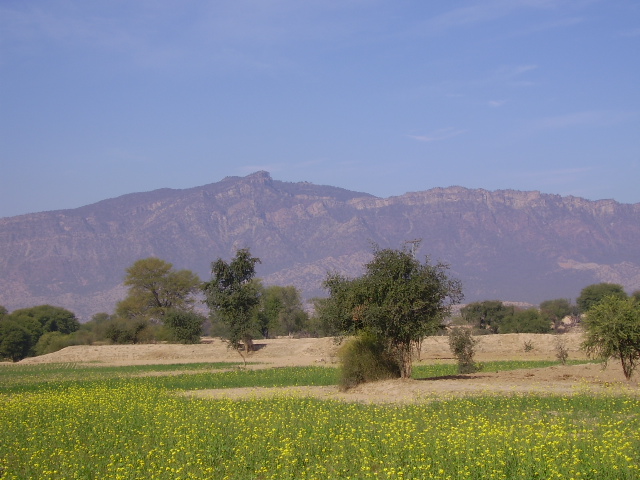
A hilltop monastery of the Kanphata yogis of Gorakhnath near Jhelum, where Guru Nanak is said to have meditated and where Ranjha comes to have his ears pierced in Waris Shah's Heer.
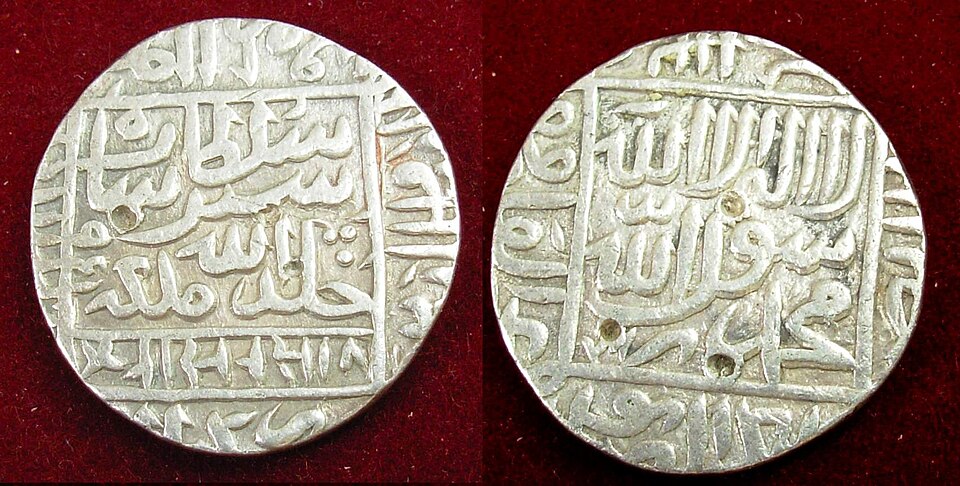
The coin of Sher Shah Suri, who drove the Mughals out of the Punjab, and gave the world the word rupee.
 This image is is representing the beautiful Rohtas FortWikimedia Commons · Sumyia Dawar · CC BY-SA ↗