East Punjab since the Suba
 Unknown · Wikimedia
The Punjabi Suba of 1966 left a small state, a little over 50,000 square kilometres, with a Sikh majority, a shared capital at Chandigarh and its rivers' waters still in dispute. It fed India through the Green Revolution, and then lived through the darkness of the 1980s.
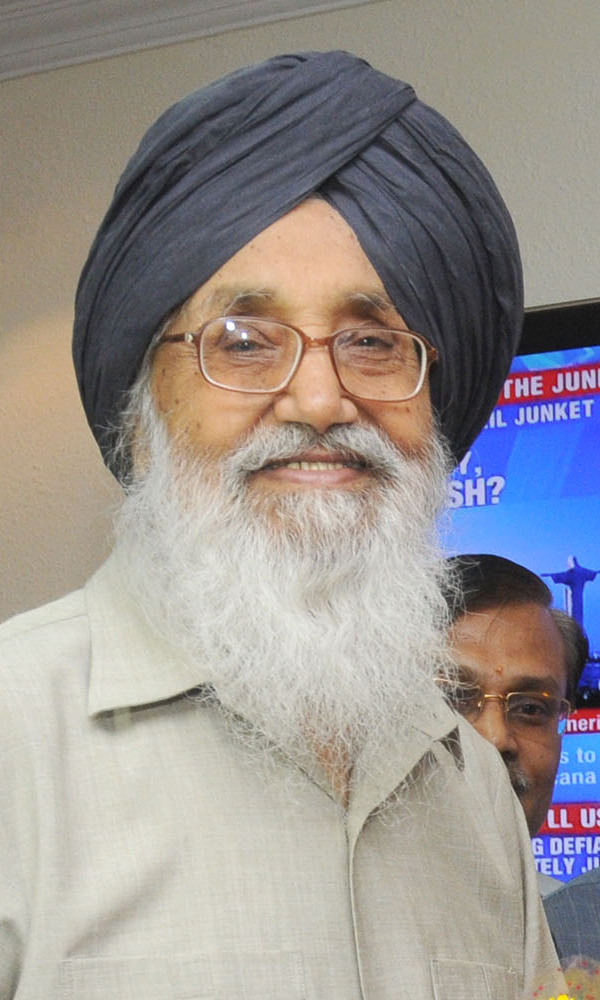
Since then power has passed between the Akali Dal, led for half a century by Parkash Singh Badal, and the Congress, led by Amarinder Singh, until in 2022 the Aam Aadmi Party of Bhagwant Mann swept both aside. The old questions remain: the river waters, Chandigarh, falling groundwater, farm debt, drugs, and the young who leave.
Punjab today: work, water and money →
The rivers and the canal
Punjab's rivers were divided with Haryana and Rajasthan by agreements that Punjab says ignore its own needs. The Sutlej Yamuna Link canal, meant to carry water to Haryana, was begun in 1982, stopped by militancy in 1990 when engineers working on it were killed, and has never been finished. In 2004 the Punjab assembly passed a law cancelling the water agreements; the courts have struck it down, and the dispute goes on.
Peace and its price
Beant Singh, Chief Minister from 1992, and the police chief K. P. S. Gill crushed the militancy by 1993 with methods that human rights groups documented as killings and disappearances. Beant Singh was killed by a bomb in 1995. The years since have been peaceful but uneasy, with no full accounting for the 1980s.
Since 2020
In 2020-21 Punjab's farmers led the year-long protest at Delhi's borders that forced the repeal of three farm laws. In 2022 the Aam Aadmi Party won 92 of 117 seats, the biggest majority in the state's history.
The two Punjabs today
Side by sidePakistan: 2023 census. India: 2011 census, the last held; the next is due in 2027. Pakistan's Punjab has over four times the land and people of India's, and more than half of all Pakistanis live in it.
The Green Revolution and the water
1960 – 2023Scroll sideways to see the whole figure →
Indian Punjab. Rice was a minor crop before the 1960s; high-yielding wheat and rice, tubewells and free farm power made the state India's granary and emptied its aquifers. Sources: R. S. Sidhu, Journal of Punjab Studies; Down to Earth, 1999; Mongabay India, 2023, citing the Central Ground Water Authority.