The land of five waters gave the world its first cities, its saints and its songs. Broken by every empire that crossed it, it is still ours to remember, and to make whole again.
Sikhs call 1984 the Third Ghallughara, the third great holocaust. The first two were in the eighteenth century: the Chhota Ghallughara of 1746, when the Mughal army of Lahore under Diwan Lakhpat Rai trapped and killed some seven thousand Sikhs in the marshes of Kahnuwan, and the Vadda Ghallughara of February 1762, when Ahmad Shah Abdali caught the Sikh families moving south of the Sutlej near Kup and killed many thousands in a single day.
In June 1984 the Indian Army attacked the Harmandir Sahib on a holy day, with tanks, while it was full of pilgrims. In November, after Indira Gandhi's assassination, organised mobs killed thousands of Sikhs in Delhi and other cities. A decade of insurgency, police killings and disappearances followed in Punjab.
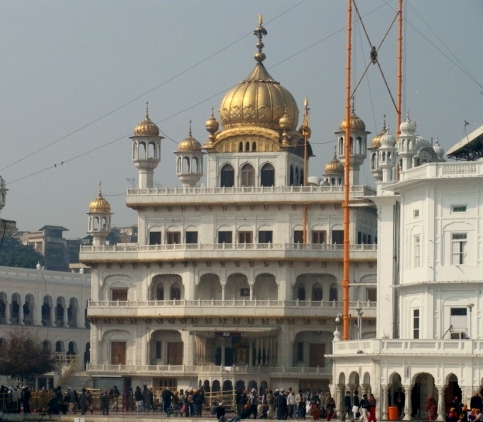
The Harmandir Sahib, Amritsar, and dozens of other gurdwaras
By
The Indian Army
Dead
493 by the government's White Paper; several thousand by Sikh and human rights estimates, most of them pilgrims
After
Indira Gandhi was assassinated in October; in November mobs killed thousands of Sikhs in Delhi and other cities.
'Ghallughara' means a holocaust or wholesale massacre. Sikhs gave the name to the two great killings of the 18th century, and in 1984 many called the army's attack on the Harmandir Sahib the third.
In June 1984 the Indian Army attacked the Harmandir Sahib, the holiest place of the Sikhs, on the anniversary of Guru Arjan's martyrdom, when the complex was full of pilgrims. Tanks shelled the Akal Takht, the throne of the Timeless, and the Sikh Reference Library with its handwritten scriptures and hukamnamas burned. Five months later, after Indira Gandhi was killed, mobs hunted Sikhs through Delhi and dozens of other cities for three days while the police stood by. Sikhs call June 1984 the Third Ghallughara, after the two great massacres of the 18th century, and November 1984 a genocide. A decade of insurgency, fake encounters and disappearances followed. This page tells that story as Sikhs remember it, with the figures beside it.
10,000+Sikhs massacred in under three days, November 1984
50,000+Sikhs left permanently homeless
130+Gurdwaras attacked in Delhi alone
40Other historic gurdwaras attacked with the Darbar Sahib, June 1984
300Sikh defenders, at most, against at least 7,000 troops
Figures as given by 1984tribute.com in its histories '1984 June: the Battle of Amritsar' and '1984 November: the Sikh Genocide', and the counts of names in its shaheed archive. The site's histories also say some 100,000 troops were deployed across Punjab, as many as 13 tanks entered the parikrama, the defenders held out for five days, the pilgrims were kept four days without food or water, and some 5,000 soldiers of the Sikh Regiment mutinied when they heard of the attack.
ਬਲੁ ਹੋਆ ਬੰਧਨ ਛੁਟੇ ਸਭੁ ਕਿਛੁ ਹੋਤ ਉਪਾਇ ॥
My strength has returned, my bonds are broken, and everything is possible.
Guru Tegh Bahadur and Guru Gobind Singh · Guru Granth Sahib, Salok Mahalla 9, page 1429
What happened
1 November 1966
Punjabi Suba
After years of agitation Punjab is reorganised on language lines, but Chandigarh, the river waters and Punjabi-speaking areas are left out, grievances that feed everything that follows.
October 1973
Anandpur Sahib Resolution
The Akali Dal sets out its demands for real federalism, a fair share of the rivers and recognition of Sikh identity.
13 April 1978
Vaisakhi at Amritsar
Sikhs led by Bhai Fauja Singh march against a Sant Nirankari convention they see as insulting the Gurus; 13 Sikhs are shot dead. Sant Jarnail Singh Bhindranwale becomes the voice of a new generation.
September 1978
Kanpur
Police fire on Sikhs protesting another Nirankari gathering; more Sikhs are killed.
August 1982
Dharam Yudh Morcha
The Akali Dal and Sant Bhindranwale launch a peaceful mass agitation for the Anandpur Sahib demands. More than 30,000 Sikhs court arrest; around 200 are killed in police action over two years.
October 1983
President's Rule
Delhi takes direct control of Punjab. The state is flooded with paramilitary forces and Sikh youth face mass arrests.
1 June 1984
The firing begins
CRPF and army units open fire on the complex. The Harmandir Sahib is hit dozens of times. Punjab is placed under curfew, and journalists are expelled.
3 June 1984
Pilgrims trapped
On Guru Arjan's martyrdom day thousands of pilgrims are inside. A total curfew is imposed and they cannot leave.
5 – 6 June 1984
The assault
Commandos and infantry storm the complex at night against a few hundred defenders led by Sant Bhindranwale, Bhai Amrik Singh and General Shabeg Singh. When the infantry fail, tanks shell the Akal Takht. Pilgrims, women and children die in the crossfire and in the parikrama.
6 – 7 June 1984
The Akal Takht falls
Sant Bhindranwale and the last defenders come out and are killed. The Sikh Reference Library burns. Some forty other gurdwaras across Punjab are raided in the same operation.
June 1984
The Sikh soldiers rise
Thousands of Sikh soldiers in several cantonments leave their barracks to march on Amritsar. Most are stopped; dozens are killed and over two thousand court-martialled. Sikh public figures return their honours.
31 October 1984
Indira Gandhi assassinated
The Prime Minister who ordered the attack is shot by her Sikh bodyguards, Beant Singh and Satwant Singh.
1 – 3 November 1984
The genocide in Delhi
Organised mobs, many led by local Congress politicians and supplied with kerosene and voter lists, kill Sikh men and boys, burn gurdwaras and rape women across Delhi and over forty other cities. The army is not called in for three days.
June – September 1984
Operation Woodrose
After the assault on the Darbar Sahib the army sweeps the villages of Punjab for young Sikh men; thousands are detained and many are never seen again.
1985
Accord and betrayal
Sant Harchand Singh Longowal signs an accord with Rajiv Gandhi promising Chandigarh and justice for November. Longowal is killed, the promises lapse, and the year also brings the bombing of Air India Flight 182, for which a Canadian inquiry blamed Canada-based Sikh militants.
26 January 1986
Sarbat Khalsa
A Sarbat Khalsa at the Akal Takht resolves to rebuild the Takht by kar seva and names a Panthic Committee.
1986 – 1993
The kharku years
An armed movement for Khalistan spreads across Punjab. Militant groups, and criminal gangs posing as militants, kill civilians, police and rivals; the state answers with a campaign of fake encounters, torture and secret cremations. Tens of thousands die, most of them Sikhs.
May 1988
Black Thunder II
Police besiege militants in the complex for ten days in front of television cameras.
February 1992
An election without voters
Assembly elections are boycotted by the Akali factions; less than a quarter of the electorate votes. The police campaign under K. P. S. Gill intensifies.
6 September 1995
Jaswant Singh Khalra taken
The man who exposed the secret cremations is abducted by police from his home in Amritsar and killed in custody. Six officers are convicted in 2005.
August 2005
An apology
Prime Minister Manmohan Singh apologises in Parliament for November 1984, after the Nanavati Commission names Congress leaders.
December 2018
Sajjan Kumar sentenced
Thirty-four years later, the Delhi High Court jails the former Congress MP for life, calling the killings crimes against humanity.
The numbers
Event
Government figure
Source
Sikh and independent estimates
June 1984: Sikhs killed in the complex
493 militants and civilians
Government White Paper
At least 1,200 dead in the complex (Associated Press); several thousand by Sikh and human rights estimates, most of them pilgrims
June 1984: soldiers killed
83
Government White Paper
Several hundred, by later accounts
November 1984: Sikhs killed in Delhi
2,733
Official figure
Over 10,000 in less than three days, by 1984tribute.com; survivor groups and lawyers also put it far higher
November 1984: Sikhs killed across India
3,350
Official figure
8,000 to 17,000 by independent estimates
Convictions for November 1984, first 30 years
a handful
Court records
Ten commissions and committees; most accused never tried
Secret cremations, Amritsar district alone
2,097
CBI inquiry ordered by the Supreme Court
Khalra's research pointed to thousands more across Punjab
Deaths in the insurgency, 1981–1995
about 21,000
Compiled figures (SATP and others)
Sikh human rights groups estimate far higher, counting the disappeared
Political killings, 1984–1990
Deaths from political violence in Punjab, newspaper tallies of killings attributed to militants (1984–1990). They do not include those killed by the police and security forces, whose victims were rarely counted.