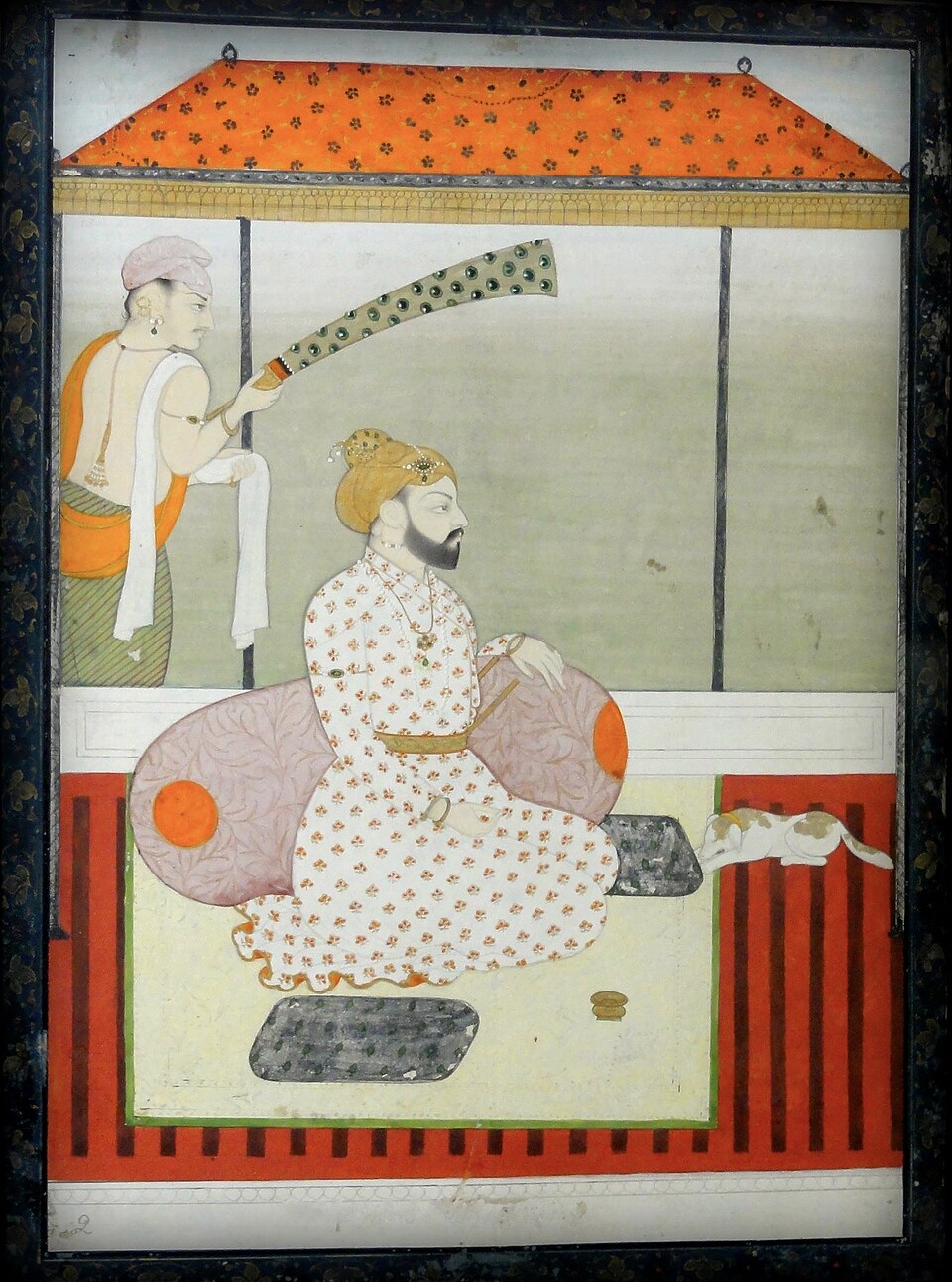
Guru Angad Dev
Second Guru. Standardised the Gurmukhi script, opened schools and kept the langar running with his wife Mata Khivi.
Lehna was born in 1504 at Matte di Sarai near Muktsar, the son of a trader, and grew up a devotee of the goddess Durga, leading a band of pilgrims each year to her shrine in the hills. One year, passing Kartarpur, he heard a Sikh reciting the Japji at dawn and asked whose words they were. He went to see Guru Nanak, and never went on to the goddess.
For some seven years he served the Guru at Kartarpur, and the stories of his service are the stories of how a disciple is made. He carried bundles of wet grass on his fine clothes because the Guru asked; he went into a cesspit to retrieve a cup; when the Guru, testing his followers, told them to eat a corpse under a sheet, Lehna alone was ready, and found sacred food. In 1539 Guru Nanak bowed before him, placed five copper coins and a coconut in front of him, and named him Angad, 'my own limb'. The Guru's sons never accepted it.
To avoid conflict Guru Angad moved to Khadur on the Beas. There he gave Sikhs a script of their own. He refined the Gurmukhi alphabet, 'from the mouth of the Guru', from the Landa scripts used by Punjabi traders, so that the hymns could be written exactly as they were sung, and opened schools to teach children to read it. He collected Guru Nanak's hymns and probably commissioned the first account of his life.
With his wife Mata Khivi he made the langar a pillar of the community. Mata Khivi ran it, and the Guru Granth Sahib remembers her by name for the rich kheer she served. Guru Angad also encouraged wrestling and physical exercise, building a wrestling arena, the Mall Akhara, at Khadur, because a disciple's body too should be strong.
He wrote 62 or 63 saloks. When the emperor Humayun, fleeing Sher Shah, came to Khadur and, kept waiting while the Guru was absorbed in music, reached for his sword, Guru Angad is said to have told him he should have used it against Sher Shah. As his own successor he passed over his sons and chose the aged Amar Das, who had carried water for him every day for twelve years. He died in 1552.
On the timeline
Connected
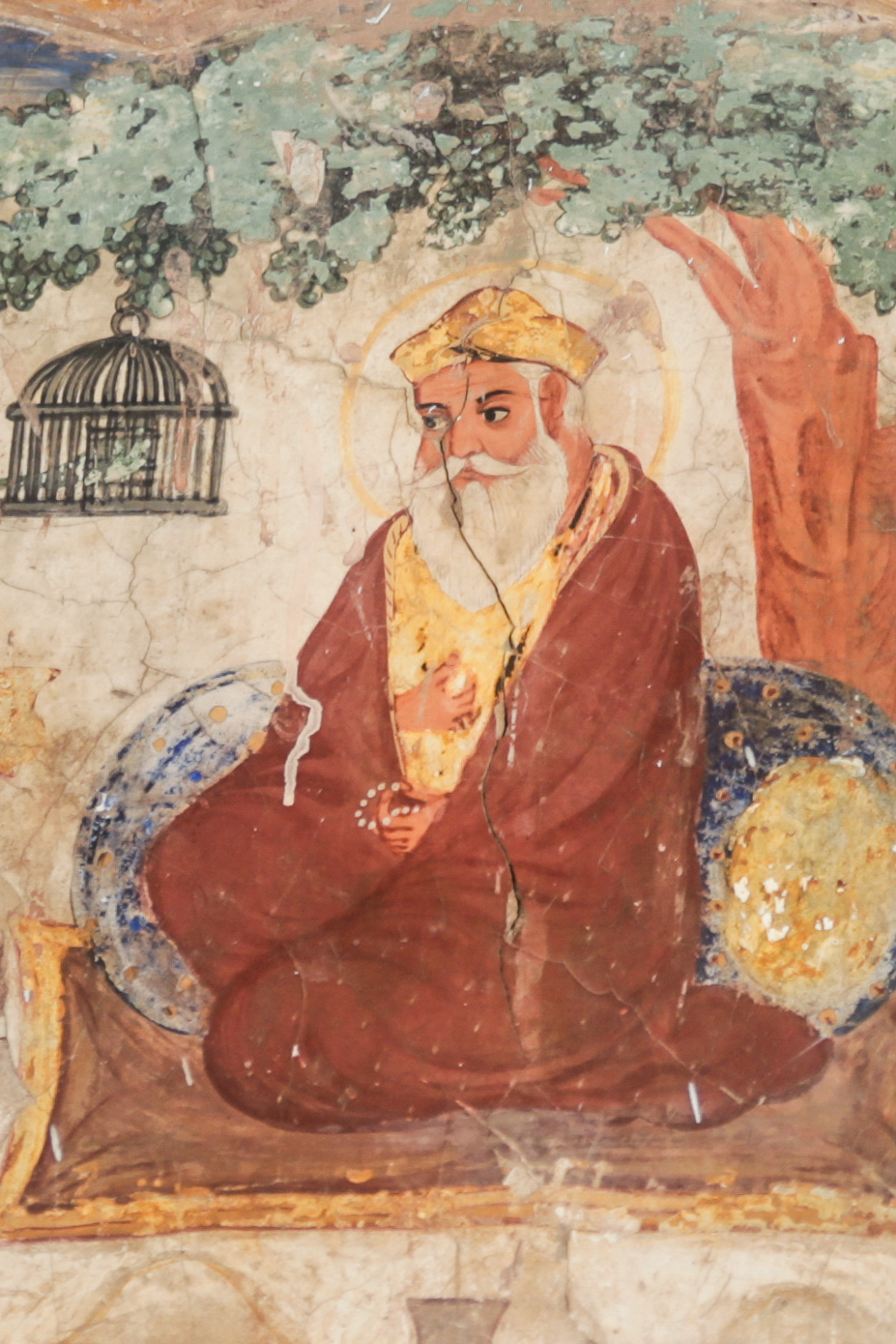
Founder of Sikhi. A poet and teacher who rejected caste and empty ritual and taught devotion to one formless God through the Name, honest work and sharing.
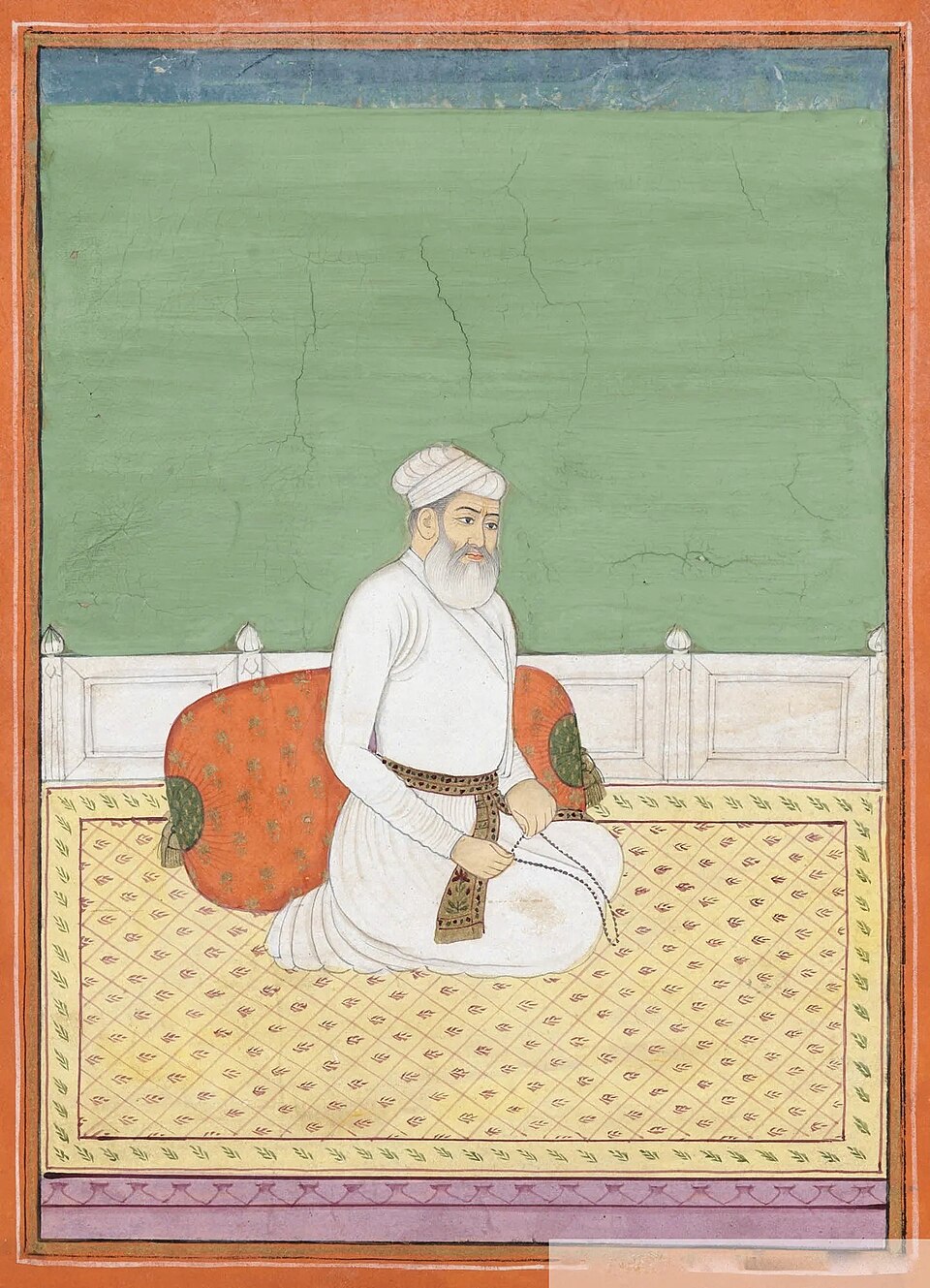
Third Guru, who became Guru at 73. Made the langar a rule for all visitors, opposed sati and purdah, and organised the community into 22 manjis (districts).
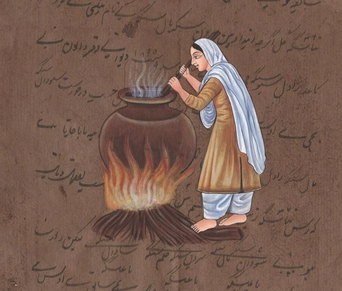
Wife of Guru Angad who ran the langar at Khadur. The only woman mentioned by name in the Guru Granth Sahib.
The Gurus' family tree
How the Guruship passedScroll sideways to see the whole tree →
Guru Gobind Singh's four sons, the Sahibzade, were all killed in 1704; in 1708 he passed the Guruship to the scripture and to the Khalsa. Guru Nanak passed over his own sons for his disciple Lehna, renamed Angad; Angad did the same. From Guru Ram Das on, the Guruship stayed in the Sodhi family, but not always with the eldest: Prithi Chand, Dhir Mal and Ram Rai each set up rival claims.
In the world's museums
5 objects Bhai Bala Recites the Life Story of Guru Nanak to Guru Angad and OnlookersAsian Art Museum, San Francisco · photo Wikimedia Commons (Wikimedia Commons) ↗
 Bhai Lehna (later Guru Angad) and his companions visit Baba NanakWikimedia Commons ↗
 Painting of Guru Angad, Deccani style, circa 19th or early 20th centurySalar Jung Museum, Hyderabad · photo Wikimedia Commons (Wikimedia Commons) ↗
 Painting of Guru Angad, Pahari, ca.1830–50Museum Rietberg, Zurich · photo Wikimedia Commons (Wikimedia Commons) ↗
 Guru Angad, Lahore Museum, accLahore Museum · photo possibly the family workshop (or atelier) of Nainsukh of Gul (Wikimedia Commons) ↗